
Earrings are worn close to the skin, often every day, so they collect grease, sweat, shampoo, makeup and dead skin far faster than most jewellery. That buildup dulls their shine and, because earrings pass through a piercing, it can also irritate the skin around the hole. Cleaning them at home is easy — but only if you match the method to the material. The wrong cleaner can tarnish silver, loosen glued stones, or ruin pearls.
The direct answer is this: start by identifying the material, then use the gentlest method that works for it. For most earrings, warm water with a few drops of mild dish soap, a soft brush, and a lint-free cloth are all you need. Stronger methods are for specific materials only, and some pieces should never be soaked at all.
Before you start: three checks
First, work over a plugged sink or a bowl, never an open drain. Earrings are small, and one slip is all it takes to lose a stud. Second, wash your hands before you begin, so you do not transfer bacteria from your hands to a piercing. Third, inspect each pair before cleaning: look for loose stones, weak clasps, or bent posts. If a stone is loose, clean it by hand very gently or take it to a jeweller first — soaking and scrubbing can finish the job of loosening it.
If you have a new piercing, do not remove the earrings to clean them. Keep new earrings in for at least six weeks after piercing, and clean around them as your piercer advised, usually with saline solution or gentle soap and water. The cleaning methods below are for healed piercings and for earrings that are out of your ears.
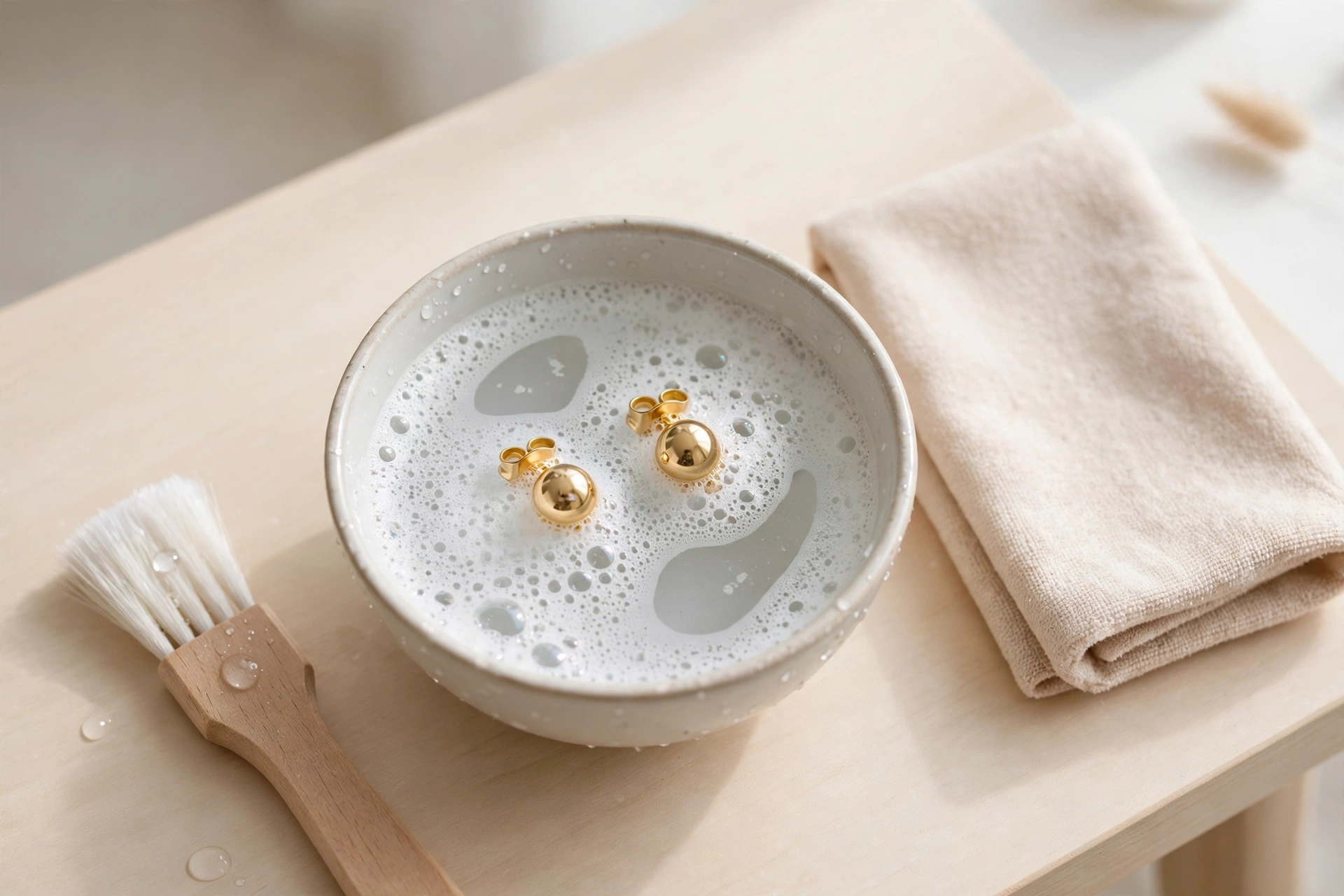
The basic soap-and-water method
This is the safest starting point for almost every type of earring, and it is the only method you need for regular cleaning.
- Mix a few drops of mild dish soap into a small bowl of warm water.
- Soak the earrings for 5 to 20 minutes, depending on how dirty they are.
- Brush gently with a soft toothbrush, reaching into crevices and around the backs and posts — the parts that touch your skin collect the most buildup.
- Rinse thoroughly under clean water and dry completely with a lint-free cloth. Moisture left on metal speeds up tarnishing, so do not put earrings away damp.
For day-to-day care, this method once a month is a good routine for earrings you wear often. If you wear the same pair daily, wiping the posts with an alcohol swab before each wear helps keep buildup and irritation down.
Cleaning by material
Gold. Plain gold earrings handle soap and water well. For extra shine, a short soak in rubbing alcohol works for plain pieces, but avoid it if stones are glued in, because alcohol can dissolve the adhesive. Dry gold thoroughly before storing it.
Silver. Silver tarnishes when it reacts with air and sulphur compounds, so it needs a little more attention. Soap and water remove everyday grime, but for tarnish, the baking soda method works well: line a glass dish with aluminium foil, place the earrings on it, sprinkle baking soda over them, and pour over just enough hot water to cover them. After a few minutes, brush gently, rinse, and dry. Use this only for solid silver, not for silver-plated or glued pieces.
Diamonds. Diamonds are hard, so they tolerate a longer soak and a firmer brush than most stones. Soak in soapy water for about 30 minutes, brush with a soft toothbrush, rinse, and dry with a lint-free cloth. This is also a good moment to check the setting, since a loose diamond is easier to spot when it is clean.
Pearls. Pearls are the exception to almost every rule. They are soft, porous, and easily damaged by soaking, chemicals, and heat. Never soak pearl earrings, and never use hydrogen peroxide or jewellery cleaner on them. Simply wipe them with a soft, damp cloth after wearing, then pat dry and leave them out for about 30 minutes before putting them away. That is all they need.
Costume and plated jewellery. Cheap metals and plating are the most fragile of all. Soap and water only, with a short soak and a gentle wipe — no baking soda method, no alcohol, no ultrasonic cleaner. Plating wears off with harsh treatment, and once it is gone, it cannot be cleaned back.
Gemstones other than diamonds. Many coloured stones are softer or more porous than diamonds, and some, like emeralds and opals, are easily damaged by heat, chemicals, or ultrasonic cleaning. When in doubt, stick to soap and water and a soft cloth, and ask a jeweller before trying anything stronger.
Cleaning the parts people forget
The fronts of earrings get all the attention, but the backs, posts, and hooks are the parts that touch your skin, and they collect the most residue. When you soak and brush, spend extra time on these parts. For studs, remove the backs and clean them separately. For hooks, wipe the full length of the wire. This is also the part of cleaning that protects your ears: dead skin and product buildup around a post is a common cause of itching and redness, and if irritation persists, our guide on how to reduce redness on face covers the same gentle-care principles for sensitive skin.
Sensitive ears and infection warning signs
If you have sensitive ears, choose the mildest method — soap and water or saline — and rinse thoroughly, since leftover cleaner can irritate skin on its own. Hypoallergenic metals such as surgical steel, titanium, or solid gold are less likely to cause reactions than nickel-containing costume metals.
Stop and seek advice if a piercing becomes increasingly painful, swollen, hot, or starts producing discharge, or if you develop a fever. Those can be signs of infection, and cleaning alone may not be enough. Do not remove a new piercing’s earring if infection is suspected without professional advice, since the hole can close over an infection.
Storage that keeps earrings clean longer
How you store earrings affects how often they need cleaning. Keep pairs together in a closed box or pouch, away from humidity and direct sunlight. Silver benefits from being kept in a sealed bag, which slows tarnishing. Do not pile earrings together in a drawer, where they scratch each other and tangle. And clean earrings before storing them for a long time, rather than putting dirty ones away to tarnish further.
Our broader guide on how to clean jewelry covers necklaces, rings, and bracelets with the same material-first approach, which is useful if you are cleaning a whole collection at once. The principle is the same throughout: identify the material, use the gentlest method that works, dry completely, and store properly. Done that way, a ten-minute clean once a month keeps earrings bright and comfortable to wear.
Frequently asked questions
How often should I clean my earrings?
About once a month for earrings you wear regularly, and a quick wipe of the posts before each wear if you wear the same pair daily.
Can I use hydrogen peroxide on earrings?
It is safe for plain gold and silver, and it disinfects well, but never use it on pearls or delicate gemstones, and avoid it on glued or plated pieces.
What is the safest cleaner for all earrings?
Warm water with a few drops of mild dish soap. It works for almost every material and is the right starting point before trying anything stronger.
Can I clean earrings with a new piercing?
Do not remove new earrings to clean them. Keep them in for at least six weeks and clean around the piercing with saline or gentle soap and water as your piercer advised.
Why do my earrings smell?
Buildup of skin oils, dead skin, and bacteria on the posts and backs, especially on studs worn for a long time without removal. A soap-and-water clean of the full earring, including backs, usually fixes it.