
A mouse in the house is more than an unpleasant surprise. Mice chew through packaging, wiring and insulation, leave droppings where food is stored, and breed quickly once they settle in. The good news is that most mouse problems can be solved at home — but only if the steps are done in the right order. Trapping without sealing brings new mice in. Sealing before trapping locks mice inside. Doing both, plus removing what attracted them, is what makes the result last.
First, confirm you have mice
Before you buy anything, check the signs. Small, dark, rice-shaped droppings near food cupboards, under sinks or along skirting boards are the clearest clue. You may also notice gnaw marks on packaging, shredded paper or fabric used for nesting, a musty smell in enclosed spaces, or faint scratching sounds at night when the house is quiet. Finding droppings in more than one room, or hearing scratching inside walls, usually means the problem is bigger than a single mouse.
Step 1: Trap the mice already inside
Start with trapping, not sealing. Use snap traps, which are inexpensive, widely available and recommended by many health departments for mice inside a home. Place several traps, not just one or two — a few feet apart in each active area works far better than a single trap in the middle of a room.
Mice travel along edges, so set each trap perpendicular to the wall with the bait end touching it. Good spots include behind the cooker and fridge, under sinks, inside cupboards where droppings were found, and along garage walls. Bait lightly: a small smear of peanut butter, or peanut butter mixed with a little oatmeal, is usually enough. A large lump of bait lets a mouse eat without triggering the trap.
Check traps every morning, dispose of caught mice promptly with gloves, and keep trapping until you have gone a week or more without a catch. That waiting period matters — stopping after the first empty night is one of the most common reasons a problem seems to return.
Step 2: Seal entry points — but in the right order
A mouse can squeeze through a gap about the width of a pencil, so sealing takes patience. Work from the outside in, and leave interior gaps open until trapping has finished. If you seal the inside first, mice trapped indoors may die in wall cavities or chew a new way out.
Outside, check where pipes and cables enter the house, gaps around doors and windows, vents, garage doors and the foundation. Pack small holes with steel wool and seal over it with caulk or cement — mice can chew through foam or caulk alone. Cover larger openings with hardware cloth or sheet metal, and fit door sweeps to exterior doors. Only once traps have stayed empty for several nights should you seal the remaining interior gaps, such as those behind the cooker or under sinks.
Step 3: Remove food, water and shelter
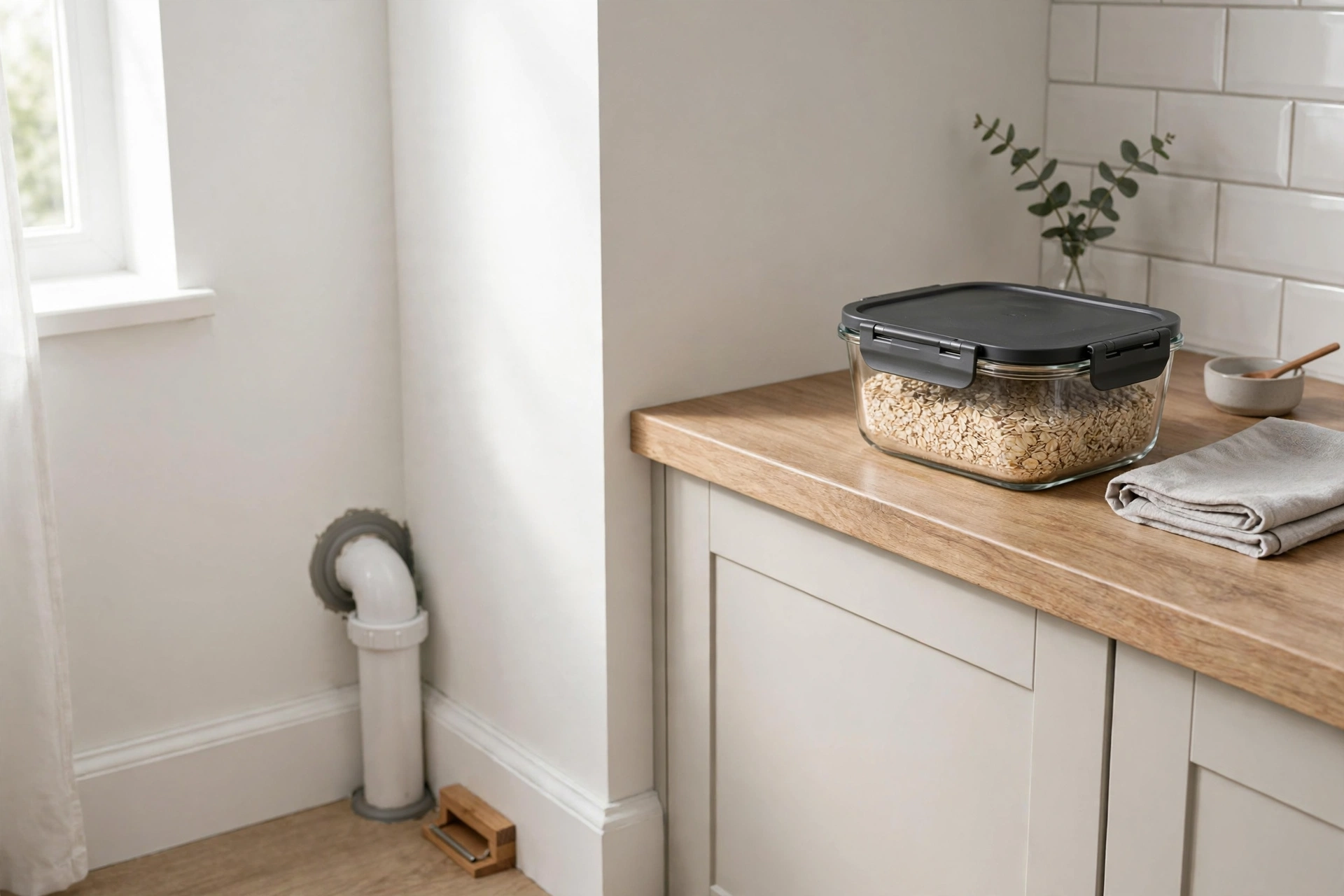
Trapping and sealing fail if the house still offers an easy living. Store dry food, pet food and bird seed in sealed, hard containers rather than bags or cardboard boxes. Wipe up crumbs and spills straight away, empty bins regularly, and do not leave pet food out overnight. Fix dripping taps and wipe up standing water, since mice need water as well as food.
Outside the house, the same logic applies. Trim shrubs and vegetation away from walls, keep firewood and stored items raised off the ground, and clear debris piles that give mice somewhere to hide near the building. A tidy perimeter makes the house a much less inviting target.
What about natural repellents and poison?
Peppermint oil, ultrasonic devices and similar repellents are popular, but on their own they rarely solve an established problem. A strong scent may move mice to another room, but it does not remove the colony or close the gaps they use. Treat repellents as an extra step, not a replacement for trapping and sealing.
Poison baits carry real risks, especially in homes with children or pets, and a poisoned mouse can die inside a wall where it cannot be removed. If you use any poison product, read the whole label first, use a lockable bait box, keep it completely out of reach of children and pets, and search for and bag dead mice daily. Many homeowners prefer to leave poison to a professional for exactly these reasons.
Glue traps deserve a mention too: they are slower and less humane than snap traps, and they work poorly in dusty areas. Snap traps, checked daily, are the kinder and more reliable home option.
Cleaning up safely
Mouse droppings can carry germs, so clean them carefully. Ventilate the area, wear gloves, and avoid sweeping or vacuuming dry droppings, which can stir dust into the air. Dampen droppings with a disinfectant spray, wipe them up with paper towels, bag them, and wash your hands thoroughly afterwards. Wash any food packaging that may have been in contact with droppings, and throw away food that shows gnaw marks.
When to call a professional
Call a pest control professional if you are still catching mice after two weeks of steady trapping, if droppings appear in several rooms, if you hear scratching inside walls or ceilings, or if you find a nest. Professionals can find entry points at height or in roof spaces that are hard to check safely from home, and they can advise on treatments for larger infestations.
FAQs
How long does it take to get rid of mice?
With enough traps in the right places and food sources removed, most of the catching happens in the first few nights. Keep checking until traps stay empty for a week or more, then seal the remaining gaps.
Can mice come back after they are gone?
Yes, if gaps reopen or food becomes accessible again. Periodic checks of door sweeps, vents and pipe entries, especially after building work or seasonal changes, keep the barriers intact.
Are mice dangerous?
Beyond damage to food, wiring and insulation, mouse droppings can spread germs, which is why safe cleanup and keeping them out of food storage areas matters.
The bottom line
Getting rid of mice permanently comes down to three jobs done in order: trap the mice already inside, seal the building so new ones cannot enter, and remove the food, water and shelter that attracted them. Skip any one of the three and the problem tends to come back. Do all three, give trapping time to finish, and your home should stay mouse-free.
Related reading on this site
Related reading: dealing with other household pests, signs of a pest problem, small pests in the kitchen, and cleaning routines that help.