
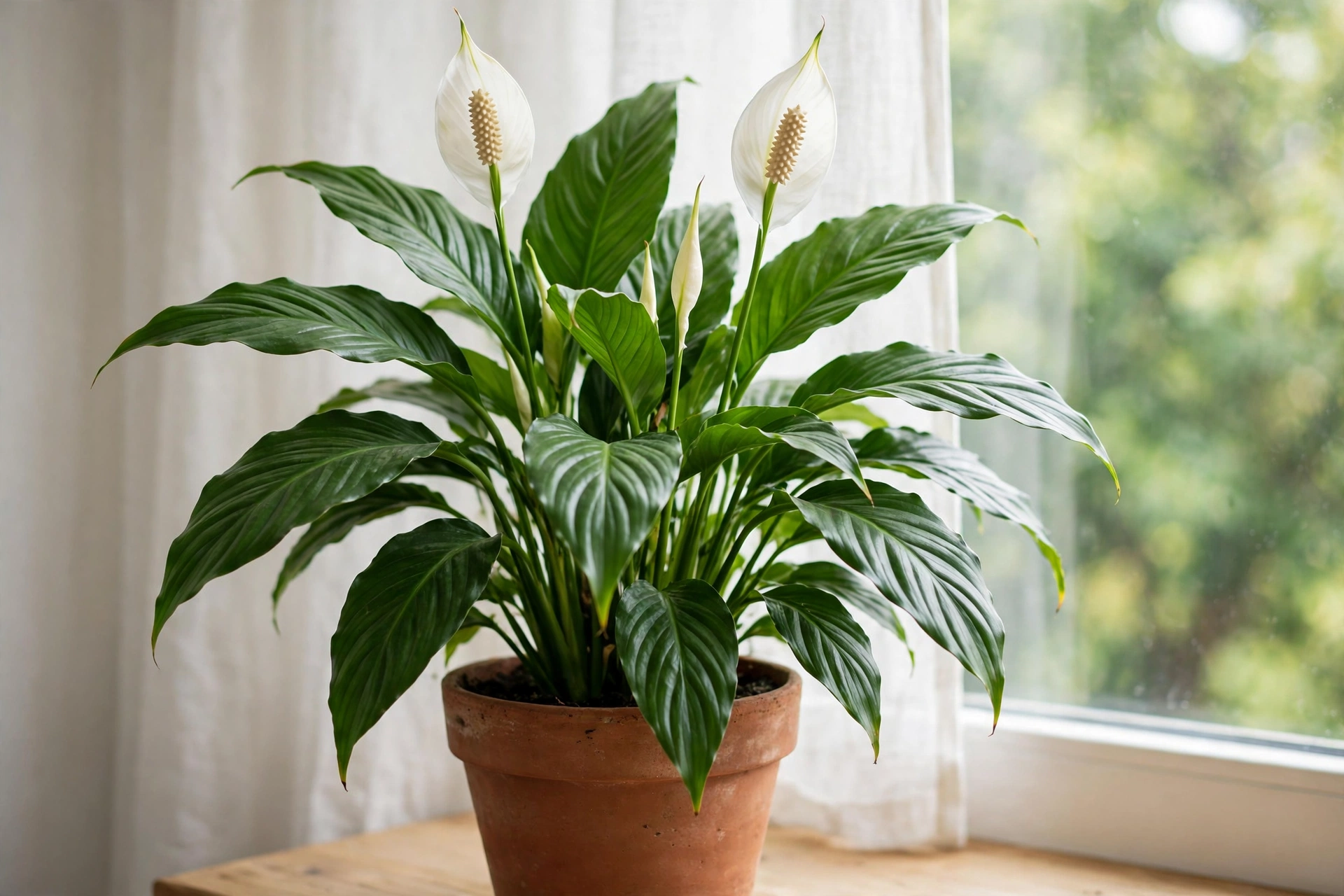
Peace lilies are famously forgiving, but a drooping plant can cause confusion, and watering it can make things worse. Most struggling peace lilies recover, often within a few weeks, once the actual cause is fixed. Diagnose before treating, because drooping from thirst and drooping from root rot look similar but need opposite responses.
Diagnose first: what are the leaves telling you?
Use the table below before watering, repotting or moving anything.
| Symptom | Most likely cause | First check |
|---|---|---|
| Drooping, dry soil | Underwatering or low humidity | Push a finger 1–2 inches into soil. |
| Drooping, wet or soggy soil | Overwatering or poor drainage | Drainage holes and whether water pools in saucer. |
| Yellow leaves, especially lower ones | Overwatering, or natural ageing of one or two leaves | Soil moisture and how many leaves affected. |
| Brown leaf tips or edges | Low humidity, chemicals in tap water, or fertiliser build-up | Humidity, water source and recent feeding. |
| No flowers for months | Too little light or lack of nutrients | Whether plant gets bright, indirect light. |
| Mushy stems, foul-smelling soil | Root rot from prolonged overwatering | Roots: healthy firm and pale, rotted dark and mushy. |
Only one or two older leaves yellowing occasionally while the rest of the plant is healthy is usually normal ageing: trim them and carry on. Widespread yellowing, drooping that does not respond to water, or mushy stems need action.
Step 1: Fix the water, not the watering schedule
Prefer consistently moist soil, not wet soil and not a fixed weekly drink. Water only when the top inch or two feels dry, water thoroughly until it drains from the bottom, and empty the saucer so the pot never sits in water. If the soil is already soggy, stop watering and let it dry before watering again. Needs change with light, temperature and season, so checking the soil beats checking the calendar.
Step 2: Check the roots if overwatering is suspected
If the plant stays droopy in wet soil, or the soil smells sour, gently slide the plant from its pot and look at the roots. Healthy roots are firm and white or pale tan. Trim dark, mushy roots with clean, sharp scissors and remove slimy soil. Repot into a fresh, well-draining mix, ideally peat-based with perlite or orchid bark, in a pot with drainage holes only slightly larger than the root ball. An oversized pot holds excess soil that stays wet too long and invites rot again.
Step 3: Get the light right
Peace lilies need bright, indirect light: near an east- or north-facing window, or behind a sheer curtain at a brighter window. Direct sun scorches the leaves, while a dark corner gives weak growth and no flowers. If the plant has not bloomed in months but is otherwise healthy, improve the light first. Rotate the plant occasionally for even growth.
Step 4: Raise humidity and stabilise the environment
As tropical plants, peace lilies prefer humidity around 50–60% and steady temperatures roughly 18°C to 27°C. Dry air from heating or air conditioning causes brown tips, and cold drafts or hot air vents stress the plant. A pebble tray with water under the pot (with the pot itself above the water), grouping plants together, or a nearby humidifier can help. Keep the plant away from radiators, exterior doors and draughty windows.
Step 5: Feed lightly, and only when the plant is recovering
Do not fertilise a stressed plant straight away. Wait until there is new growth, then feed lightly during the growing season, roughly every six weeks with a diluted liquid fertiliser, and hold off in winter when growth slows. Overfeeding causes salt build-up that burns leaf tips and is easily mistaken for underwatering. If fertiliser burn is suspected, flush the soil with plain water and skip feeding until the plant has recovered.
What not to do
Do not water a drooping plant without checking the soil first, since half of all drooping peace lilies are already too wet. Do not repot into a much larger pot, do not prune every leaf at once, and do not move the plant between extreme spots. Recovery needs stability: make one correction at a time, then be patient.
How long does recovery take?
A thirsty plant often perks up within hours of good watering. Recovery from overwatering or repotting usually brings new growth within two to four weeks, with fuller recovery taking up to six weeks. Judge recovery by new leaves and firm stems, not by old damaged leaves, which rarely return to perfect condition. Trim yellowed or brown leaves at the base so the plant directs energy to new growth, and resist the urge to keep changing conditions.
Sources: Gardener Report on reviving a drooping peace lily.
FAQs
Q: Can a peace lily recover from root rot? A: Yes, if some healthy roots remain: trim the rot, repot in fresh mix, and avoid overwatering while it regrows.
Q: Why is my peace lily drooping even after watering? A: The soil may already be waterlogged, the roots damaged, or low humidity or poor drainage keeping it stressed; check the soil, drainage and roots before watering again.
Q: Should I mist my peace lily? A: Misting raises humidity briefly, but a pebble tray or humidifier is more reliable, and misting alone will not fix overwatering or poor light.
Q: Why does my peace lily have brown leaf tips? A: Usually low humidity, tap-water chemicals, or fertiliser build-up; try filtered or rainwater, raise humidity, and ease off feeding.