
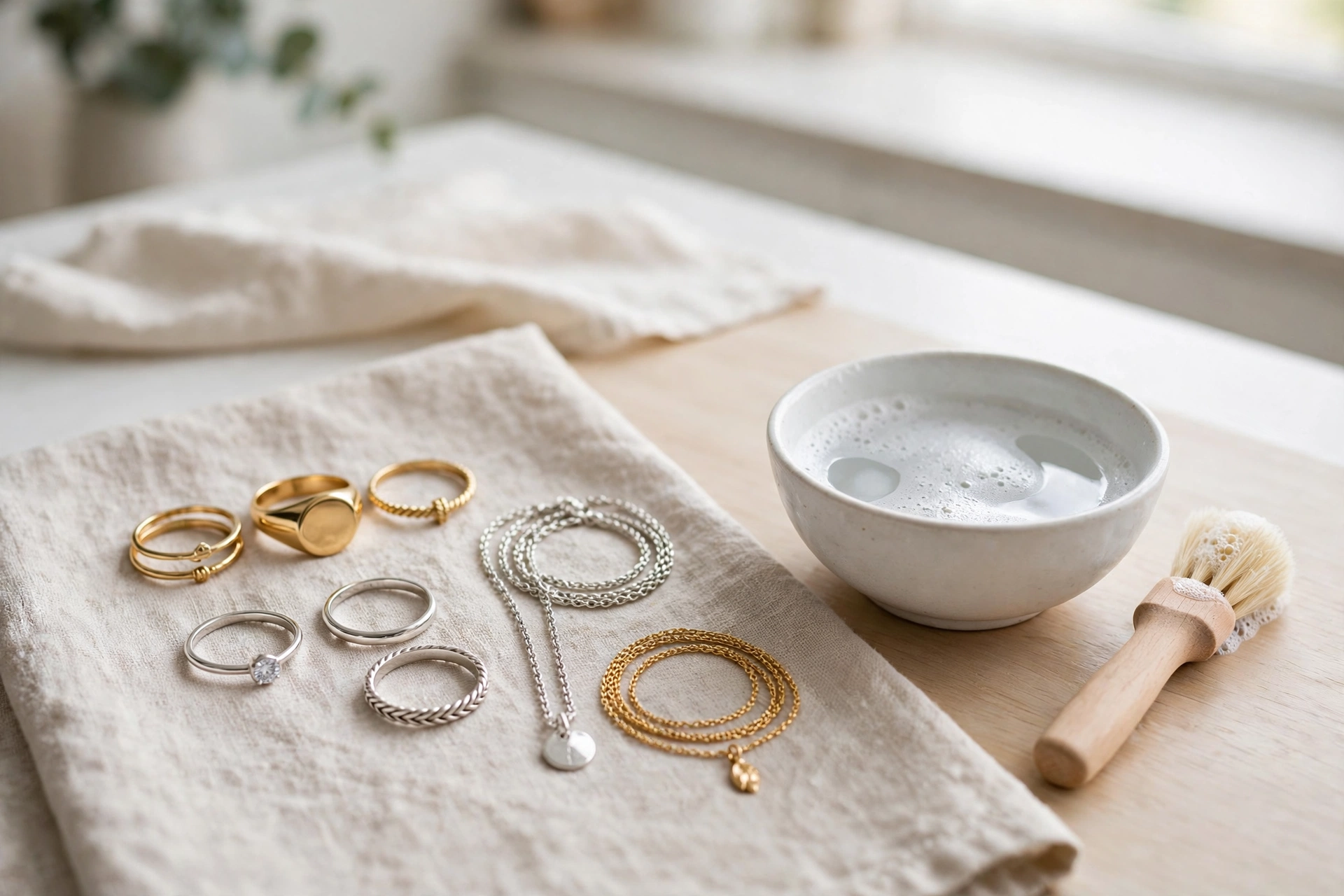
Jewelry dulls slowly, and most of the dullness is not damage. It is skin oil, lotion, soap residue, and everyday dust settling into settings and links. The good news is that most pieces can be brought back to life at home with nothing more specialised than warm water, mild soap, and a soft brush — provided you first check what the piece is made of. Cleaning the wrong way is where the damage happens, so identification comes before water.
The short answer: For most solid gold, platinum, silver, and diamond pieces, a short soak in lukewarm water with a few drops of mild dish soap, a gentle brush, a rinse, and a soft dry is safe and effective. Plated pieces, pearls, porous stones, and glued costume jewelry need a much lighter touch: a damp cloth only, no soaking, no brushing, no ultrasonic cleaner. When a stone is loose, a clasp is bent, or you are unsure what a piece is, a jeweler’s check comes before any home method.
Start by identifying the piece
Before you clean anything, look at it properly. Check for hallmarks or stamps on rings and clasps, and think about what you know: is it solid gold or gold-plated? Is the stone a hard diamond or a soft, porous stone such as opal, turquoise, or malachite? Is it a pearl strand, or costume jewelry with glued stones? The answers decide the method, because a method that is perfect for a diamond ring can strip plating, cloud a pearl, or loosen a glued stone.
Also check the condition. Wiggle each stone gently. If anything moves, if a prong looks bent, or if a clasp no longer closes firmly, do not clean it at home yet. Cleaning a piece with a loose stone risks losing the stone down the drain, and brushing a weakened setting can finish the job. Get it checked and repaired first; cleaning can wait a week.
The gentle soap method (for durable pieces)
This is the safest all-round method for solid gold, platinum, sterling silver, and hard gemstones such as diamonds, sapphires, and rubies. First, plug the sink or work over a bowl. This one habit prevents the most common jewelry accident of all: a ring slipping down the drain. Fill a small bowl with lukewarm water — never hot, because sudden heat can stress some stones — and add a few drops of mild, plain dish soap. Avoid soaps with moisturisers, strong fragrance, or antibacterial agents. Soak the piece for about 15 to 20 minutes. This loosens oil and grime so you do not need to scrub hard. Then take a very soft toothbrush, ideally a baby toothbrush, and brush gently, paying attention to the back of stones and inside settings, where most buildup hides. Rinse under clean lukewarm running water, again over a bowl or plugged sink, and pat completely dry with a soft, lint-free cloth. Let the piece air for a few minutes before putting it away, so no moisture is trapped in a box. For often-worn pieces, this routine once a month is plenty. Cleaning more often does not make jewelry shinier; it only adds wear.
Silver tarnish: the foil method
Silver tarnishes differently. It darkens as it reacts with sulphur in the air, and soap alone sometimes leaves a grey film. For solid silver pieces without soft stones or plating, the foil method helps. Line a bowl with aluminium foil, shiny side up, place the silver so it touches the foil, sprinkle baking soda over it, and pour hot — not boiling — water over the top. After a few minutes, lift the pieces out with tongs, rinse, and dry with a soft cloth.
Two warnings matter here. First, this method is for solid silver only: it can damage plated pieces, oxidised finishes that are meant to look dark, and soft or porous stones. Second, keep the time short. A few minutes is enough; leaving pieces for much longer adds nothing and increases the risk to finishes. If the piece has any stone you cannot identify, skip this method and use the soap method or a jeweler.
Pieces that need a lighter touch
Gold-plated jewelry should only ever meet a damp, soft cloth with a little mild soap, then a dry cloth. No soaking, no brushing, no foil method: plating is a thin layer, and every soak and scrub thins it further. The same applies to gold-filled pieces, though they tolerate slightly more handling; when in doubt, treat them as plated.
Pearls are organic and soft. Never soak them, never use soap baths, and never put them in an ultrasonic cleaner. Wipe each pearl with a soft, slightly damp cloth after wearing, and lay the strand flat to dry. Perfume, hairspray, and lotion should go on before pearls, not after, because chemicals dull their surface over time.
Porous stones — opal, turquoise, malachite, lapis, and similar — should be cleaned with a soft, dry cloth only. Water, oils, and sudden temperature changes can stain or crack them. If a porous stone looks dull, a jeweler who knows the stone is the right next step, not a home remedy.
Costume jewelry is the most fragile category of all. Stones are often glued, metals are often plated, and finishes are thin. A damp cloth is the limit. Soaking weakens glue, and a stone that survives the soak may fall out later, in the street rather than in the bowl.
What never to use
Toothpaste is the most repeated bad advice in jewelry care. It is abrasive by design, and it scratches soft metals and plating. Bleach, ammonia-based household cleaners, and harsh bathroom cleaners can discolour metals and damage stones. Boiling water risks thermal shock for some stones. Paper towels feel soft but can scratch polished metal; use a microfibre or jewelry cloth instead. Ultrasonic cleaners are useful in a jeweler’s hands for the right pieces, but at home they can shake loose stones out of weakened settings, and they are unsafe for pearls, porous stones, and glued pieces.
Storage: keeping it clean longer
Cleaning lasts longer when storage is right. Keep pieces separate — in individual pouches or compartments — so harder stones do not scratch softer metals. Silver benefits from an anti-tarnish pouch or strip. Keep jewelry away from bathrooms, where humidity and hair products accelerate tarnish, and put it on last when dressing, after perfume and lotion. A quick wipe with a soft cloth after wearing removes the day’s oil before it hardens into film.
When to see a jeweler
Home cleaning maintains jewelry; it does not repair it. See a jeweler if a stone is loose, a prong is bent or worn, a clasp fails, white gold has yellowed noticeably, or a piece has deep scratches. A yearly inspection for often-worn rings is sensible: prongs wear down, and catching a thin prong early costs far less than replacing a lost stone. Most jewelers also offer a professional clean, including ultrasonic and steam cleaning for suitable pieces, which reaches grime that a home brush cannot.
FAQs
Can I clean all my jewelry the same way? No. Solid gold, platinum, and diamonds tolerate the soap method well, but plated pieces, pearls, porous stones, and costume jewelry need only a damp or dry cloth. Identify the piece first.
Is toothpaste safe for cleaning jewelry? No. Toothpaste is abrasive and can scratch metals and plating. Mild dish soap and water is safer and more effective for home cleaning.
How often should I clean my jewelry? Once a month is enough for often-worn durable pieces. Over-cleaning adds wear without adding shine, and delicate pieces should be wiped, not soaked, after wearing.
Why does my silver keep tarnishing? Silver reacts with sulphur compounds in the air, so tarnish returns even in a drawer. Anti-tarnish storage slows it, and the foil method removes it from solid silver — but it will return, and that is normal.
Bottom line
Clean jewelry starts with identification, not with a product. Solid, durable pieces take a gentle soap soak and a soft brush; plated, pearl, porous, and costume pieces take a cloth and nothing stronger. Avoid toothpaste, bleach, boiling water, and ultrasonic cleaners at home, store pieces separately, and let a jeweler handle anything loose, bent, or unknown. Done that way, a ten-minute routine keeps jewelry looking the way it did when it was new, without risking the piece itself.
Related reading: how to clean a carpet; how to remove nail polish without remover; Beauty & Personal Care
Sources: Copeland Jewelers guide to keeping jewelry clean; All Cotton and Linen guide to cleaning jewelry at home