
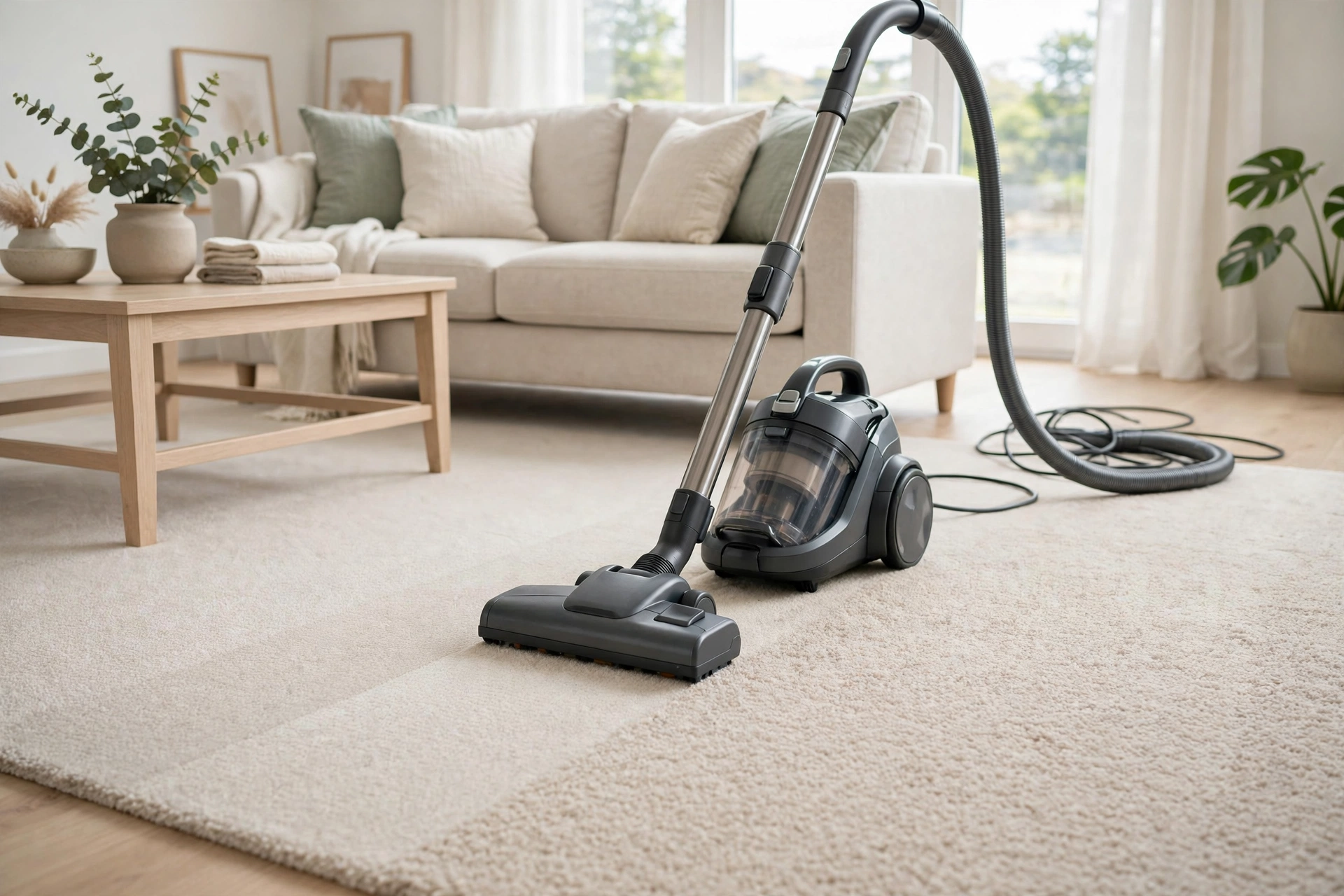
A clean carpet starts with three habits: vacuum often, deal with spills straight away, and deep clean before dirt gets ground in. You do not need expensive equipment for everyday care. A good vacuum, a few clean cloths, and a mild cleaning solution will handle most carpets well.
The golden rule is simple. Work gently, use as little moisture as you need, and always test a new solution in a hidden corner first. Carpets look better and last longer when they are cleaned regularly rather than scrubbed hard once in a while.
What You Will Need
- A vacuum cleaner with a brush head and a crevice tool
- Clean white cloths or paper towels
- A soft-bristle brush
- Mild liquid dish soap
- White vinegar
- Baking soda
- A spray bottle
- A fan, if you want faster drying
Avoid coloured cloths for stain work. Dye can transfer to a damp carpet and create a second stain.
Know Your Carpet Type First
Different fibres react differently to water, heat, and cleaning products. Checking the care label, or asking the supplier if you are unsure, saves you from shrinking, fading, or stiffening the pile.
| Carpet type | How to treat it |
|---|---|
| Nylon and polyester (synthetic) | The most forgiving. Tolerates regular vacuuming, mild soap solutions, and machine cleaning. |
| Wool | Clean gently. Use cool to lukewarm water, mild detergent made for wool, and never soak it. |
| Cotton and blends | Handle like wool: gentle cleaning, limited moisture, and thorough drying. |
| Silk, sisal, and jute | Keep as dry as possible. Vacuum and spot clean lightly, and get professional help for deep cleaning. |
| Shag and high-pile | Vacuum slowly without a beater bar if the pile pulls easily, and allow extra drying time. |
If you have a valuable, antique, or hand-knotted rug, skip home deep cleaning altogether and ask a specialist. One wrong product can do more damage than the dirt did.
Step 1: Vacuum Properly
Vacuuming is not just a quick once-over. Slow, overlapping passes lift far more dirt than fast strokes.
- Pick up small objects and move light furniture where you can.
- Start at the far side of the room and work towards the door.
- Go slowly, especially in hallways, in front of sofas, and by doorways where foot traffic is heaviest.
- Pass over high-traffic areas twice, in different directions if possible.
- Use the crevice tool along skirting boards, edges, and around furniture legs.
- Empty the vacuum bag or bin when it is about two-thirds full, so suction stays strong.
For homes with pets or children, vacuuming high-traffic areas several times a week makes the biggest visible difference. It also means deep cleaning is easier later, because less grit is sitting deep in the pile.
Step 2: Spot Clean Spills Straight Away
Speed matters more than strength. A fresh spill is far easier to lift than a dried stain.
- Blot, never rub. Press a clean cloth onto the spill and lift. Repeat with a fresh section of cloth until no more liquid transfers.
- For a solid spill, lift away what you can with a spoon or blunt knife, working from the outside in.
- Mix a gentle solution: a small drop of mild dish soap in a cup of lukewarm water.
- Dampen a clean cloth with the solution, not the carpet itself, and blot the stain from the outside towards the centre.
- Rinse by blotting with a cloth dampened with plain water, so no soap residue is left behind.
- Press dry towels onto the area to absorb moisture, then let it air dry.
Soap residue is a common hidden problem. It feels clean at first, but sticky residue attracts new dirt, so the spot can look dirty again within days. Rinsing and blotting properly prevents that cycle.
For a specific stain such as red wine, the same blot-first principle applies, with a few extra steps. Our guide to removing wine stains from clothes, carpet, and upholstery covers that in detail.
Step 3: Freshen the Carpet and Remove Odours
Baking soda is a simple, low-risk way to freshen a carpet between deep cleans.
- Vacuum the carpet first.
- Sprinkle baking soda lightly and evenly over the area.
- Leave it for at least 30 minutes, or overnight for a stronger odour.
- Vacuum slowly and thoroughly to remove all the powder.
This works for everyday smells from cooking, pets, and closed rooms. It will not fix a stain, and it will not help if the carpet is damp underneath. If an odour returns quickly after cleaning, check for a damp patch, a pet accident that soaked through, or a spill under furniture.
Step 4: Deep Clean in Sections
A deep clean is worth doing when vacuuming and spot cleaning no longer restore the carpet, or when high-traffic areas look dull and flat. You can hire a carpet cleaning machine or book a professional service. If you clean it yourself, work in small sections so nothing stays wet for too long.
- Vacuum thoroughly first, including edges and under movable furniture.
- Pre-treat visible stains using the spot-cleaning steps above.
- Prepare your machine and solution exactly as the manufacturer directs. Do not add extra detergent, thinking it will clean better — excess soap leaves residue.
- Clean one section at a time, moving slowly and overlapping slightly.
- Make extra slow extraction passes to pull out as much water as possible.
- Open windows, switch on fans, and keep foot traffic off the carpet until it is fully dry.
Drying matters as much as cleaning. A carpet that stays damp can develop a musty smell, and the backing can suffer. In a well-ventilated room, drying often takes several hours. Thick pile, cool weather, and poor airflow all extend that time, so plan a deep clean for a day when you can leave windows open.
What to Avoid
- Soaking the carpet. Too much water can reach the backing and underlay, and it takes far too long to dry.
- Rubbing stains. Rubbing spreads the stain, pushes it deeper, and frays the fibres.
- Using bleach on a coloured carpet. Bleach can strip colour and weaken fibres. Only use products made for your carpet type.
- Skipping the patch test. A solution that is fine on one carpet can fade or stiffen another.
- Strong scented sprays as a substitute for cleaning. They mask odour for a day and leave residue behind.
- Steam on delicate natural fibres. High heat and moisture can shrink wool, distort silk, and damage plant-fibre rugs.
A Simple Maintenance Routine
| How often | What to do |
|---|---|
| Daily | Deal with spills at once, and shake out doormats. |
| Several times a week | Vacuum high-traffic areas and rooms used most. |
| Weekly | Vacuum the whole carpeted area, including edges and under light furniture. |
| Every few months | Freshen with baking soda and check for stains you may have missed. |
| When it looks dull | Deep clean, or book a professional clean for delicate or heavily soiled carpets. |
Doormats at entrances, a no-shoes rule indoors, and moving furniture occasionally so wear is spread evenly will all reduce how often a deep clean is needed. Small habits protect a carpet far better than one aggressive clean a year.
When to Call a Professional
Call a professional if the stain has not lifted after two gentle attempts, if the carpet is valuable or delicate, if there is a large area of water damage, or if an odour persists after the carpet is fully dry. A professional can also help when pet accidents have soaked through to the underlay, because surface cleaning alone will not reach the source.
FAQs
How often should I vacuum my carpet?
Vacuum high-traffic areas several times a week and the whole carpet at least once a week. Homes with pets, children, or allergies benefit from more frequent vacuuming, because dirt and hair build up quickly in the pile.
Can I clean a carpet without a machine?
Yes. For everyday care, vacuuming, spot cleaning with a mild soap solution, and baking soda for odour are enough. A machine is mainly useful for a full deep clean, when dirt is embedded across a large area.
Is vinegar safe for carpets?
A diluted white vinegar solution is widely used for spot cleaning, but always patch test first. Avoid vinegar on stone-adjacent trims that it could mark, and never mix vinegar with bleach or other cleaners.
How long does a carpet take to dry after deep cleaning?
It depends on pile thickness, airflow, and weather, but several hours is normal. Fans and open windows help. Do not replace heavy furniture until the carpet feels dry all the way through, not just on the surface.
Can baking soda damage my carpet?
Baking soda on its own is gentle, but it must be vacuumed out fully. Leftover powder can build up in the pile and dull the carpet over time, so vacuum slowly and thoroughly after use.
Should I shampoo or steam clean my carpet?
Both are deep-cleaning methods. Shampooing uses a cleaning solution worked into the pile, while steam cleaning, also called hot water extraction, sprays hot water and solution and then extracts it. For most synthetic carpets either can work. For wool and delicate fibres, check the care label and consider a professional low-moisture clean instead.
Conclusion
Cleaning a carpet well is mostly about routine, not effort. Vacuum slowly and often, blot spills before they set, use gentle solutions in small amounts, and let the carpet dry fully after a deep clean. Match the method to your carpet type, patch test anything new, and leave delicate or valuable pieces to a professional. Done that way, a carpet stays fresh, keeps its colour, and feels good underfoot for years.
Sources: The Spruce