
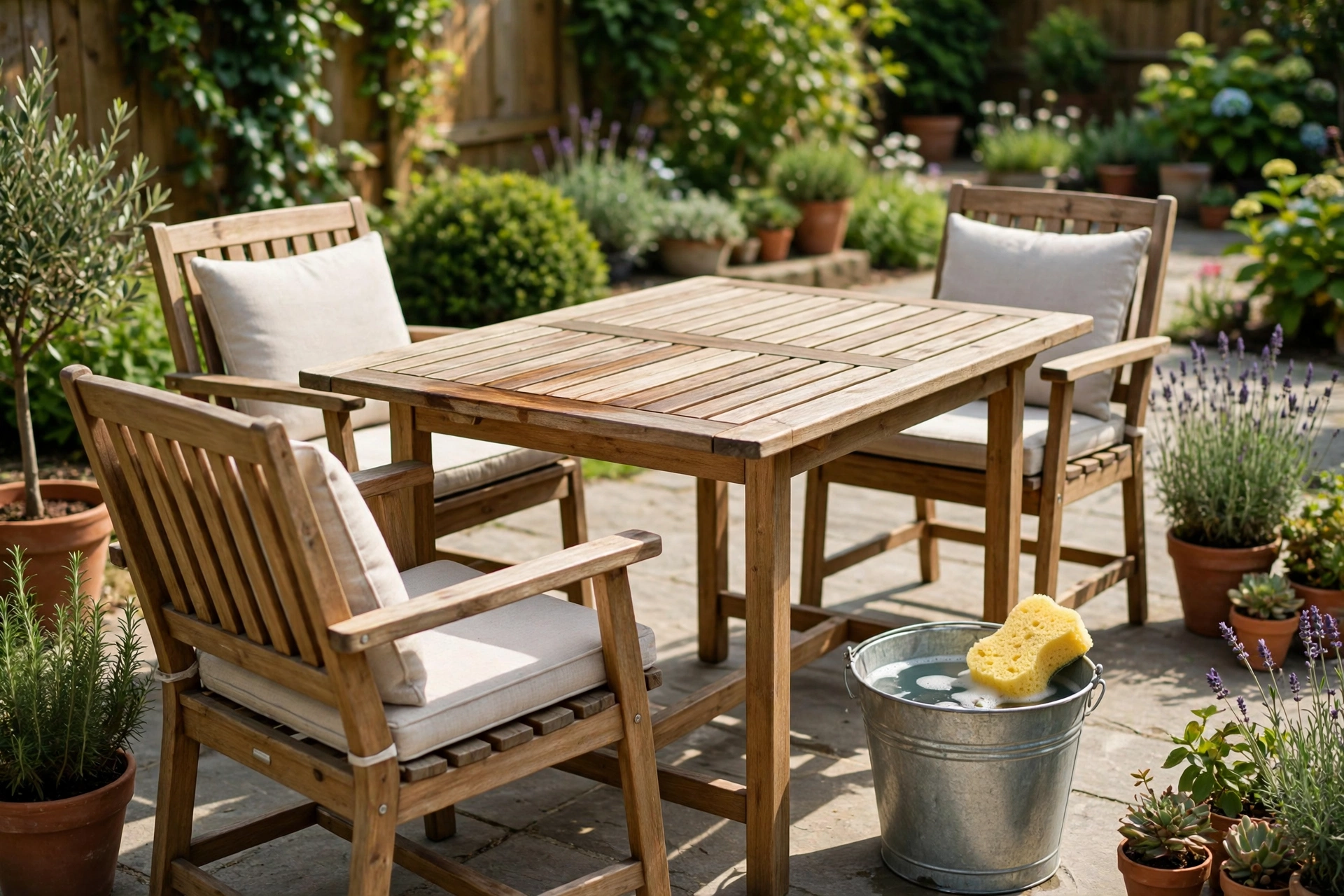
Outdoor furniture takes a beating. Sun fades it, rain leaves marks, pollen settles into every joint, and cushions soak up whatever the weather brings. A regular clean keeps it looking good and helps it last, and most pieces need nothing fancier than warm water, mild soap, and a soft brush.
Start with the maker’s care instructions if you have them. The steps below work for most common materials, but a painted, oiled, or coated piece may need gentler treatment than a plain one.
Before you start
Remove cushions, covers, and anything stored on the furniture. Brush or hose off loose dirt, leaves, and cobwebs first — scrubbing grit into a surface can scratch it. Work from the top down so dirty water does not run over areas you have already cleaned. Test any cleaner on a hidden spot before using it all over, especially on wood, painted metal, and fabric.
The basic clean that suits most pieces
For a general clean, mix warm water with a small amount of mild dish soap. Scrub with a soft brush or sponge, working into joints and textured areas where dirt collects. Rinse with clean water until no soap remains, then let the piece dry completely before using it or covering it. Trapped moisture under a cover can lead to mildew, so drying matters as much as washing.
Cleaning wood furniture
Wooden outdoor furniture, including teak, cedar, and eucalyptus, needs a gentle touch. Brush off loose dirt, wash with mild soap and water using a soft brush, and scrub along the grain rather than across it. Rinse well and let it air-dry.
Avoid pressure washing softwood and teak unless the maker recommends it, since a strong jet can gouge the surface and raise the grain. For mildew, a diluted vinegar solution left on the area for a few minutes before scrubbing can help, followed by a thorough rinse. Once the wood is dry, a coat of teak oil or a suitable outdoor wood sealant once a year helps protect it from sun and rain. Light sanding between seasons can remove grey, weathered surface layers, but go gently and follow the grain.
Cleaning metal and aluminium furniture
Aluminium does not rust, but it can develop a dull, chalky coating called oxidation. Wash it with mild soap and water and a soft cloth, and for light oxidation try a paste of baking soda and water, rubbed gently and rinsed off. Wrought iron and steel need more attention: check for rust first, brush off loose rust, clean the frame, and let it dry fully. Bare spots should be primed and repainted with a paint made for metal, following the product instructions, or the rust will come back.
Dry metal furniture after washing rather than leaving it wet, and store cast iron away from damp conditions where possible.
Cleaning plastic, resin, and PVC furniture
Plastic furniture is the easiest to clean. A hose-down or a wash with mild soap and water usually does it. For stubborn stains, make a paste of baking soda and a little water, apply it to the stain, scrub gently, and rinse. Avoid abrasive pads, which can scratch the surface and leave it looking dull. A UV protectant spray, applied once the furniture is clean and dry, can help slow sun fading.
Cleaning wicker and rattan furniture
Wicker traps dirt in its weave, so start by removing loose debris with a brush, a vacuum brush attachment, or a leaf blower on a gentle setting. Then wash with warm soapy water and a soft brush, rinse with a hose or clean water, and let it dry away from direct sun. Avoid soaking natural rattan for long periods, and mist it lightly now and then to stop it drying out and becoming brittle.
Cleaning cushions and fabric
Remove covers where you can and follow their care labels. For covers that cannot be removed, brush off loose dirt, spot-clean with mild soap and water, and rinse or blot away the soap. Let cushions dry fully, ideally in the sun and open air, before putting them back. Storing damp cushions is one of the quickest ways to get mildew.
For mould or mildew on fabric, a vinegar and water solution can help, but test it first on a hidden area and rinse well afterwards.
Dealing with stains, mould, and bird droppings
Tackle stains sooner rather than later — dried, set-in marks are harder to shift. Baking soda paste works well on many surface stains, while a diluted vinegar solution helps with mould and mildew on hard surfaces. Always rinse after treating a stain, and avoid strong chemical cleaners unless the material maker approves them. Bird droppings should be removed promptly, since they can stain and, on some finishes, damage the surface if left in the sun.
Should you use a pressure washer?
A pressure washer can speed up cleaning on tough surfaces such as concrete or bare metal, but it is risky on wood, wicker, painted surfaces, and fabric. If you use one, choose a low pressure setting, keep the nozzle moving, hold it at a distance from the surface, and test on a hidden area first. For most garden furniture, a brush and a hose give a better result with far less risk.
Keeping it clean for longer
A little routine care saves a big annual clean. Brush furniture down every few weeks in the season you use it, cover it or store it under shelter during long wet spells, and clean it before putting it away for winter. Clean furniture stored dry stays in better shape than dirty furniture left out, because dirt and moisture feed mould and staining over the off-season.
FAQs
How often should I clean outdoor furniture?
A quick brush-down every few weeks during the season you use it, plus a proper wash at the start of the season and before winter storage, is a good routine. Pieces under trees or near the sea may need cleaning more often.
Can I use dish soap on outdoor furniture?
Yes, mild dish soap mixed with warm water is a safe default for most materials. Avoid harsh chemicals, bleach, and strong solvents unless the furniture maker recommends them for that material.
How do I stop outdoor furniture going mouldy?
Keep it clean and dry. Rinse off soap fully, let pieces dry completely before covering or storing them, and avoid storing damp cushions. Good airflow around stored furniture helps too.
What is the best way to clean teak furniture?
Wash teak gently with mild soap and water, scrubbing along the grain, rinse well, and let it dry. Avoid pressure washing, and apply teak oil or sealant once a year if you want to keep its colour and protect it.
Related reading: cleaning a carpet indoors, reviving a peace lily, getting rid of fruit flies, Today’s Homeowner — How to Clean Outdoor Patio and Deck Furniture, HomeWorldDesign — How to Clean All Types of Outdoor Furniture.