
Washing a cutting board and disinfecting it are two different jobs, and confusing them is how cross-contamination happens. Washing removes visible food, grease, and much of the surface dirt. Disinfecting reduces the bacteria left behind, which matters most after raw meat, poultry, or seafood. You need both, in that order: disinfecting a dirty board does not work well, because food residue shields bacteria from the sanitiser.
The short answer is this: wash the board in hot, soapy water, rinse it, then flood it with a fresh bleach solution — one tablespoon of unscented liquid chlorine bleach per gallon of water — leave it for a few minutes, rinse, and air-dry. For everyday use, or for wood boards you want to treat gently, vinegar or 3% hydrogen peroxide are useful alternatives, used the same way: clean first, then treat, then rinse and dry.
Why separate boards matter
The simplest protection is not a stronger chemical but a second board. Use one board for raw meat, poultry, and seafood, and a different board for produce and ready-to-eat foods such as bread, cheese, and salad. That way, even if a board is not perfectly disinfected, raw juices never meet food that will not be cooked. Colour-coded boards help households keep the rule without thinking about it. If you only have one board, disinfect it between raw and ready-to-eat foods, and wash your hands and knife as well.
Step 1: Clean first, always
Scrape off food scraps, then wash the board in hot, soapy water, scrubbing into knife marks and grooves where food hides. Rinse with clean water. This step alone removes a large share of bacteria and all visible soil. Do not skip it and go straight to bleach: a board coated in chicken juice will not be properly disinfected by a quick spray, however strong the spray is.
Step 2: The bleach method (the standard)
Bleach is the most widely recommended home sanitiser for cutting boards, because it is cheap, effective, and food-contact safe when used correctly and rinsed. Make it fresh each time: mix one tablespoon of unscented liquid chlorine bleach into one gallon (about four litres) of cool water. Flood the surface, or submerge a small board, and keep it wet for two to five minutes. Rinse with clean water and air-dry, or pat dry with clean paper towels. Do not dry with a used dish towel, which can reintroduce bacteria. Use unscented bleach only, not scented or splashless varieties, and never mix bleach with vinegar or other cleaners. Make the solution fresh daily: bleach solution loses strength as it sits. If the board is very large, a spray bottle of the same solution, applied generously so the surface stays wet, works as well as soaking.
Step 3: Vinegar and peroxide alternatives
If you prefer to avoid bleach, white vinegar and 3% hydrogen peroxide are the common household alternatives. Spray undiluted white vinegar over the clean board, leave it for five to ten minutes, then rinse and dry. Or pour 3% hydrogen peroxide over the surface, let it fizz for a few minutes, then rinse and dry. Both are useful for routine maintenance and for deodorising a board that smells of onion or garlic. They are not identical to bleach, and for high-risk jobs — raw poultry or meat juices on a board that will next touch salad — bleach remains the standard choice in food-safety guidance.
Step 4: The salt and lemon scrub (for stains and smells)
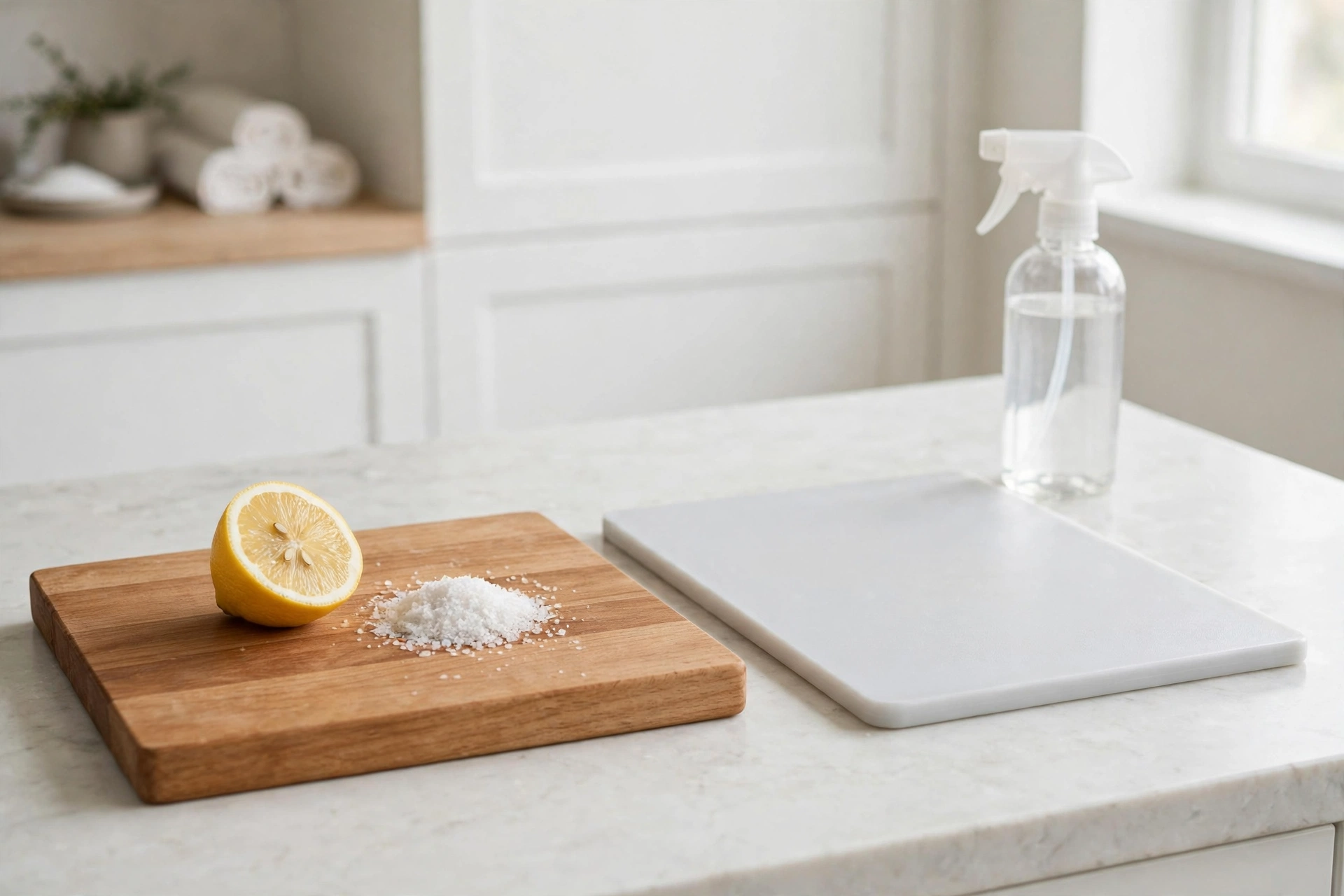
For a stained or smelly wood board, sprinkle coarse salt or baking soda over the surface and scrub with half a lemon, cut side down, in small circles. The salt acts as a gentle abrasive, the lemon lifts odours and light stains, and the combination freshens the board. Rinse well and dry fully. This is a cleaning and deodorising step, not a full disinfectant on its own, so use it alongside the bleach or vinegar method when the board has handled raw meat, not instead of it.
Wood boards need different care from plastic
Plastic, glass, and nonporous acrylic boards can usually go in the dishwasher, which sanitises them with heat and detergent — check the maker’s guidance first, since laminated boards can crack and split. Wood and bamboo boards should not go in the dishwasher: they warp, crack, and split, and the cracks then harbour bacteria. Wash wood boards by hand, dry them upright so air reaches both sides, and oil them occasionally with food-grade mineral oil when the wood looks dry or pale. Never use cooking oil for this: it can go rancid. A well-oiled wood board resists moisture and staining better than a dry one.
When to replace a board
All boards wear out. Deep grooves, cuts that will not wash clean, warping, and cracks are signs to retire a board, because bacteria can live in grooves even after careful cleaning. A board that stays stained or smelly after washing and disinfecting has also reached the end of its useful life. Replacing a worn board is cheaper than a bout of food poisoning, and it is the one step no amount of scrubbing can substitute for.
Drying and storage habits that help
Air-dry boards upright or on a rack, not flat on a damp counter, so both sides dry. Store them where air can circulate, not stacked wet in a cupboard. Wash the sponge or brush you used on a raw-meat board before you use it on anything else, or use a fresh cloth. These small habits matter as much as the disinfectant itself: a disinfected board dried with a dirty towel, or stored damp, is soon dirty again.
Common mistakes
The most common mistakes are disinfecting before washing, using too little contact time, and reusing the same board for raw chicken and then salad without disinfecting in between. Others are using scented bleach, mixing bleach with vinegar, and putting a wood board in the dishwasher to “sanitise” it. Each of these feels like a shortcut, and each one undermines the step it is meant to replace.
FAQs
How often should I disinfect a cutting board?
Disinfect after every use with raw meat, poultry, or seafood, and whenever the board smells, is stained, or has handled high-risk foods. For produce-only boards, a thorough wash is usually enough, with periodic disinfecting.
Is vinegar enough to disinfect a board?
Vinegar helps with routine cleaning and odours, but for raw-meat contamination, the bleach solution is the standard recommended method. Use bleach for high-risk jobs.
Can I put a wooden cutting board in the dishwasher?
No, in most cases. Dishwashers warp and crack wood and bamboo boards. Wash them by hand and dry them upright.
Should I oil my wooden board?
Yes, occasionally, with food-grade mineral oil when the wood looks dry. Oiling helps the board resist moisture and staining. Do not use cooking oil, which can go rancid.
Bottom line
Wash in hot, soapy water, disinfect with fresh bleach solution after raw meat, rinse, and air-dry — and keep a separate board for ready-to-eat foods. That routine, plus replacing worn boards, covers almost everything a home kitchen needs.
Related reading: How Long Do Cooked Eggs Last in the Fridge?, How Long Is Pizza Good in the Fridge?, and the Cooking & Kitchen category.
Sources: Iowa State University Extension — Cutting Board Basics; EatRight — Cutting Board Safety.