
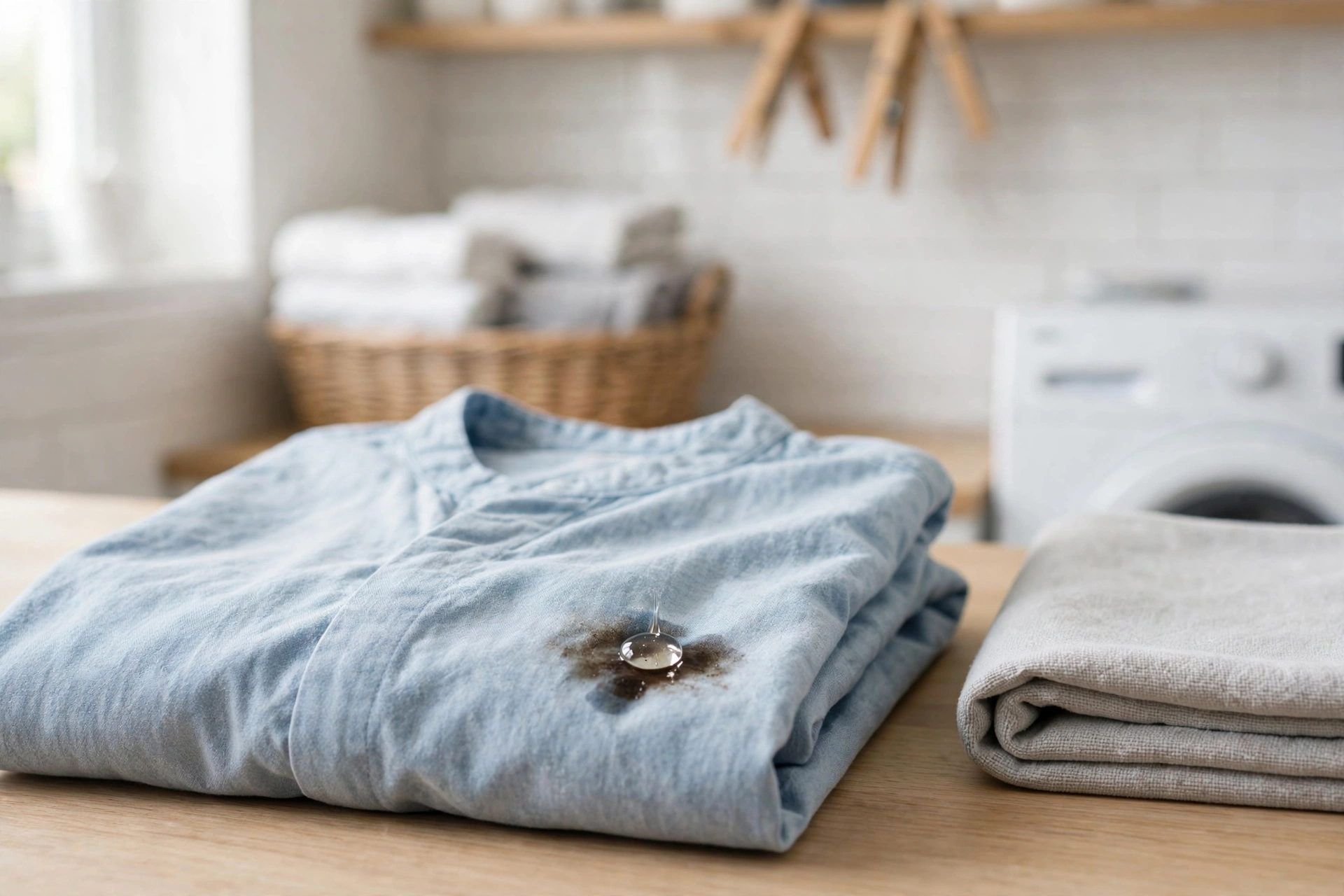
An oil stain does not have to ruin a favourite shirt. The order matters: absorb first, break the oil down with dish soap, wash, and check before you dry. Skip the dryer until the stain is truly gone, because heat sets oil into fabric. Always start with the care label, so you do not make a washable shirt into a delicate problem.
Why Oil Stains Are Stubborn
Oil repels water, clings to fibres, and darkens as it sits. A hot dryer locks it in, which is why a stain that looked faint after washing can become permanent after drying. Acting quickly and keeping heat away gives you the best chance of a clean result.
What You Will Need
- Clean white cloths
- Baking soda or cornstarch
- Liquid dish soap made to cut grease
- A soft toothbrush
- Laundry detergent
- A clean towel to place behind the stain
Use one product at a time, and test it first on an inside seam if you are unsure about the fabric.
Step 1: Act Fast and Absorb the Oil
Work on dry fabric. Do not rinse first, and do not rub.
- Lay the garment flat, with a clean towel behind the stain.
- Blot gently with a clean cloth, turning the cloth to a fresh section as it picks up oil.
- Cover the stain generously with baking soda, cornstarch, or crushed white chalk.
- Press lightly and leave it for 15 to 30 minutes, longer for a heavy spill.
- Brush off the powder and repeat once if the fabric still feels greasy.
Step 2: The Dish Soap Method for Washable Clothes
Dish soap cuts grease, so it works well for cooking oil, salad dressing, butter, and food grease.
- Put a few drops directly on the stain.
- Work it in gently with your fingers or a soft toothbrush, without fraying the fabric.
- Leave it for 5 to 10 minutes.
- Wash in the warmest water the label allows, with your regular detergent.
- Check in good daylight before drying.
If a faint shadow remains, repeat the powder and dish soap steps and wash again. For a specific stain such as red wine, the same blot-first principle applies, and removing wine stains from clothes, carpet, and upholstery covers that in detail.
Washable vs Delicate Fabrics
| Fabric | How to treat it |
|---|---|
| Cotton, linen, denim, polyester | Absorb with powder, pre-treat with dish soap, wash in the warmest water the label allows, air dry and check. |
| Wool | Blot and absorb, hand wash gently in cool water with mild detergent; avoid hot water, which can shrink wool. |
| Silk | Absorb with powder only as first aid; do not soak in hot soapy water; for a valuable or set-in stain, use a dry cleaner. |
| Velvet and corduroy | Absorb first, use dish soap sparingly, and avoid harsh scrubbing that crushes the pile. |
| Leather and suede | Blot, dust with cornstarch to lift surface oil, then use a cleaner made for that finish; do not soak leather. |
| Dry-clean-only | Blot and absorb only, then take it to the cleaner and point out the stain. |
When in doubt, test on an inside seam first and stop if colour transfers.
How to Handle Old or Set-In Oil Stains
Old stains are harder, but not hopeless, if the garment has never been through a hot dryer. Absorb, leave dish soap on for 10 to 15 minutes, wash in the warmest water the label allows, air dry, and inspect in daylight. Repeat if the shadow has lightened, and keep it out of the dryer until it is gone. If it has already been tumble dried, repeat the same routine before the next wash. Heavy marks, such as motor oil on light fabric, may lighten but never disappear completely.
What Not to Do
- Do not put it in the dryer or iron it before the stain is gone: heat sets oil.
- Do not rinse first and hope: water alone will not lift oil and can spread the stain.
- Do not rub or scrub hard: this pushes oil deeper and sideways.
- Do not stack cleaners: bleach, vinegar, solvents, and soap used together can damage fabric and create harmful fumes.
- Do not use bleach on coloured or delicate fabrics.
- Do not use hot water on wool, silk, or dry-clean-only items.
After washing, air dry and check in daylight. A damp oil stain can look exactly like a wet patch.
Preventing the Next Oil Stain
An apron in the kitchen and paper towels nearby help more than any special product. Good habits in the kitchen matter too, and smart food storage tips to keep your kitchen organised and fresh can help you keep cooking and storage tidier.
FAQs
Can I remove an oil stain after washing?
Sometimes, if it has not been tumble dried. Repeat the routine, then air dry and check. Once heat has set it, it is much harder.
Should I use hot or cold water?
For sturdy washables, use the warmest water the label allows. For wool, silk, and delicates, use cool or lukewarm water.
Does dish soap work on all oil stains?
It works well on cooking oil and food grease on washables. It is less effective alone for heavy motor oil or very old stains, which may need several rounds or professional cleaning.
When should I take it to a dry cleaner?
If the label says dry-clean only, if it is silk, leather, or suede, if it is valuable, or if gentle home treatment has not worked after two rounds. Tell the cleaner what caused the stain.
Conclusion
Removing oil is a patient, step-by-step job: blot, absorb, pre-treat with dish soap, wash at the right temperature, and check before drying. Respect the care label, treat delicates differently from sturdy cotton, and never let heat near a stain that is still there.