
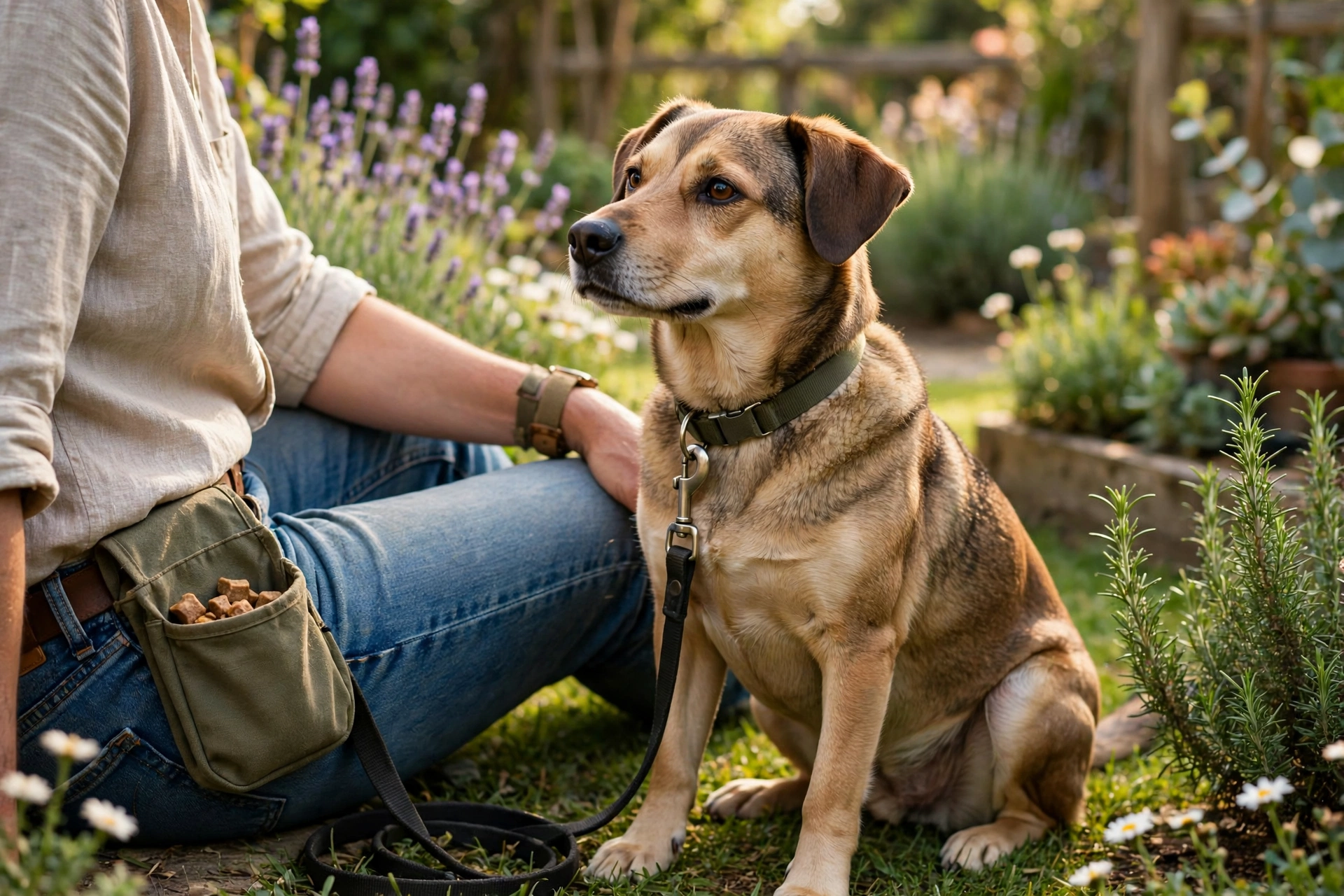
Yes, you can potty train an older dog. The old saying about old dogs and new tricks is wrong about this: adult dogs often learn faster than puppies because they can hold themselves longer and focus for longer stretches. What they need is what every dog needs — a clear routine, supervision, and rewards for getting it right. What they do not need is punishment, which only teaches a dog to hide accidents from you.
Step 1: Rule out a medical cause first
Before training begins, have your vet check a dog that has suddenly started having accidents, especially a previously trained dog. Urinary infections, diabetes, kidney problems, and age-related incontinence can all cause accidents that no amount of training will fix. A senior dog with cognitive decline may also forget habits it once knew. Training starts once medical causes are treated or ruled out; otherwise you will both be frustrated for no reason.
Step 2: Build a fixed daily routine
Dogs learn through repetition, so feed, walk, and rest at the same times every day, seven days a week, with everyone in the household following the same plan. Take your dog out first thing in the morning, after every meal, after naps and play sessions, and last thing at night. During active training, add extra trips every two to four hours during the day. Keep meals on a schedule too, because regular feeding produces regular bathroom habits.
Step 3: Pick one toilet spot and one cue
Choose a single outdoor spot and take your dog there on a leash every time. The familiar scent helps the dog understand what the trip is for. As the dog begins to go, say a short cue such as “go potty” in a calm voice. Over time the cue itself becomes the prompt, which is useful on rainy days and unfamiliar walks.
Step 4: Reward instantly, every time
The moment your dog finishes in the right place, celebrate with a happy voice and a high-value treat, right there on the spot. The reward must be immediate: if you wait until you are back indoors, the dog will not connect the treat with the toilet trip. Carry treats in a pocket on every outing during training. Rewarding the right behaviour is far more powerful than scolding the wrong one, and it keeps training enjoyable for a dog that may already be nervous in a new home.
Step 5: Supervise, and limit freedom
Until your dog is reliable, do not give it unsupervised access to the whole house. Use baby gates, a playpen, or a room with an easy-to-clean floor, and keep the dog in sight or on a leash beside you the rest of the time. Watch for signs that it needs to go: sniffing the floor, circling, restlessness, or heading for the door. Catching these signals and getting outside in time is how the habit forms.
Step 6: Handle accidents calmly
Accidents will happen, and they are part of training, not defiance. If you catch your dog mid-accident, interrupt gently with a sound such as “uh uh” or a light clap, then take it straight to the toilet spot. If you find an accident after the event, just clean it up — scolding after the fact teaches nothing, because the dog cannot link your anger to something it did minutes ago. Clean with an enzymatic cleaner, which breaks down the scent markers that ordinary cleaners leave behind; dogs tend to return to spots that still smell like a toilet.
Using a crate the right way
A crate can help, because most dogs avoid soiling their sleeping area, and it gives you a safe place to leave the dog when you cannot supervise. The crate must be large enough for the dog to stand, turn around, and lie down comfortably, and it must never be used as punishment. A dog that spends long hours crated will eventually have no choice but to soil it, which destroys the benefit, so crate time should be short and paired with frequent outings.
How long will it take?
Most adult dogs show real progress within a few weeks, and many are reliable within a couple of months. Rescue dogs with no previous training, small breeds, and senior dogs may take longer, and that is normal. Progress is rarely a straight line: a move, a new pet, or a change in routine can cause a temporary setback. Go back to basics, tighten the schedule, and the habit usually returns.
FAQs
Is it too late to potty train a senior dog? No. Senior dogs can learn, though medical issues are more likely, so a vet check comes first and patience matters more.
Should I use pee pads? Pads in one fixed location can suit small dogs or homes without easy outdoor access, but pads scattered around the house confuse the dog about where it is allowed to go.
My dog only has accidents when I am out. Why? It may be separation anxiety rather than a training gap. A vet or qualified trainer can help separate the two, because the solutions differ.
Should I rub my dog’s nose in an accident? Never. It damages trust, teaches the dog to hide from you, and does nothing to teach the right behaviour.