
Pet accidents happen, even in the best-trained homes. A puppy still learning, an older cat with a sensitive stomach, or a dog caught out by a closed door can all leave a stain on carpet or upholstery. The good news is that most pet stains can be removed with simple household items, as long as you act in the right order and avoid the few mistakes that set a stain permanently.
The single most important rule is to work on the stain before it dries, and to blot rather than rub. Rubbing pushes the mess deeper into fibres and spreads it wider, while blotting lifts it out. Everything below follows from that one habit.
First, identify what you are dealing with
Urine, vomit, and faeces behave differently, and the first step differs for each. For urine, the goal is to absorb as much liquid as possible before cleaning. For vomit or faeces, remove the solids first with paper towels or a dull knife, taking care not to press them into the fabric. Wear gloves for hygiene, and work from the outside of the stain inward so you do not spread it.
Fresh stains are far easier than old ones. If you catch the accident while it is still wet, you have a real advantage: most of the stain is still sitting in the top fibres rather than bonded to them. A stain that has dried, especially urine that has soaked into carpet padding, needs more patience and may need repeated treatments.
Step 1: Blot up as much as possible
Lay a thick stack of paper towels or a clean white cloth over the stain and press down firmly. Stand on the towels if needed to apply pressure. Replace the towels as they soak up liquid and repeat until the cloth comes up almost dry. For upholstery, press rather than standing, and take care not to soak the cushion filling.
Do not reach for a coloured towel for this step. Dyes from a coloured cloth can transfer to a damp carpet, adding a second stain to the first. White cloths or plain paper towels are the safer choice throughout.
Step 2: Clean with a vinegar solution
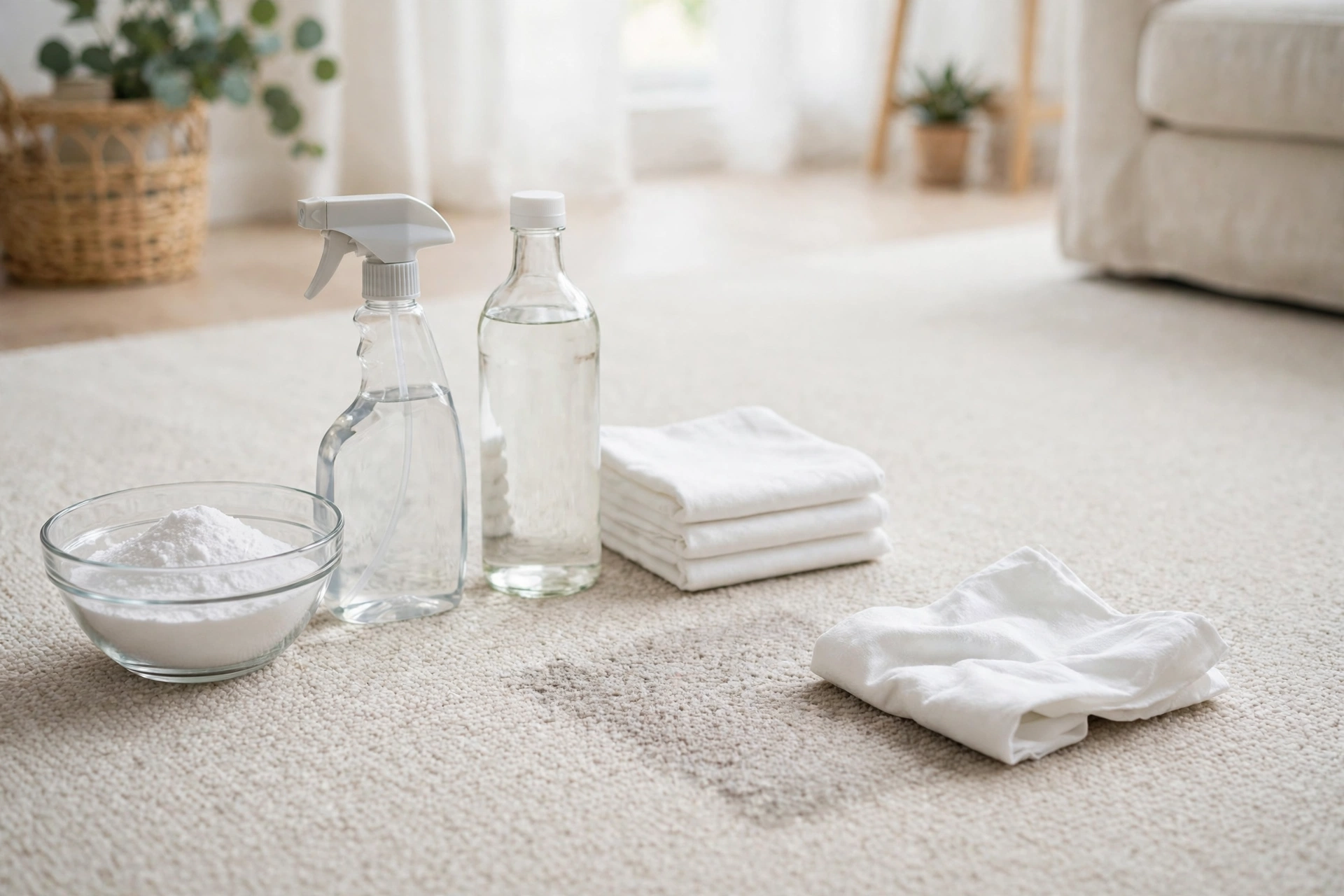
For a fresh stain on carpet or upholstery, a simple solution of equal parts white vinegar and cool water works well. Spray or pour it over the stain so the area is damp but not flooded, let it sit for about ten minutes, then blot again with clean cloths. Vinegar helps break down the stain and neutralise odour, and it rinses out cleanly.
One caution is worth knowing. Some animal welfare guides warn against strong-smelling cleaners, including vinegar used heavily, because a lingering scent can encourage a pet to mark the same spot again. That is another reason to rinse and blot thoroughly after cleaning, and to finish with plain water so little scent remains. Never use a cleaner containing ammonia on a pet stain: ammonia smells similar to urine to a pet and can invite repeat accidents in the same place.
Step 3: Baking soda for odour
Once the area is only slightly damp, sprinkle baking soda generously over it and let it dry completely, ideally for several hours or overnight. Baking soda absorbs moisture and odour as it dries. When the area is fully dry, vacuum thoroughly. This step is especially useful for urine, where the visible stain may be gone but a faint smell remains.
For a stain on a hard floor that has left a mark on a rug or mat, the same approach works on the fabric, but keep the floor itself clean and dry too, since urine can damage wood finishes if left sitting.
Step 4: Enzyme cleaner for stubborn or old stains
If the stain or smell survives the vinegar and baking soda steps, an enzyme-based pet stain cleaner is the next step. Enzyme cleaners contain biological agents that break down the proteins in urine, vomit, and faeces, which is why they often succeed where ordinary soap fails. Apply according to the product instructions, keep the area damp for the recommended time so the enzymes can work, then blot and let it dry.
For old, dried stains, start by scraping off any dried residue and vacuuming loose material, then apply the enzyme cleaner and give it extra time. You may need a second application. A carpet cleaning machine, rented or owned, can help draw out deep residue from carpet, but do not use a steam cleaner on a urine stain: heat can bond the proteins into synthetic fibres and set both the stain and the smell permanently.
Different surfaces, different care
Carpet needs the gentlest moisture control. Avoid soaking it, because excess water pushes the stain into the padding underneath, where it is much harder to reach. If urine has soaked through to the padding, the carpet may need professional treatment, and in severe cases a section of padding may need replacing.
Upholstery needs a patch test first. Test any solution on a hidden corner and check for colour change before treating the visible stain. Dab gently, do not scrub, and allow cushions to dry fully before use, since trapped dampness can lead to mildew.
Washable items such as blankets, pet bedding, and removable covers are easier: wash with regular detergent plus baking soda, and air-dry if possible. If a smell remains after washing, wash again with an enzyme cleaner before drying, because heat from a dryer can set a remaining odour.
Hard floors are the simplest case. Wipe up promptly, clean with a pet-safe floor cleaner, and check whether urine has damaged varnish or grout. Discoloured wood may need refinishing, since the finish itself has reacted.
What not to do
Do not use bleach on a pet stain on carpet or upholstery. It can damage fibres and colour, and its fumes are unpleasant for both people and pets. Do not use hot water as a first step on a protein stain, for the same setting reason as steam. Do not cover a stain with a rug and hope the smell fades: it usually does not, and the pet can still smell it even when you cannot.
Also, do not punish a pet after the fact. Accidents are usually about training, health, age, or access to the outdoors, not spite. If a previously trained pet suddenly starts having accidents, a vet check is worth arranging, since urinary infections and other health problems are a common cause.
Preventing the next stain
Prevention is mostly about routine. Regular toilet breaks, easy access to a litter tray or garden, and prompt cleaning of any accident reduce repeat marking. Washable covers on favourite sleeping spots make the next accident far easier to handle, and regular vacuuming keeps pet hair and dander from trapping odours in carpet.
While you are close to your pet during cleaning, you may notice other care needs. Our guide to getting mats out of cat fur explains gentle grooming, and regular contact like that makes it easier to spot coat or skin changes early.
Frequently asked questions
Can vinegar remove pet urine stains?
Yes, for many fresh stains, especially when followed by baking soda and thorough blotting. For old or deep stains, an enzyme cleaner is usually needed as well.
Does baking soda remove pet smell from carpet?
It helps a great deal with surface odour when left to dry fully and vacuumed up. Deep odour in padding may need an enzyme cleaner or professional cleaning.
Why does the stain keep coming back?
Usually because residue remains in the padding or fibres, or because a scent marker encourages the pet to reuse the spot. Clean thoroughly, avoid ammonia cleaners, and check for a health cause if accidents repeat.
Should I use a steam cleaner on pet urine?
No. Heat can set urine stains and odour into fibres permanently. Use cool or lukewarm cleaning and an enzyme cleaner instead.
When should I call a professional?
When the stain has soaked into padding, covers a large area, has damaged wood or upholstery, or survives two careful enzyme treatments. A professional with pet-safe methods can often save a carpet that home cleaning cannot.
Most pet stains respond to the same simple sequence: blot, clean gently, deodorise with baking soda, and bring in an enzyme cleaner only if needed. Patience matters more than strong chemicals, and the sooner you start, the better the result.
Related reading: why cats knead, how to clean a yoga mat and more cleaning guides.