
Blurry vision is not one problem. It is a symptom, and the right response depends on what is causing it. Sometimes the cause is simple: tired eyes, dry air, or too many hours staring at a screen. In those cases, natural steps such as rest, breaks, and better lighting often clear the blur. Sometimes, though, blur points to a refractive error or an eye condition that no home remedy can correct. Learning how to fix blurry vision naturally therefore starts with telling those two groups apart, not with buying a supplement or an eye exercise app.
This article gives general information only. It is not medical advice and it does not diagnose any condition. If blur is sudden, painful, in one eye only, or does not improve, see an eye care professional promptly.
First, find the pattern
Before changing anything, notice when the blur appears. Does it come on late in the day after screen work, and clear after a night of sleep? That pattern points to strain or dryness. Does it happen every morning, or only when reading small print? That may point to a refractive change, such as needing glasses, or to age-related focusing changes. Does it come with a headache, eye pain, flashing lights, or a curtain over part of your vision? Those are warning signs, not strain, and they need urgent assessment.
A useful test is a two-week routine. Keep the habits below for two weeks and note whether the blur is better, the same, or worse. If it improves with rest and breaks, strain was probably the main driver. If it stays the same in every condition, book an eye exam. An exam is not a failure of natural care. It is how you find out whether glasses, treatment, or simply reassurance is the right next step.
Rest the focusing system
Your eyes work hardest at close range. Reading, phones, and laptops all demand constant focusing, and we blink less when we concentrate. That combination dries the eye surface and tires the focusing muscles, which is why text can look fuzzy by late afternoon.
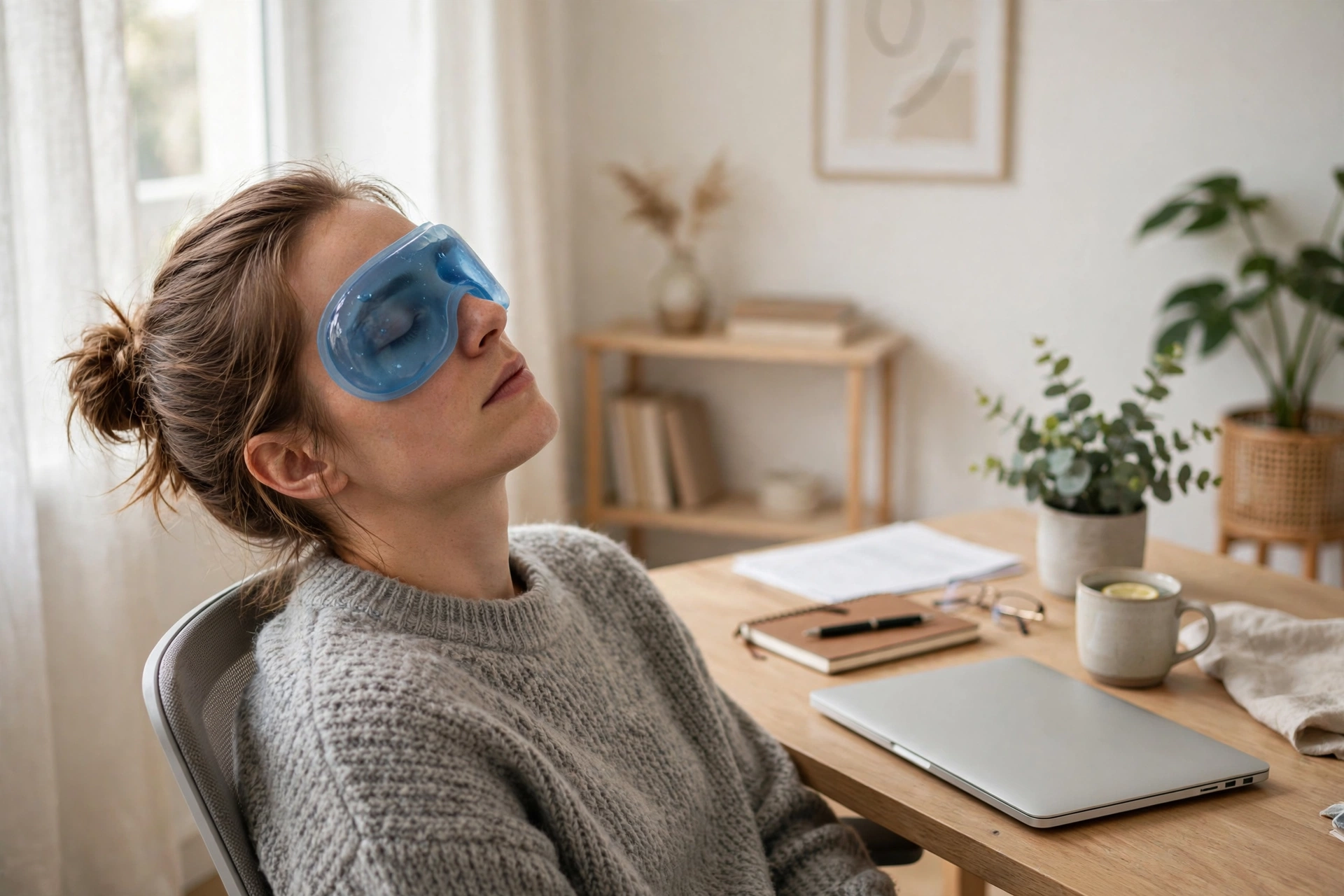
The 20-20-20 rule is a simple reset: every 20 minutes, look at something about 20 feet away for 20 seconds. It sounds too small to matter, but it lets the focusing muscles relax and reminds you to blink. Set a timer at first, because it is easy to forget once you are absorbed in work. Between long tasks, close your eyes for a minute or two, or place a warm, clean cloth over closed eyes. Palming, cupping warm hands lightly over closed eyes without pressing on them, can feel restful too, although it does not change the shape of the eye or cure a refractive error.
Good lighting matters as much as breaks. Work with light coming from the side rather than shining directly into your eyes or reflecting off the screen. Increase text size instead of leaning closer to the screen, and keep the screen at arm’s length with the top of the screen at or just below eye level. These small ergonomic changes reduce the effort your eyes must make all day.
Treat dryness, not just blur
Dry eyes are a common, overlooked cause of blur. The tear film smooths the front of the eye, and when it breaks up, vision blurs until the next blink restores it. Fans blowing at your face, dry indoor heating, air conditioning, and long screen sessions all make dryness worse.
Drink enough water through the day, and avoid sitting directly in a stream of dry air. If the air is very dry, a humidifier in the room where you work can help. Artificial tears, available without prescription, can lubricate the surface, but check with a pharmacist or eye professional if you need them often, wear contact lenses, or have any other eye condition. Do not share eye drops, and do not use drops meant to whiten the eyes as a daily habit, as they can make irritation worse over time.
If you wear contact lenses, follow the cleaning and wearing schedule exactly. Sleeping in lenses not designed for overnight wear, or reusing solution, increases irritation and infection risk. Blurry vision in a contact lens wearer, especially with pain or redness, should be checked promptly rather than treated at home.
Food, sleep and sunlight
No food restores perfect vision on its own, but a balanced diet supports eye health over time. Foods rich in vitamin A, such as leafy greens, carrots, and eggs, and foods rich in omega-3 fats, such as oily fish, flaxseed, and walnuts, are commonly recommended for general eye health. Lutein and zeaxanthin, found in leafy greens and eggs, are also associated with eye health in research. Think of diet as long-term support, not a quick fix for today’s blur.
Sleep matters more than most people expect. Tired eyes are dry eyes, and poor sleep makes strain feel worse the next day. Aim for a regular sleep routine, and keep screens out of the last part of the evening where you can. Outdoors, wear sunglasses that block ultraviolet light. Bright glare forces squinting and strain, and long-term ultraviolet exposure is linked to eye conditions such as cataracts.
What natural methods cannot fix
This is the honest limit, and it matters. Nearsightedness, farsightedness, astigmatism, and age-related difficulty focusing up close are caused by the shape of the eye and how light focuses inside it. Eye exercises, diet, and rest can reduce the strain around those problems, but they do not reshape the eye. If you need glasses, wearing them is not giving up on natural care. It is the correct treatment.
Similarly, cataracts, glaucoma, macular degeneration, and diabetes-related eye problems need medical care. Blurry vision that is new, worsening, or paired with other symptoms should never be left to home remedies alone. The same applies to blur after an eye injury, blur with severe headache or nausea, or sudden loss of part of your vision. Those need same-day care.
A simple daily routine
Put the pieces together and the routine is short. Take a screen break every 20 minutes, and a longer break every hour. Blink deliberately when you notice your eyes feeling dry. Work in good light, at a comfortable distance, with text large enough to read easily. Eat a varied diet, sleep regularly, and wear sunglasses outdoors. Keep a brief note for two weeks: when did blur appear, what were you doing, and did rest help? That note is useful information for an eye exam if you need one.
FAQs
Can eye exercises cure blurry vision? Gentle exercises and breaks can ease strain and improve comfort, but they do not cure refractive errors or eye disease. If blur persists, get an eye exam.
How quickly should strain-related blur improve? Often within minutes of resting, and over days with better breaks and lighting. Blur that does not change at all after two weeks of good habits deserves an exam.
When should I see a doctor urgently? Sudden blur, blur in one eye only, eye pain, flashing lights, new floaters, or a shadow over part of your vision all need prompt assessment.
Do blue-light glasses fix blurry vision? They may reduce glare for some people, but they are not a treatment for refractive errors or eye disease. Proper breaks and lighting help more.
Blurry vision that comes from strain usually responds to rest, breaks, moisture, and better habits. Blur that stays, worsens, or arrives suddenly is a different matter, and an eye exam is the natural next step, not a last resort.
Related reading: how to reduce neck pain naturally; how to get rid of an eye twitch; how to stop snoring; Health & Fitness archive. Sources: Healthline on curing blurry vision naturally; SightMD on fixing blurry vision naturally.