
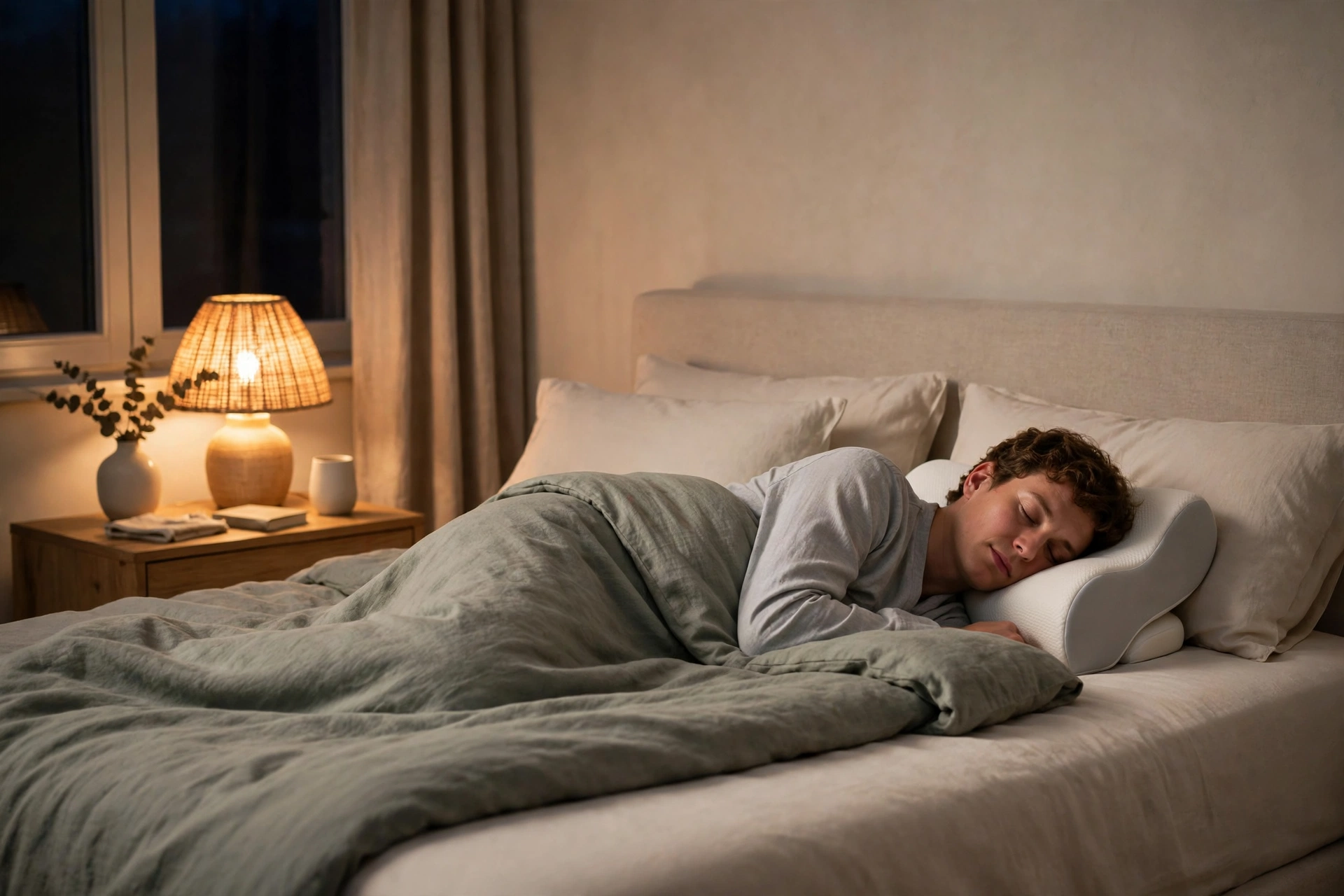
Snoring is the sound of soft tissues in the nose and throat vibrating as air moves through a narrowed airway during sleep. For many people it is occasional and harmless, a noisy night after a cold or a late evening. For others it is regular, loud, and a sign that something about sleep, breathing, or health needs attention. Learning how to stop snoring starts with finding your own pattern, not with buying a device on the first night.
This article gives general information only. It is not medical advice, and it does not diagnose any condition. If snoring is loud, frequent, or comes with other symptoms described below, talk to a doctor rather than trying to solve it alone.
Why snoring happens
When you fall asleep, the muscles in your throat relax. If the airway narrows, air moves faster through a smaller space, and the soft palate, tongue, and throat tissues vibrate. Anything that narrows the airway or relaxes those muscles further can make snoring more likely.
Common contributors include sleeping on your back, which lets the tongue fall backward; nasal congestion from a cold, allergies, or a deviated septum; alcohol or sedating medicines before bed, which relax throat muscles; extra tissue around the neck; and being very tired, which can lead to deeper, more relaxed sleep. The shape of your mouth and throat matters too. Some people have a low, thick soft palate, large tonsils, or a long uvula, and those features can narrow the airway even when everything else is normal.
Snoring alone does not mean you have sleep apnoea, but the two are linked. Obstructive sleep apnoea is a condition in which breathing repeatedly pauses or becomes shallow during sleep. It needs medical assessment, and it cannot be diagnosed from snoring alone.
Start with a two-week test, not a purchase
Before you spend money, try a simple two-week routine and keep brief notes. Note whether you snored, how loudly your partner or a sleep app reports it, what position you slept in, whether you had alcohol, and whether you woke up feeling rested. Patterns usually appear quickly. If snoring only happens on your back, position is probably the main driver. If it only happens with a cold, congestion is the likely cause. If it happens every night in every position, that is worth a medical conversation.
Sleep on your side
This is the single most useful change for back snorers. On your back, gravity pulls the tongue and soft palate backward and narrows the airway. On your side, the airway usually stays more open. A body pillow can help you stay on your side through the night. Some people sew a pocket onto the back of a sleep top and place a tennis ball in it, which makes rolling onto the back uncomfortable enough to prevent it, although it is not comfortable for everyone and it is not a treatment for apnoea.
Raising the head of the bed a few inches can also help, because it changes the angle of the airway. Use blocks under the bed legs or an adjustable base if you have one. Simply piling up pillows often bends the neck forward instead, which can narrow the airway further, so aim for a gentle slope of the whole upper body, not just a higher head.
Clear your nose before bed
If you breathe through your mouth at night because your nose is blocked, snoring often follows. A saline rinse or spray before bed can clear mucus and reduce swelling. Nasal strips, which stick across the bridge of the nose and gently pull the nostrils open, help some people, especially when congestion is mild. Treat allergies properly if they are the cause, and keep the bedroom free of dust where you can. A cold usually passes, but congestion that lasts for weeks, or comes with facial pain, bleeding, or a one-sided blockage, should be checked by a doctor.
Evening habits that matter
Alcohol is a common trigger. It relaxes throat muscles more than normal sleep does, so even one drink in the evening can make snoring louder. Try to avoid alcohol for several hours before bed, and notice whether the change helps. The same applies to sedating medicines, including some sleep aids and antihistamines, but never stop a prescribed medicine without medical advice. Ask your doctor or pharmacist if a medicine you take could be contributing.
Heavy meals close to bedtime, smoking, and poor sleep routines can also worsen snoring. A regular bedtime, a dark and quiet room, and enough sleep each night help the airway muscles work normally. Staying hydrated matters too, because dry, sticky secretions in the nose and throat can make vibration worse.
Weight and general health
Extra weight around the neck can press on the airway and narrow it, so gradual, sustainable weight loss can reduce snoring for some people. It is not a quick fix, and it is not the cause for everyone who snores. A balanced diet, regular movement such as walking, and steady sleep habits support both weight and airway health. If you are considering a weight plan, a doctor or dietitian can help you set a realistic goal.
Devices: what they do, and what they do not do
Nasal strips and dilators open the nose a little. They are low-risk and worth trying for congestion-related snoring, but they do not treat throat collapse. Mandibular advancement devices, fitted by a dentist, hold the lower jaw forward during sleep to widen the airway. Tongue-retaining devices hold the tongue in place. These can help some people, but a poorly fitted device can cause jaw pain or bite changes, so professional fitting matters.
Continuous positive airway pressure, or CPAP, is a treatment for diagnosed sleep apnoea, not a general snoring gadget. It uses a mask to keep the airway open with gentle air pressure. Surgery can correct a deviated septum, remove polyps, or tighten throat tissue, but it is reserved for specific cases after proper assessment. None of these should be chosen from an advert alone.
When to see a doctor soon
Seek medical advice if snoring is paired with pauses in breathing, gasping or choking during sleep, waking up with a headache, excessive daytime sleepiness, difficulty concentrating, or high blood pressure that is hard to control. A partner noticing breathing pauses is an important clue. Children who snore regularly should also be assessed, as the causes and treatments differ from adults.
FAQs
Does sleeping on my side really stop snoring?
For many back snorers, yes, it reduces snoring noticeably. It does not help everyone, especially if congestion, alcohol, or airway shape is the main cause.
Do nasal strips work?
They can help when the nose is the bottleneck, by opening the nostrils a little. They are less useful when snoring comes mainly from the throat.
Can alcohol cause snoring?
Yes. Alcohol relaxes throat muscles, which narrows the airway and makes vibration more likely, even in people who do not usually snore.
When is snoring a medical problem?
When it is loud and frequent, or comes with breathing pauses, gasping, daytime sleepiness, or morning headaches, it may point to sleep apnoea and should be checked.
Most snoring improves with a few honest checks: position, nose, evening habits, and sleep routine. Try those first, track what changes, and get medical advice if the pattern is loud, nightly, or comes with warning signs. Better sleep is worth that second step.
Related reading: how to reduce neck pain naturally, why do we get headaches, is walking good for lower back pain, Health & Fitness archive. Sources: Northwestern Medicine on stopping snoring, Sleep Apnea organization on snoring remedies.