
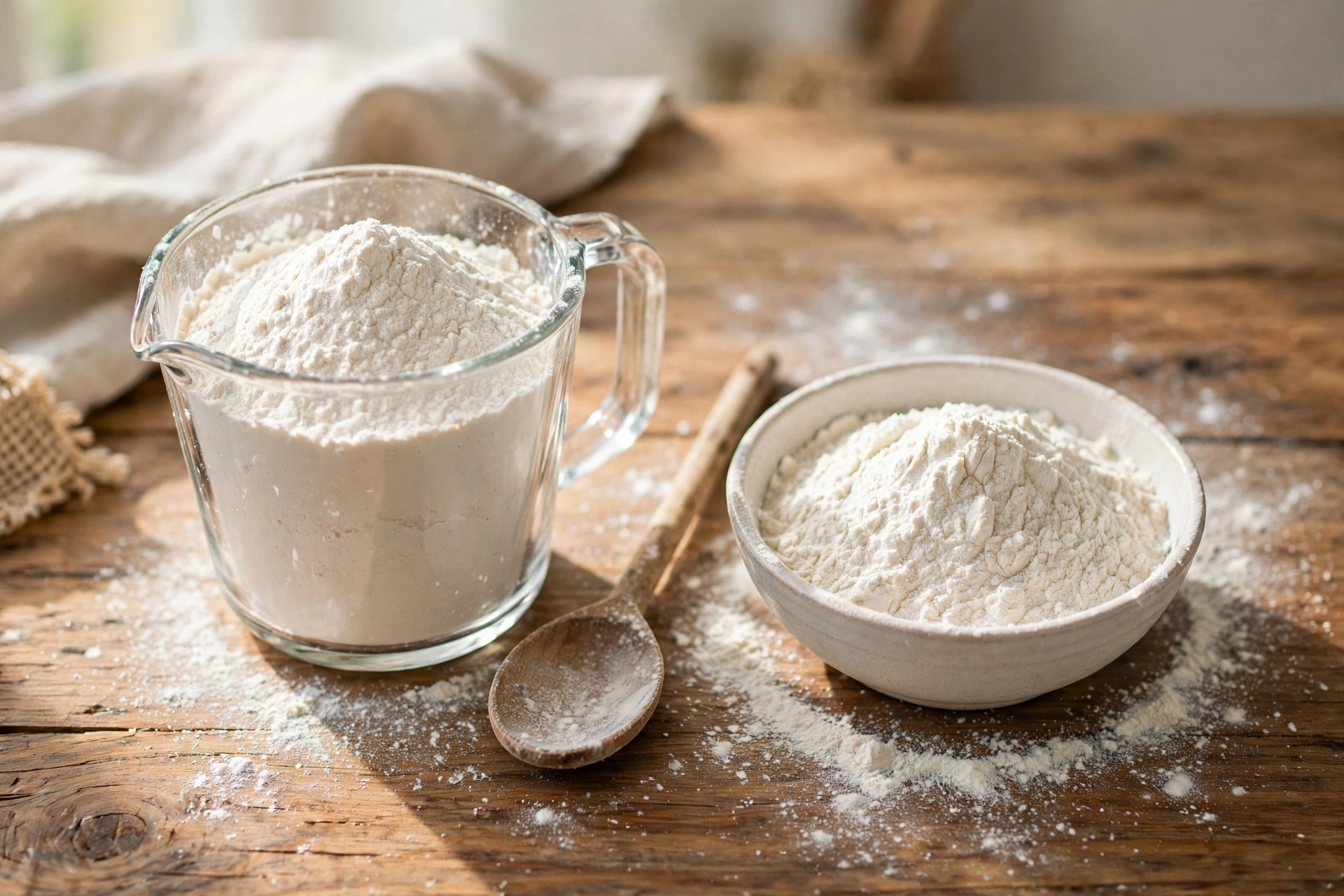
Direct answer: 200 grams of plain (all-purpose) flour is about 1⅔ cups. Use this if you are converting in a hurry. The caveat is that cups measure volume and grams measure weight, so the same 200 grams fills different cups depending on the flour type and how you fill the cup. This guide explains the conversion, gives approximate tables, and shows how to measure accurately.
Why There Is No Single Exact Answer
Flour is light and airy, and it settles and packs differently. A scooped cup weighs noticeably more than a spooned-and-levelled cup. Different flours also have different densities: whole wheat flour is heavier per cup than cake flour. The figures are therefore approximate. Reputable sources use around 120 grams per cup for plain flour, spooned and levelled: 200 ÷ 120 = about 1.67 cups, which is 1⅔ cups. Some sources use 125 grams per cup, which gives 1.6 cups. Both round to one full cup plus about two-thirds of another. For reliable results, especially for bread and cakes, weigh with a kitchen scale whenever the recipe gives grams. Use cup conversions only when you do not have a scale.
200 Grams to Cups by Flour Type
| Flour type | Grams per cup | 200 grams |
|---|---|---|
| Plain / all-purpose | 120 g | 1⅔ cups |
| Bread flour | 120 g | 1⅔ cups |
| Whole wheat flour | 113 g | About 1¾ cups |
| Cake flour | ~100 g (sifted) | About 2 cups |
Note on cake flour: it is very fine and light, so its weight per cup varies more. Unsifted cake flour weighs more than sifted flour, so 200 grams unsifted may be closer to 1½ cups. If precision matters for a delicate cake, weigh it.
Other Gram Amounts for Plain Flour
| Plain flour | About |
|---|---|
| 50 g | About ⅓ cup + 1 tablespoon |
| 100 g | About ¾ cup + 1 tablespoon |
| 150 g | About 1¼ cups |
| 200 g | About 1⅔ cups |
| 250 g | About 2 cups + 1 tablespoon |
| 300 g | About 2½ cups |
| 500 g | About 4 cups + 2 tablespoons |
Conversion rule: divide grams by 120. For example, 400 grams ÷ 120 = about 3⅓ cups.
How to Measure Flour Accurately
How you fill the cup matters as much as the conversion. Two methods give different results.
The spoon-and-level method (recommended)
- Fluff the flour in its container with a spoon.
- Spoon it lightly into the cup until it is heaped above the rim. Do not shake or tap it down.
- Level the top with the back of a knife, sweeping off the excess.
- Repeat for each cup.
Most conversion charts assume this method, and it is the most consistent method without a scale.
The scoop method (and why it causes problems)
Scooping directly into the bag packs the flour, and can give around 20% more than the spooned-and-levelled method. Too much flour makes cakes dense and dry, cookies stiff, and bread dough hard to knead. A recipe writer who scoops may have a heavier “cup” — another reason weighing is best.
Tips for better accuracy
- Use proper measuring cups, not a coffee mug or teacup.
- Do not sift unless the recipe says so, as a sifted cup weighs less.
- Check your cup size: a US cup is about 237 ml, while a metric cup (used in Australia and some other countries) is 250 ml — a small but real difference.
- Level every time: a heaped tablespoon extra per cup adds up.
- Buy a cheap kitchen scale if you bake often. It removes guesswork, is faster, and means fewer dishes.
Common Mistakes When Converting Flour
- Treating cups and grams as interchangeable: a cup of flour and a cup of sugar weigh very different amounts, so use an ingredient-specific conversion.
- Using the same figure for every flour type: whole wheat, bread, and cake flour densities differ. The plain flour figure gives slightly less for whole wheat, and a larger difference for cake flour.
- Scooping from the bag: this packs in extra flour and is the single most common measuring mistake.
- Rounding too aggressively: rounding 1⅔ down to 1½ removes about 20 grams, enough to change a cake’s texture. If you must round, round to the nearest tablespoon, not the nearest quarter cup.
- Forgetting that the recipe’s origin matters: a recipe written in grams was developed by weight, so converting to cups always loses precision. Grams hint that accuracy matters.
Related reading: Smart Food Storage Tips to Keep Your Kitchen Organized and Fresh — including how to store flour so it stays fresh and does not compact or go stale.
FAQs
How many cups is 200 grams of flour?
About 1⅔ cups for plain flour, spooned and levelled. Whole wheat flour is about 1¾ cups, and sifted cake flour is about 2 cups. All figures are approximate.
Is 200 grams the same as 2 cups?
No. Two cups of plain flour is roughly 240 grams, so 200 grams is about one-third of a cup less. Using 2 cups adds roughly 40 grams, which can make a cake denser.
Why do different websites give different answers?
They use different grams-per-cup values, commonly 120 or 125 grams for plain flour, and different measuring methods. Scooped flour weighs more than spooned-and-levelled flour. The honest answer for plain flour is a range of roughly 1.6 to 1⅔ cups.
Should I weigh flour or measure it in cups?
Weigh whenever you can. It is more accurate, faster, and more consistent, especially for bread and cakes. Use cups only when the recipe was written in cups or you have no scale.
Does a metric cup versus a US cup matter?
A little. A metric cup is 250 ml, while a US cup is about 237 ml, so a metric cup holds slightly more. It is a small difference for everyday cooking, and another reason to weigh for precise baking.
How do I convert cups back to grams?
Multiply cups by the grams-per-cup value for that flour type. For plain flour, 1 cup is about 120 grams, so 3 cups is about 360 grams.
Conclusion
Remember: 200 grams of plain flour is about 1⅔ cups, spooned and levelled. Whole wheat flour is about 1¾ cups, and sifted cake flour is about 2 cups — always approximate, never exact. If you bake regularly, a kitchen scale is the single best purchase: it removes guesswork, gives consistent results, and lets you follow gram recipes exactly as their authors intended. Until then, spoon, level, and use the tables — far more reliable than guessing with a scooped cup.
Related reading: How to Choose and Style Kitchen Islands for Maximum Function — practical ideas for a kitchen layout that makes everyday cooking and baking easier.
Sources: CalcMate Pro; Baking Like a Chef