
Note: General nutrition information only. This article is not medical advice. Anyone with diabetes, kidney problems, digestive conditions, or taking blood-thinning medication should ask a doctor or dietitian about suitable portions.
Short answer
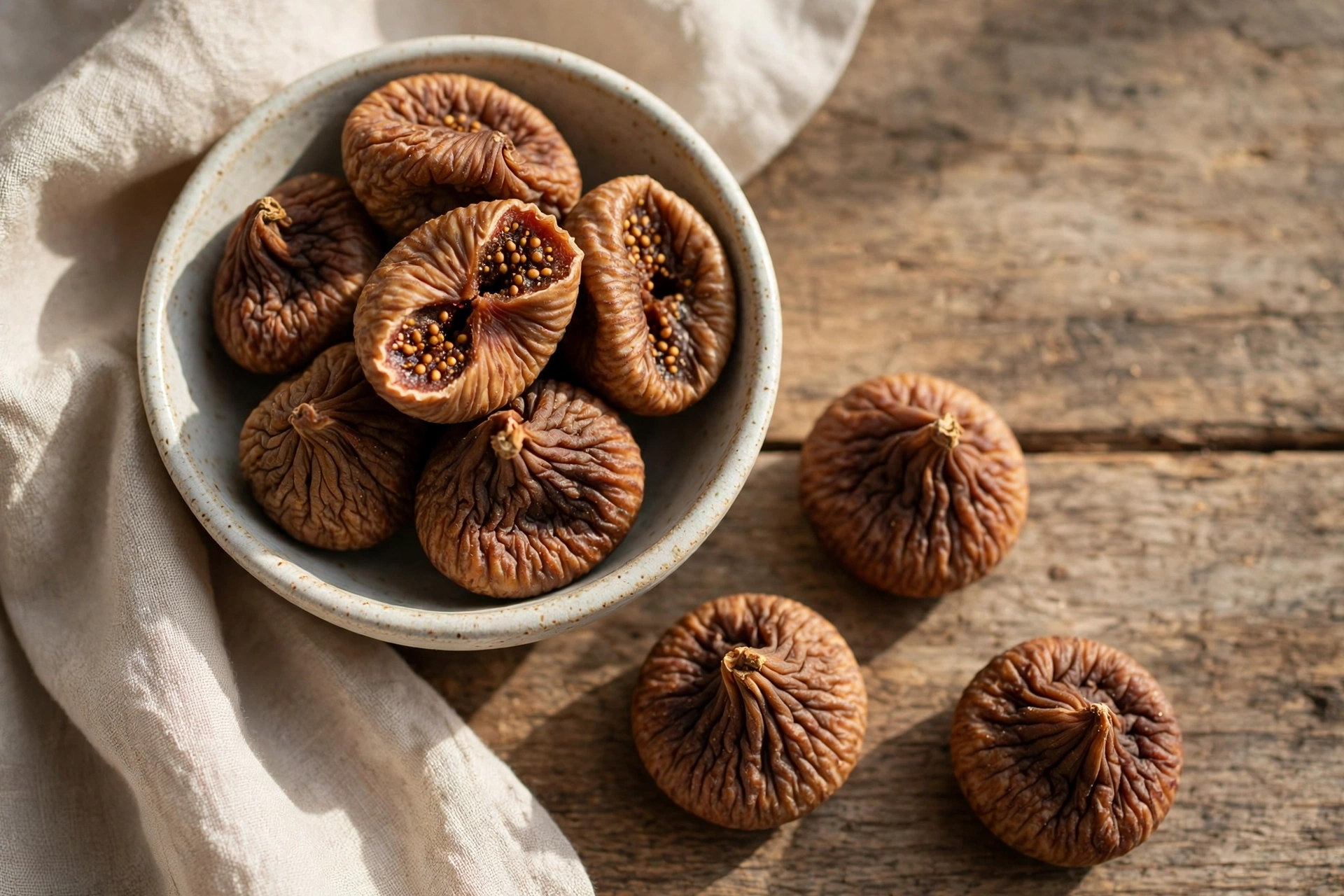
Dried figs — often called anjeer in South Asia — are simply fresh figs with most of the water removed. That makes them sweeter, chewier, longer-lasting, and more concentrated in both nutrients and natural sugars. Eaten in modest portions, they are a useful whole-fruit snack: rich in fibre, potassium, magnesium, calcium, and vitamin K, with no added sugar unless the pack says otherwise.
They are not a medicine and they will not cure anything on their own. Their value is simpler than that: they are a naturally sweet, nutrient-dense food that can replace highly processed snacks in a balanced diet, provided portions stay sensible.
What is a dried fig?
A fig is the fruit of the fig tree, Ficus carica, which belongs to the mulberry family. Fresh figs are soft, delicate, and highly perishable, which is why they are seasonal. Drying solves that problem: it preserves the fruit for months and concentrates its flavour.
When water leaves the fruit, everything else becomes more concentrated per bite. That includes fibre and minerals, but also natural sugars and calories. A small handful of dried figs therefore gives you more energy than the same weight of fresh figs. Neither form is “bad” — they simply suit different purposes.
Nutrition at a glance
Dried figs are best known for five things:
- Fibre. Dried figs are notably high in fibre, which adds bulk to meals, supports regular digestion, and helps you feel full. Food tables commonly list around 10 grams of fibre per 100 grams of dried figs.
- Potassium. Potassium helps maintain normal muscle and nerve function and supports healthy blood pressure as part of a balanced diet. Dried figs are a useful source, with roughly 680 milligrams per 100 grams in many food tables.
- Calcium. For a fruit, dried figs are unusually rich in calcium, often listed around 162 milligrams per 100 grams — higher than the same weight of fresh figs, because drying concentrates the minerals.
- Magnesium and iron. Dried figs provide modest amounts of magnesium, which supports normal muscle and bone function, and a small amount of iron.
- Vitamin K and antioxidants. Dried figs contain vitamin K and plant compounds such as anthocyanins and other antioxidants, which are part of the fruit’s natural colour and flavour.
Fresh figs, by comparison, contain more water and vitamin C, which partly decreases during drying, and fewer calories per bite. If you want volume and lightness, fresh figs win. If you want a portable, shelf-stable snack with concentrated minerals, dried figs win.
Fresh vs dried figs
| Feature | Fresh figs | Dried figs |
|---|---|---|
| Texture | Soft, delicate, juicy | Chewy, dense, sweet |
| Shelf life | Days, needs refrigeration | Months, stored dry |
| Calories per bite | Lower, because of water content | Higher, because water is removed |
| Fibre and minerals per 100 g | Lower concentration | Higher concentration |
| Natural sugars per 100 g | Lower | Higher, close to half the weight |
| Best for | Salads, cheese boards, eating fresh | Snacking, baking, porridge, trail mixes |
The key point is portion awareness, not fear. Drying does not add sugar — it removes water. But because the fruit shrinks, it is easy to eat several dried figs without noticing, in a way you would not with fresh figs.
Seven benefits, explained honestly
1. Supports digestion
Fibre is the main reason dried figs are linked with digestive comfort. Fibre adds bulk, supports regular bowel movement, and feeds beneficial gut bacteria. Many people traditionally soak two or three dried figs overnight and eat them in the morning for this reason. Soaking also softens the skin and makes them easier to chew. This is general nutrition information, not a treatment for any digestive condition — persistent digestive problems deserve professional advice.
2. A naturally sweet snack
Dried figs satisfy a sweet craving without added sugar, chocolate coatings, or artificial flavours, provided you buy plain dried figs. Pairing them with nuts, such as almonds or walnuts, adds protein and fat, which makes the snack more filling and slows down how quickly you feel hungry again.
3. Useful minerals in a small package
Few snacks combine fibre, potassium, calcium, and magnesium in one whole fruit. That combination is useful for people who eat little dairy, or who want more variety in their mineral intake from food rather than supplements. Dried figs will not meet your full daily needs on their own — a small handful is a contribution, not a complete solution.
4. Heart-friendly as part of a balanced diet
Fibre is known to support heart health as part of an overall balanced diet, and potassium helps maintain normal blood pressure. Dried figs contribute both. Some laboratory and animal studies on fig extracts have shown encouraging results, but those studies used extracts, not whole fruit, and they are not proof that eating figs alone will change cholesterol or blood pressure. The honest claim is narrower: dried figs fit well into a heart-friendly eating pattern that is rich in whole foods, vegetables, and fibre.
5. Steady energy for active days
Because dried figs combine natural sugars with fibre, they provide readily available energy without the sharp crash of a sugary drink or sweet alone. That makes them a practical snack for hiking, long workdays, or post-workout eating, especially when combined with nuts or yoghurt.
6. Versatile in cooking
Dried figs chop easily into oats, porridge, and yoghurt. They blend into a paste for desserts, add sweetness to savoury tagines and salads, and work well on a cheese board. Their flavour pairs naturally with honey, cinnamon, walnuts, and citrus.
7. Long shelf life, less waste
Fresh figs spoil quickly, and many people avoid buying them for that reason. Dried figs keep for months in an airtight container, which means less waste and a healthy snack always available at home. That practical benefit matters more than it sounds: the healthiest snack is often the one you actually have in the cupboard.
How many should you eat?
A common, sensible serving is two to four dried figs at a time — roughly a small handful. That gives you fibre and minerals without a large amount of natural sugar in one go. People who eat much more at once sometimes notice loose stools, because of the fibre and sugar load, so it is wise to build up gradually if you are new to dried figs.
Check the pack: choose plain dried figs with no added sugar, sulphur dioxide, or chocolate coating if you want the simplest version. Some packs are treated to stay soft and bright; others are unsulphured and darker. Both are dried figs — the difference is in processing, not in the basic fruit.
How to choose and store dried figs
- Look: Plump, soft, and flexible figs are fresher than hard, dry, or crystallised ones. A light white bloom on the surface is usually natural sugar, not mould.
- Smell: They should smell sweet and fruity, not sour or fermented.
- Store: Keep them in an airtight container in a cool, dry place. Refrigeration extends their life further, especially in warm climates.
- Soak: If they feel firm, soak them in water or milk overnight. They soften, plump up, and become easier to digest and blend.
Simple ways to enjoy them
- Morning bowl: Chop two soaked figs into oats, curd, or porridge with walnuts.
- Trail mix: Combine chopped figs with almonds, sunflower seeds, and raisins for a portable snack.
- Salad topper: Slice figs over a green salad with cheese and a lemon dressing.
- Natural sweetener: Blend soaked figs into a paste for energy bars, halwa, or baked oats, instead of refined sugar.
- Cheese board: Serve whole figs with cheese, crackers, and nuts for a simple, elegant snack.
Who should be cautious?
Dried figs are a whole food, not a supplement, but a few groups should take extra care with portions:
- People with diabetes should count dried figs as a source of natural sugars and discuss portions with their clinician or dietitian, since dried fruit concentrates sugar.
- People with kidney problems should be mindful of potassium intake in general, and ask a professional about dried figs specifically.
- People taking blood-thinning medication should note that figs contain vitamin K, which can interact with some medications. Again, this is a reason to ask a professional, not a reason to panic.
- People with fig or latex-related allergies should avoid figs if they have been advised to do so, and seek advice if they notice symptoms.
None of this makes dried figs unsafe for most people. It simply means that general nutrition articles cannot replace personal medical advice.
FAQs
Are dried figs good for you?
In modest portions, yes. They are a whole fruit rich in fibre, potassium, magnesium, calcium, and vitamin K, with no added sugar in their plain form. Their main drawback is concentrated natural sugar, so portions matter.
How many dried figs per day is reasonable?
A common serving is two to four figs at a time. That is a practical guide, not a medical prescription — individual needs vary.
Are dried figs better than fresh figs?
Neither is strictly better. Fresh figs are lighter, juicier, and higher in vitamin C. Dried figs are more concentrated, portable, and longer-lasting. Choose based on what you need.
Do dried figs help with constipation?
Their fibre can support regular digestion, and many people find soaked figs helpful. Persistent constipation, pain, or blood in stool should be checked by a clinician, not treated with food alone.
Should dried figs be soaked before eating?
Soaking is optional. It softens the fruit, makes it easier to chew and blend, and is a traditional way to eat them in the morning. Unsoaked figs are fine as a snack.
Are dried figs high in sugar?
Yes, in the sense that about half their weight is natural sugars after drying. That is why portions matter, and why pairing them with nuts or yoghurt makes a more balanced snack.
Conclusion
Dried figs earn their place in a healthy kitchen not through miracle claims, but through simple strengths: fibre, minerals, natural sweetness, versatility, and a long shelf life. Eat a small handful, pair them with nuts or yoghurt, choose plain packs, and enjoy them as part of a varied diet. That modest, honest approach is exactly what makes them worth keeping in the cupboard.
Related reading on this site
- 200 Grams Flour to Cups: A Simple Conversion Guide — useful when baking with dried figs.
- Smart Food Storage Tips to Keep Your Kitchen Organized and Fresh — keeping dried figs and other dry goods fresh.
- Health Benefits and Preparation Tips for Nature Walks — a practical active-day companion to a portable snack.
- Cooking & Kitchen — more kitchen guides from this site.
1 thought on “Fig Dry Fruit Benefits: A Simple, Honest Guide”