
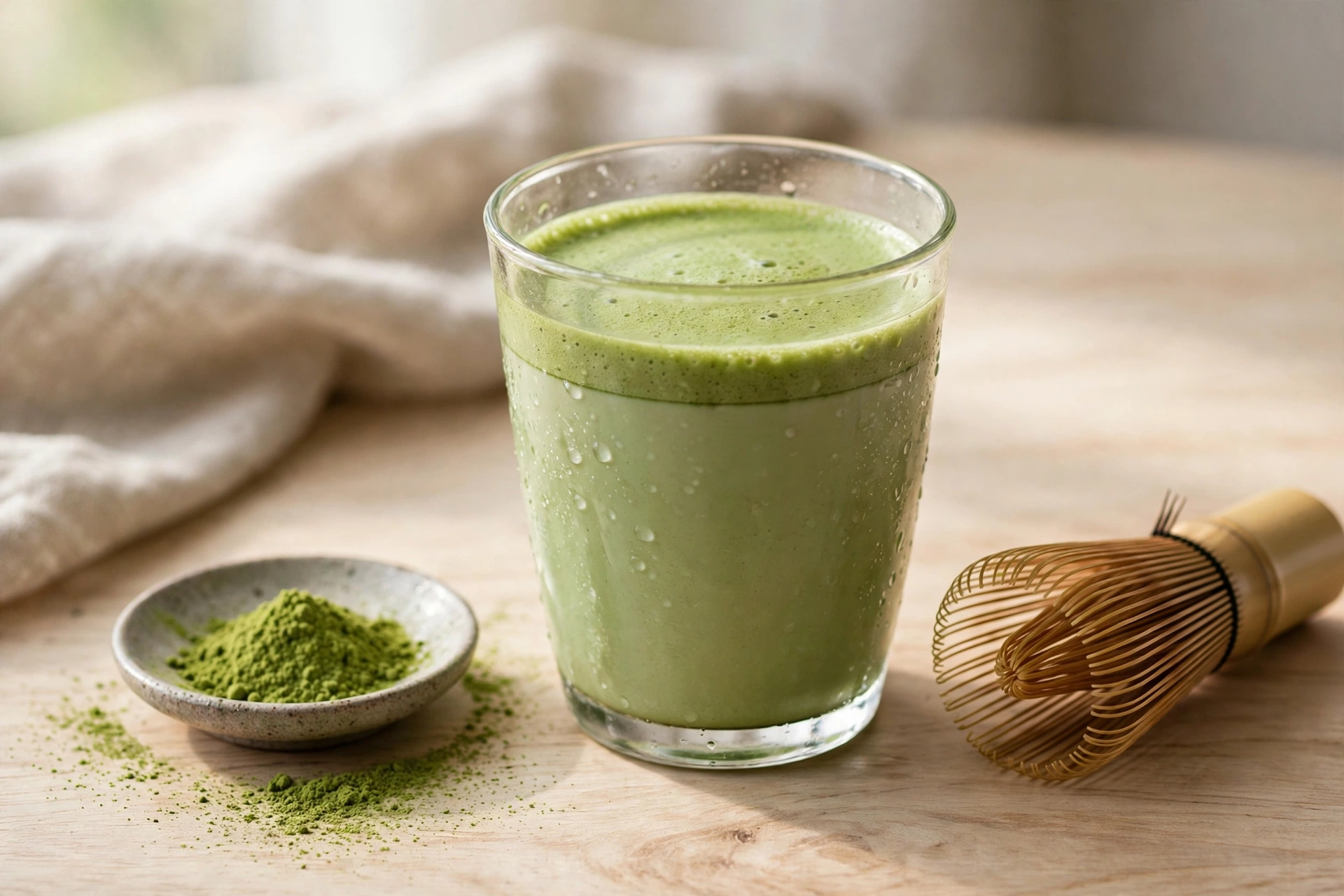
A matcha latte is simply matcha — finely ground green tea leaves — whisked with hot water and mixed with milk, served hot or over ice. Unlike regular green tea, where the leaves are steeped and discarded, matcha means you consume the whole leaf, ground to a powder. That is the key to both its vivid colour and its nutritional profile. It is not a miracle drink, but it does offer a genuinely useful combination: moderate caffeine, a calming amino acid, and a rich supply of antioxidants.
The short answer
A matcha latte offers steadier energy than coffee, thanks to caffeine paired with L-theanine, an amino acid found in tea that promotes calm alertness. It also provides catechins, the antioxidant compounds in green tea, and, depending on the milk, protein and calcium. The catch is the sugar: a sweetened café version can be a dessert in disguise, while an unsweetened homemade one is a much lighter drink.
What makes matcha different from green tea
Regular green tea is an infusion: hot water draws compounds out of the leaves, and the leaves are thrown away. Matcha is a suspension: the whole leaf is ground and whisked into the drink, so you take in more of the leaf’s compounds, including fibre and chlorophyll. That is why matcha tastes stronger and more grassy than a bag of green tea, and why its colour is so intensely green. Quality matters here: ceremonial-grade matcha, made from younger leaves, tastes smoother and less bitter than cheaper culinary grades, which are better suited to baking.
Steady energy without the coffee crash
A cup of matcha contains less caffeine than a typical cup of coffee — roughly a third to two-thirds as much, depending on how much powder you use — but the experience is different. L-theanine slows the absorption of caffeine and is linked with alpha brain waves associated with relaxed focus. Many drinkers describe the result as calm alertness: awake and able to concentrate, without the jittery peak and afternoon dip that strong coffee can bring. If coffee makes you anxious or disrupts your sleep, a matcha latte is worth trying as a morning alternative — though it still contains caffeine, so late-evening cups are not a good idea for light sleepers.
Antioxidants, in plain terms
Matcha is rich in catechins, particularly EGCG, a type of plant compound studied for its antioxidant activity. Antioxidants help counter the everyday oxidative stress that comes from metabolism, sunlight, and pollution. That does not mean a latte prevents disease — no single food does — but as part of a varied diet, matcha contributes a meaningful amount of these compounds in a single cup, more than a standard cup of steeped green tea. Think of it as one good habit among many, not a shield on its own.
Focus, mood, and everyday performance
The caffeine-plus-L-theanine combination is the most studied aspect of matcha. Research on tea compounds points to improved attention and reduced mental fatigue compared with caffeine alone, which matches what many drinkers report: a smoother, longer-lasting focus that suits desk work, study, and creative tasks. The effect is modest, not dramatic — it will not turn a bad night’s sleep into a sharp morning — but for a daily drink, a modest, reliable lift is exactly what most people want.
Weight and metabolism: a realistic view
Matcha is often marketed for weight loss, and the honest version is more restrained. Caffeine and catechins can slightly increase energy expenditure, and an unsweetened matcha latte is a low-calorie drink that can replace a sugary one. Those two facts together make it a sensible part of a weight-conscious routine. What it will not do is burn fat on its own, and a large sweetened latte with syrup and full-fat milk can contain as many calories as a small meal, cancelling the benefit entirely.
How to make a healthier matcha latte
The healthiest version is the simplest. Sift one to two teaspoons of matcha into a bowl, whisk with a small amount of hot — not boiling — water until smooth and frothy, then add warm or cold milk of your choice. Keep sweetener minimal or skip it: the milk already softens matcha’s grassy edge. Dairy milk adds protein and calcium; fortified oat or soy milk adds similar benefits for those avoiding dairy. Avoid pre-sweetened matcha mixes, which often contain more sugar than matcha. If you like it iced, whisk the matcha first, then pour over milk and ice — adding powder straight to cold milk leaves clumps.
Who should be careful?
Matcha contains caffeine, so people who are sensitive to it, pregnant, or managing anxiety or sleep problems should keep portions modest and avoid late-day cups. Tea can also reduce iron absorption from plant foods when drunk with meals, so if you rely on plant sources of iron, leave a gap between your latte and your meal. Matcha powder should be stored sealed, cool, and dark: light and air dull both its colour and its flavour within weeks.
Matcha latte vs coffee: which suits you?
Choose coffee if you want the strongest, fastest lift and you tolerate it well. Choose a matcha latte if you prefer gentler, longer-lasting energy, you like the taste, and you want the antioxidant content of whole-leaf tea. Some people alternate: coffee on training days, matcha on desk days. There is no wrong answer, only the drink that fits your body and your routine.
FAQs
How much caffeine is in a matcha latte?
It varies with the amount of powder, but a typical serving has roughly 30 to 70 milligrams, compared with about 80 to 100 milligrams in a cup of brewed coffee.
Is a matcha latte good for weight loss?
An unsweetened one can help, mainly by replacing a higher-calorie drink and providing a small metabolic lift. A sweetened café version is much less helpful.
Can I drink a matcha latte every day?
For most healthy adults, one daily cup is fine. Keep an eye on your total daily caffeine from all sources.
Does matcha latte help you sleep?
No — it contains caffeine, so it is a morning or early-afternoon drink, not a bedtime one. The L-theanine makes the energy calmer, not sleep-inducing.
Bottom line
A matcha latte earns its popularity honestly: steady energy, calm focus, and a rich supply of tea antioxidants in one pleasant drink. Keep it lightly sweetened, and it is a genuinely good daily habit.
Related reading
Fig Dry Fruit Benefits
Health Benefits of Magnesium Glycinate
Food & Nutrition