
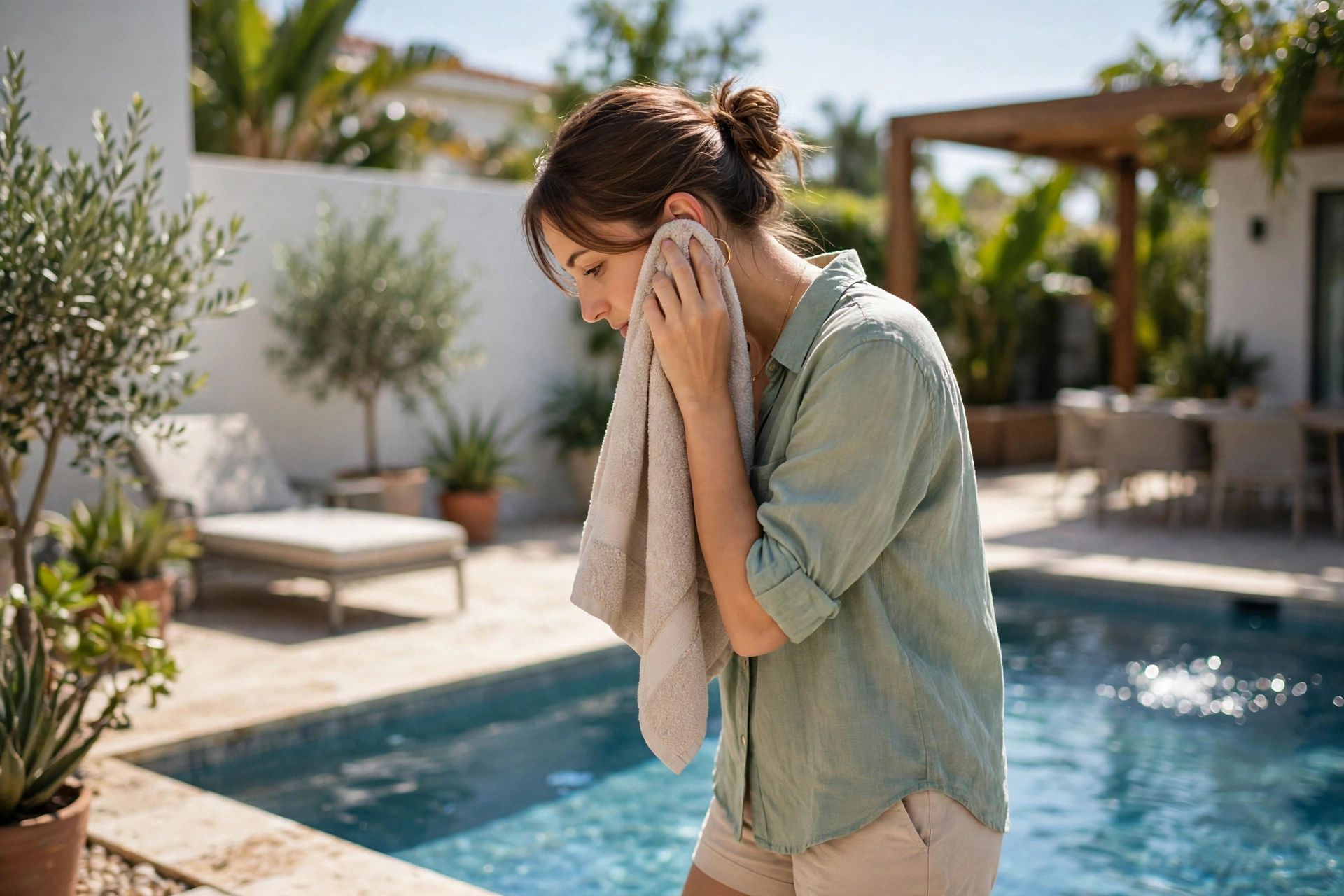
Water trapped in the ear after swimming or showering is common, uncomfortable, and usually harmless. It feels muffled, it tickles, and it can make you feel slightly off-balance. In most cases it clears on its own within a day, but a few gentle techniques can speed it up. The rule throughout is simple: be patient and gentle, and never push anything into the ear canal.
The short answer
Start with gravity: tilt your head so the affected ear faces down, gently tug the earlobe down and back to straighten the canal, and give the water a minute to drain. Chewing, yawning, or hopping gently on one foot often helps. If that fails, gentle warmth or drying drops can finish the job. Stop and seek advice if pain, discharge, or hearing loss appears, or if the water stays put for more than a day or two.
Why water gets stuck
The ear canal is not a straight tube; it curves, and a small bend can hold a droplet in place. Earwax can also trap water, acting like a dam. Normally, jaw movement and body heat clear the canal gradually, which is why the problem often solves itself while you go about your day. Water is more likely to linger after swimming in a pool or sea, after a long shower with the head tilted back, or if you already have a build-up of wax.
Method 1: gravity and the earlobe tug
Tilt your head to the side with the blocked ear pointing down. Gently pull the earlobe down and slightly back — this straightens the canal, much as a clinician does when examining the ear. Hold the position for thirty seconds or so, and shake your head gently from side to side. You can also lie on your side with the affected ear down for a few minutes. This alone clears most cases, and it is always the safest place to start.
Method 2: jaw movement
Chew gum, mime a wide yawn, or move your jaw from side to side while the ear is tilted down. Jaw movement shifts the tissues around the ear canal and helps open the Eustachian tube, the channel that connects the middle ear to the back of the nose. Many people find that a few big yawns, combined with the tilt, release water that tilting alone could not move.
Method 3: gentle hopping
Lean your head to the affected side and hop gently on one foot. The small jolts can dislodge a droplet held by surface tension. Keep the hops light — this is about vibration, not force — and hold on to something stable if your balance feels off. Children often clear water this way without thinking about it, which is a good sign of how little force is actually needed.
Method 4: warmth and evaporation
A hair dryer on its lowest heat and speed, held at least a foot away from the ear and moved back and forth for twenty to thirty seconds, can evaporate remaining moisture. A warm, damp cloth held against the outer ear for a few minutes works in a similar way, opening the canal slightly and encouraging drainage. Never use high heat, never hold a dryer close to the ear, and never pour hot water into the ear.
Method 5: drying drops
Over-the-counter drying drops, usually based on alcohol and glycerin, help water evaporate from the canal. A home mixture of equal parts rubbing alcohol and white vinegar is also widely described: a few drops, left for about thirty seconds, then tilted out. The alcohol dries the canal, and the vinegar creates an environment bacteria dislike. Do NOT use drops of any kind if you have ear tubes, a perforated eardrum, an active ear infection, pain, or discharge — in those cases, drops can cause harm, and a clinician should be your first call.
What NOT to do
Do not insert cotton swabs, hairpins, fingers, or any object into the ear canal. Swabs tend to push wax and water deeper, and they can scratch the canal or damage the eardrum. Do not use strong suction, do not blow hard into the ear, and do not try to “pop” the ear forcefully: the Valsalva manoeuvre — pinching the nose and blowing gently — can help equalise pressure, but forcing it risks damage. If a method hurts, stop immediately.
Preventing it next time
If you swim regularly, consider swimmer’s ear plugs or a swim cap that covers the ears. After swimming, tilt each ear down for a few seconds before you get dressed — catching the water early is easier than chasing it later. Dry the outer ear with a towel, and avoid digging at wax: wax protects the canal, and removing too much of it leaves the skin vulnerable to infection.
When to see a clinician
Seek medical advice promptly if water remains trapped for more than a day or two, or if you develop pain, itching that worsens, discharge, a bad smell, fever, dizziness, or noticeable hearing loss. These can signal swimmer’s ear — an infection of the outer ear canal — which needs proper treatment rather than home remedies. People with ear tubes, a perforated eardrum, diabetes, or a weakened immune system should seek advice sooner, since ear infections can progress faster for them.
FAQs
How long does water usually stay in the ear?
Most of the time it drains within a few hours, and almost always within a day. If it lasts beyond two days, get it checked.
Can water in the ear cause an infection?
Yes, if it lingers: trapped moisture softens the canal skin and lets bacteria grow, which is how swimmer’s ear starts. That is why drying the ear matters.
Is it safe to use a cotton swab just around the outside?
Drying the outer ear with a towel or a swab used only on the outside is fine. The danger is pushing anything inside the canal.
Why does my ear feel blocked after a cold?
That is usually fluid behind the eardrum or a blocked Eustachian tube rather than water in the outer canal. If it persists, or comes with pain or fever, see a clinician.
Bottom line
Tilt, tug, chew, and be patient: gravity and gentle movement clear most trapped water safely. Avoid anything that goes inside the ear, and treat pain, discharge, or water that lingers beyond a couple of days as a reason to seek professional advice, not to try harder at home.