
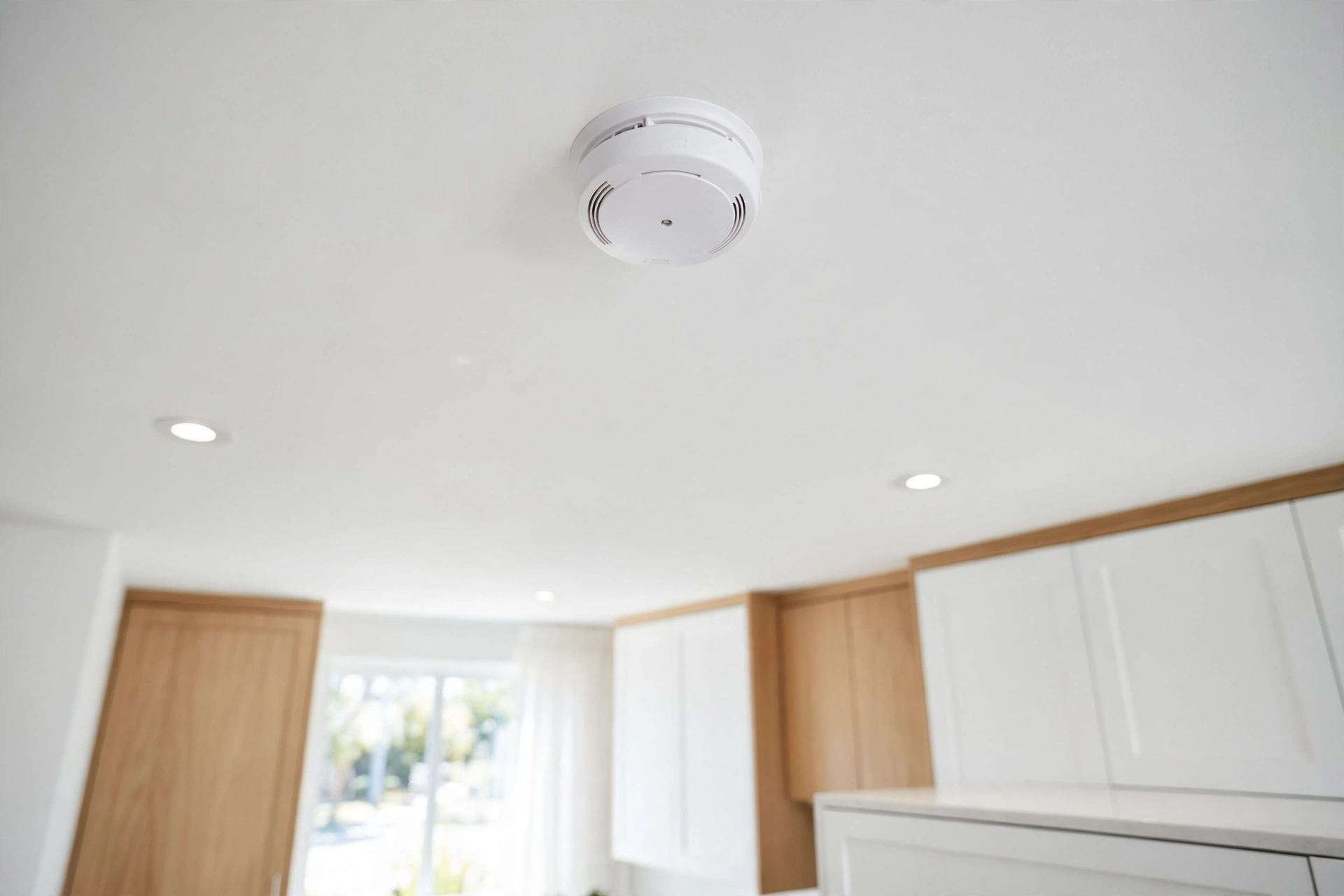
A smoke alarm sounding when there is no fire is more than annoying: it trains everyone in the house to ignore it, which is dangerous. The good news is that most false alarms have a short list of causes, and most of them are easy to fix. The first rule never changes, though: treat every alarm as real until you have checked for fire, smoke, or a burning smell.
The short answer
The most common causes are a low battery, steam or cooking particles reaching the sensor, dust or insects inside the unit, and an alarm placed too close to a bathroom, kitchen, or vent. An alarm older than about ten years can also become unreliable. Work through those causes in order — battery, cleaning, placement, age — and most nuisance alarms stop.
First: rule out a real problem
Before you silence anything, check for smoke, a burning smell, or heat. If you find any, leave the house and call emergency services. Never remove the battery or disconnect an alarm to stop the noise while you are unsure. Only once you are confident there is no fire should you start troubleshooting the alarm itself.
Cause 1: a dying battery
This is the single most common cause. Many alarms are designed to sound when their electrical current drops, and a dying battery drops the current just as smoke would. The classic sign is a short chirp every thirty to sixty seconds rather than a full alarm, but a weak battery can also trigger full false alarms. Replace the battery, even if it “should” still have life in it, and note the date. For sealed lithium units, the whole alarm needs replacing when its built-in battery runs down.
Cause 2: steam and cooking particles
Steam from a hot shower, a boiling pot, or a dishwasher can set off an alarm installed too close to a bathroom or kitchen, because moisture and fine particles interfere with the sensor in the same way smoke does. The same goes for cooking: frying, searing, broiling, and burnt toast all release particles that a nearby alarm will detect. If your alarm goes off mainly during cooking or after showers, placement is almost certainly the problem, not the alarm.
Cause 3: dust, insects, and residue
Dust builds up inside the sensing chamber over months and years, especially after decorating, sanding, or in a dusty room. Small insects can also crawl inside and disturb the sensor. Kitchen grease and airborne residue add to the problem. A gentle clean — vacuuming around the vents with a soft brush attachment and wiping the outside — often restores normal behaviour. Never paint over an alarm, and cover it temporarily during decorating work, remembering to uncover it afterwards.
Cause 4: bad placement
Placement rules exist for a reason. An alarm too close to a bathroom door catches steam; one too close to a cooking appliance catches every frying pan; one beside a supply vent or ceiling fan gets a constant stream of particles blown into it. Alarms belong on the ceiling or high on a wall, inside each bedroom, outside each sleeping area, and on every level of the home — but at a sensible distance from kitchens and bathrooms. If moving the alarm is not practical, a model designed to be less sensitive to cooking particles, installed in the right spot, may solve the problem.
Cause 5: age and electrical faults
Smoke alarms do not last forever: most manufacturers recommend replacement after about ten years, and older sensors become less reliable, producing more false alarms. Check the manufacture date printed on the unit. For hardwired alarms, power interruptions, loose wiring, or a failing backup battery can also cause beeping or random alarms; if a hardwired unit keeps alarming after a battery change and cleaning, an electrician should check the circuit. Interconnected alarms add one more wrinkle: one faulty unit can set off the whole house, so identify which unit started the alarm before replacing parts at random.
Cause 6: humidity, temperature, and chemicals
High humidity, sudden temperature changes, and fumes from fresh paint or chemical treatments can all trigger sensitive alarms. New paint is a known culprit: the volatile compounds released as paint dries can set off a nearby alarm for days. Ventilate well during and after painting, and expect a recently painted room to be more prone to nuisance alarms until the paint has fully cured.
How to fix it, step by step
- Confirm there is no fire, then find which alarm is sounding.
- Replace the battery, or the whole unit if it is sealed or over ten years old.
- Clean the vents gently with a vacuum brush and wipe the cover.
- Check the placement: is it near a bathroom, kitchen, vent, or fan? If so, move it to a better spot.
- Reset the alarm as its instructions describe, and test it with the test button.
- If one unit still misbehaves after all that, replace it — a faulty alarm is worse than no alarm only if it teaches you to ignore alarms, so do not leave a known faulty unit in place.
When to call a professional
Call an electrician if a hardwired alarm keeps faulting, if you suspect wiring damage, or if several interconnected alarms misbehave together. Replace any alarm that is damaged, discoloured by heat, or past its expiry date. And if you are ever unsure whether an alarm is a false one, treat it as real and get out first — troubleshooting can wait until everyone is safe.
FAQs
Why does my smoke alarm beep once every minute?
That is usually the low-battery warning. Replace the battery first, and if the beeping continues, check the unit’s age and wiring.
Can steam really set off a smoke alarm?
Yes. Steam and humidity carry fine moisture particles that the sensor can mistake for smoke, especially in ionisation-type alarms near bathrooms.
How often should I test my smoke alarm?
Test it monthly with the test button, change batteries at least once a year (or as the manufacturer directs), and replace the whole unit every ten years.
Should I just remove the battery to stop the noise?
No. A silenced alarm protects no one, and it is easy to forget to put the battery back. Fix the cause instead.
Bottom line
A smoke alarm that keeps going off is usually telling you something simple: its battery is low, it is dusty, it is badly placed, or it is old. Fix those in order, keep the alarm working, and you will stop dreading the sound — which means you will take it seriously on the day it matters.