
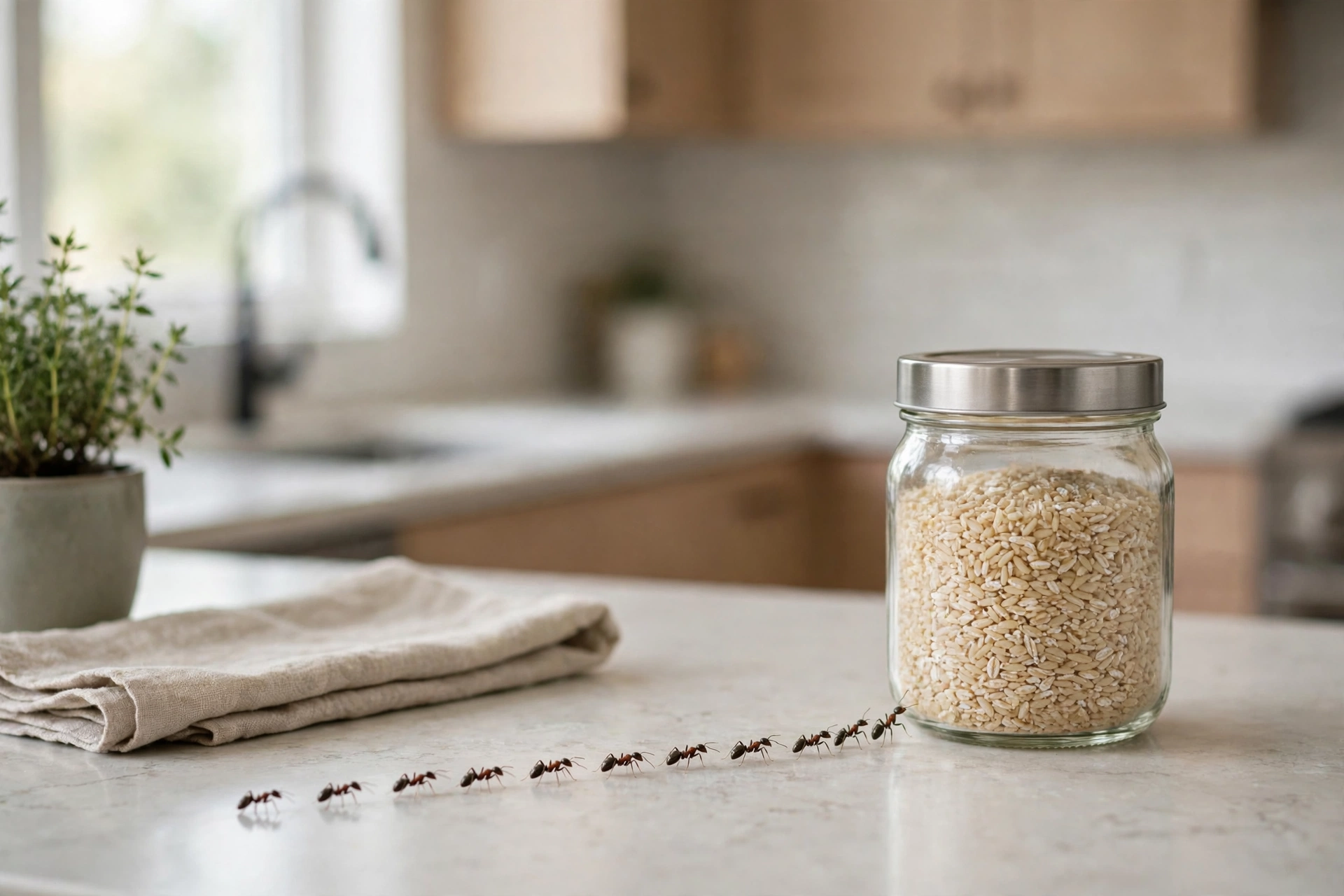
Seeing a neat line of ants marching across your kitchen counter is frustrating, and spraying the ants you can see rarely solves the problem. The ants on your counter are only the foragers. The colony — and the queen — is hidden somewhere else, and until the colony is dealt with, new ants will keep appearing. Getting rid of ants permanently means changing your approach: kill the colony, not just the trail, and then make your home hard to re-enter.
Why ants keep coming back
Ants follow scent trails left by scout ants. When a scout finds food, it lays down a pheromone trail that guides other workers to the same spot. That is why a line of ants can appear in exactly the same place day after day. Spraying the visible ants removes the workers but leaves the trail, the food source and the colony untouched. Within days, new workers follow the same route.
The other reason sprays fail is speed. Fast-acting sprays kill workers before they can carry anything back to the nest. The colony survives, the queen keeps producing new workers, and the cycle repeats.
Step 1: Find what is attracting them
Before you treat anything, watch the ants for a few minutes. Note where the trail starts, where it ends, and what the ants are carrying. Most indoor ants are after one of three things: sugary foods, greasy foods, or water. Common attractors include open sugar bowls, honey jars with sticky outsides, crumbs under the toaster, pet food left out overnight, and damp areas around sinks or leaking pipes.
Removing the attraction is half the treatment. Store dry foods in sealed containers, wipe up spills straight away, empty bins regularly, and do not leave pet food out all night. Keeping the kitchen clean also removes the scent trails ants rely on, which is why regular cleaning routines matter as much as any product.
Step 2: Use slow-acting baits, not just sprays
Slow-acting ant baits are the most effective home treatment for a permanent result. Worker ants carry the bait back to the colony and share it with other ants, including the queen. Because the bait works slowly, workers make many trips before they die, which gives the bait time to spread through the colony. It can take several days to a week before ant numbers drop noticeably — that delay is a sign the bait is working, not failing.
Place bait stations along the ant trail, near entry points, and wherever you see regular activity. Do not spray insecticide near bait stations, because repellent sprays can stop ants from reaching the bait. Follow the product label exactly, and keep baits out of reach of children and pets.
Step 3: Try natural options for light problems
For a small, occasional ant problem, several natural options can help. A spray of equal parts white vinegar and water disrupts scent trails on hard surfaces. Food-grade diatomaceous earth, sprinkled in dry areas where ants travel, damages their outer coating and dehydrates them. Peppermint oil, lemon juice and cinnamon are often cited as deterrents because ants dislike strong scents, though they work better as repellents than as colony killers.
A homemade borax and sugar mix is a classic DIY bait: sugar attracts the workers, and borax acts slowly enough for them to carry it home. Use it with care — borax must be kept well away from children and pets, and containers should be clearly labelled.
Step 4: Seal the entry points
Once ant numbers fall, stop the next colony from moving in. Walk around the outside of your home and look for gaps around doors, windows, pipes and cables. Seal small cracks with caulk, fit draught excluders on doors, and repair damaged window screens. Indoors, check where pipes enter walls under sinks, as these gaps are common ant highways.
Step 5: Remove water sources
Ants need water as well as food. Fix dripping taps, wipe up standing water around sinks, and empty saucers under pot plants. In bathrooms, keep surfaces dry and ventilate well so damp patches do not form.
Step 6: Keep it up for two weeks
The most common mistake is stopping too early. Even after visible ants disappear, keep baits in place and keep food sealed for at least two weeks. Colonies can rebound if a few workers survive, and a fresh scout can restart a trail in a home that has gone back to old habits.
When to call a professional
Call a pest control professional if ants keep returning after several weeks of baiting, if you see large numbers of flying ants indoors, if ants are nesting in walls or woodwork, or if you suspect carpenter ants, which can damage timber. A professional can identify the species and treat nests that are hard to reach.
Common mistakes to avoid
- Spraying the trail and assuming the job is done.
- Placing bait and spray in the same spot, so ants avoid the bait.
- Leaving pet food and open bins out overnight.
- Sealing entry points before the colony is dead, which can push ants to find a new route indoors.
- Expecting results overnight — colony treatments take days, not hours.
FAQs
Q: How long does it take to get rid of ants permanently?
A: With slow-acting baits, visible ants usually drop within a few days, and the colony is typically dealt with within one to two weeks. Sealing entry points and removing food sources keeps them from returning.
Q: Does vinegar kill ants?
A: Vinegar spray disrupts scent trails and can kill ants on contact, but it does not reach the colony, so it works best as a cleaning and repellent step alongside baits.
Q: Are ant baits safe around pets?
A: Modern bait stations are designed to limit exposure, but baits should still be placed where pets and children cannot reach them, and product labels should always be followed.
The bottom line
Permanent ant control is a three-part job: bait the colony, seal the entries, and remove the food and water that attracted ants in the first place. Do all three, give the bait time to work, and the trail across your counter should stay gone.
See more cleaning guides.
Sources: Healthline: How to Kill Ants; BB Pest: Why Ants Keep Coming Back and How to Stop Them.