
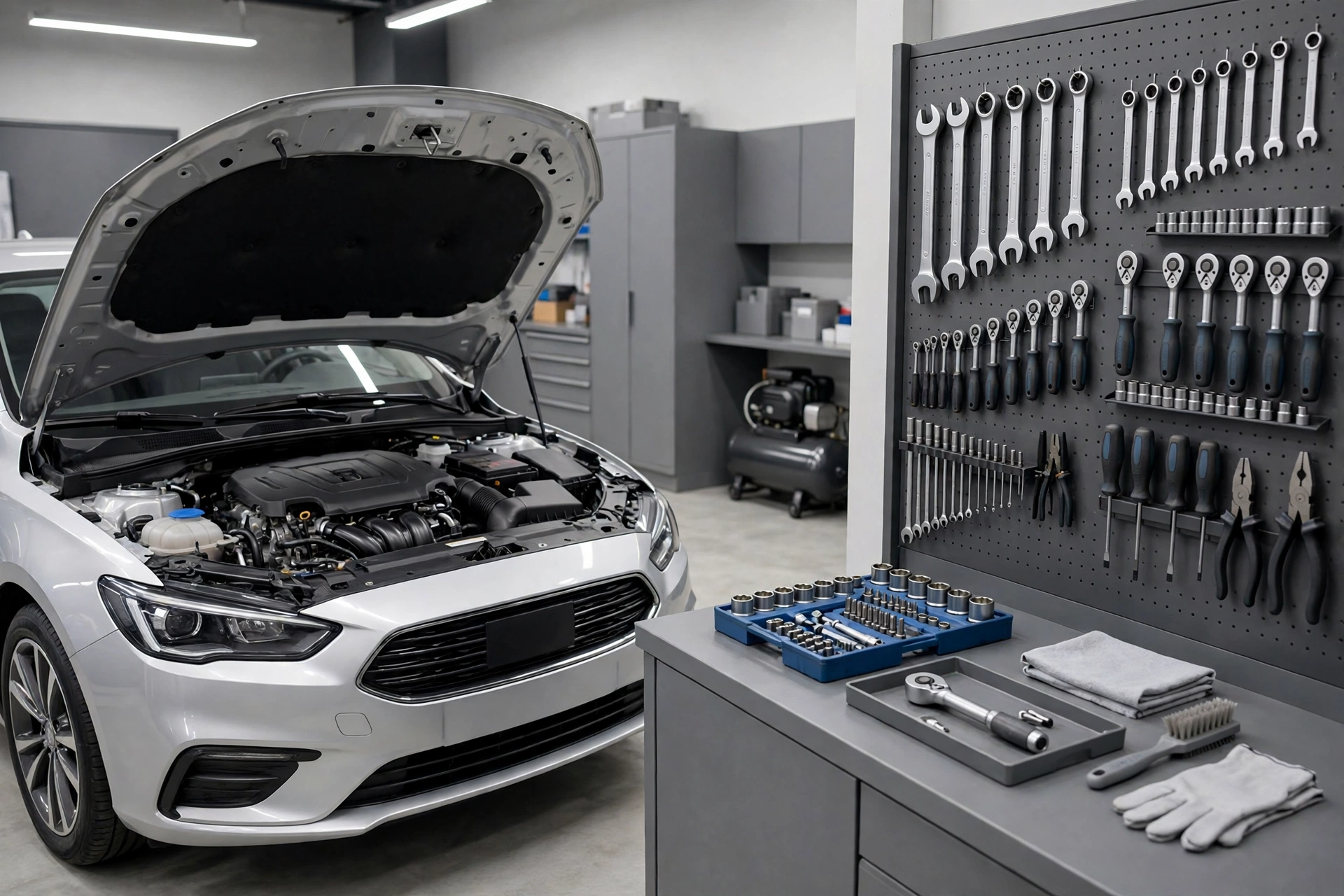
Car maintenance cost is one of those figures that sounds simple until you own the car. One driver reports a quiet year with little more than an oil change, while another faces brakes, tyres and a battery in the same month. Both experiences are normal. The difference is usually age, mileage, brand and how much of the work is routine rather than repair.
The short answer
For planning purposes, most mainstream cars cost roughly $900 to $1,200 a year to maintain, according to figures reported from RepairPal data. That range is widely quoted because it covers routine servicing plus common unscheduled repairs, but it does not tell the whole story. A newer, smaller car driven modestly may sit well below it, while an older luxury or European model can sit well above it.
One widely reported RepairPal-based average is around $936 a year. A separate AAA-based calculation, which counts wear items more broadly, works out higher, at roughly $1,400 a year for average mileage. Neither number is wrong. They simply count different things, which is why a single “average” should be treated as a budgeting starting point, not a promise.
What is usually included — and what is not
Routine maintenance normally includes oil and filter changes, air and cabin filters, tyre rotation, fluid checks and top-ups, wiper replacement, brake inspection, and the scheduled checks in the owner’s manual. Repairs are different: they replace something that has worn out or failed, such as brake pads, a battery, a suspension part or an alternator.
Tyres deserve special attention because they are often left out of headline averages. A set of four tyres can cost $500 to $1,500 fitted, and on typical mileage that works out at roughly $150 to $300 a year to set aside. If your budget only covers servicing, the year you need tyres will feel like a shock even though it was entirely predictable.
What pushes the cost up or down
Age matters more than almost anything else. A three-year-old car is mostly in its routine-service phase. A ten-year-old car is in its replacement phase, when rubber parts, suspension components and batteries are all reaching the end of their useful lives at around the same time.
Brand matters too. Reported brand averages illustrate the spread: a Honda owner is often reported at roughly $583 a year, while a Porsche owner is reported at roughly $1,623 a year. Parts prices, labour complexity and dealer servicing all play a part. Mileage matters in a similar way. A car driven twice as far does not simply cost twice as much, but it reaches service intervals, tyre changes and brake changes sooner, so costs bunch together.
Driving conditions also count. Short trips in stop-start traffic, dusty roads, extreme heat and cold, and towing all wear parts faster than steady motorway driving. The owner’s manual often has a “severe” service schedule for exactly this reason, and it is worth checking whether it applies to you.
A simple monthly budgeting method
Because real maintenance is lumpy — a $180 year followed by a $1,400 year is common — a monthly allowance works better than hoping for a cheap year. A practical approach is:
- Take your planning figure, for example $1,100 a year including a tyre allowance.
- Divide it by twelve and set that amount aside each month, about $92 in this example.
- Keep the fund separate from general spending, so a brake job does not become a credit-card job.
- After a year, adjust the figure up or down based on what you actually spent and what your manual says is due next.
If you drive very little, your figure can be lower, but do not drop it to zero. Time-based items such as fluids, rubber parts and batteries still age when a car sits. Our guide to long-term vehicle storage explains what to check when a car is parked for extended periods.
Common services and what to expect
Oil and filter changes are the most frequent job. A reported example for a 2016 Honda CR-V in Georgia puts an oil and filter change at $77 to $117, a cabin air filter at $68 to $104, and a tyre rotation at $47 to $68. Your own prices will vary by location, garage and vehicle, but the order of magnitude is useful: routine items are usually tens of dollars, not hundreds.
Brake pads are the next step up, commonly reported in the $250 to $500 range per axle, and batteries are commonly reported at $150 to $300 every three to five years. These are not emergencies if you plan for them. Brake pads wear gradually and are checked at services, and a battery usually gives warning signs, such as slow starting, before it fails completely.
Small jobs are worth doing on time. Worn wipers, for example, are cheap and affect safety directly in rain. See our guide to choosing and maintaining windshield wipers for what to look for. Keeping the interior clean matters too, and the same basic approach used for cleaning a carpet at home works for fabric car mats and upholstery.
DIY, independent garage or dealer?
Doing basic work yourself can save labour costs, but only for jobs you can do safely and correctly. Checking fluids, tyre pressures and wiper condition is within reach for most owners. Brake work, steering, suspension and anything involving high-voltage systems in hybrids and electric cars is best left to trained technicians.
An independent garage is often cheaper than a dealer for out-of-warranty cars, while a dealer may be the sensible choice for warranty work, recalls and model-specific electronics. Whichever route you choose, ask for the old parts back on larger jobs, ask what is urgent and what can wait, and get a written quote before work starts. A second opinion is reasonable for any bill that is much higher than expected, especially if it bundles several unrelated jobs together.
Electric cars: cheaper to maintain, different costs
Electric cars generally have fewer moving parts, no oil changes and less brake wear, because regenerative braking does much of the slowing. That usually means lower routine maintenance costs. The trade-off is that tyres can wear faster because of the car’s weight and instant torque, and specialist repairs, when needed, can be expensive. The overall pattern is the same, though: budget monthly, expect lumpy years, and follow the manufacturer’s schedule rather than guessing.
Warning signs that deserve attention now
Some costs should not be deferred. Grinding brakes, a temperature warning light, a sudden loss of power steering, a strong smell of fuel, or a dashboard warning that stays on all need prompt attention. Delaying these rarely saves money. It usually turns a repair into a larger repair, and in some cases it creates a safety risk.
Frequently asked questions
How much should I budget for car maintenance each year?
Use $900 to $1,200 a year as a starting point for a mainstream car, plus a tyre allowance if your figure does not already include it. Adjust for your car’s age, brand and mileage after your first year of records.
Why do two similar cars cost different amounts to maintain?
Age, mileage, brand, driving conditions and service history all matter. Two cars of the same age can be at very different points in their replacement cycle.
Is it cheaper to maintain an older car or buy a newer one?
Not automatically. An older car with modest repair bills is often cheaper overall than a new car’s purchase cost and depreciation. The calculation changes when repairs become frequent, unpredictable or safety-related.
Does skipping services actually save money?
Rarely. Missed oil changes, neglected coolant and worn brakes tend to create larger bills later, and a poor service history also reduces resale value.
For a broader reported breakdown of annual costs, see Insurify’s guide to car maintenance costs and AutoCalcHub’s average car maintenance cost guide. Both are useful for comparing how different sources count the same spending.
The honest version of car maintenance cost is less exciting than a single number, but it is more useful: plan for roughly $1,000 a year, expect some years to be cheaper and some to be dearer, and let the manufacturer’s schedule, not a surprise bill, decide when work is due.