
Fruit flies are small, but they are stubborn. A trap can catch dozens of them and still leave you with the same problem a week later, because traps only deal with the adults you can see. The real fix has two parts: remove the places where they breed, and only then trap what is left. Done in that order, most kitchen infestations clear up within a week or two.
Why fruit flies appear so suddenly
Fruit flies are drawn to fermenting fruit and vegetables, sugary liquids, and the damp, organic film that builds up in drains, bins and mops. They often arrive on grocery produce as tiny eggs, then hatch once the fruit ripens on your counter. That is why a clean-looking kitchen can still get them: the source may be one overripe banana, a recycling bin that was never rinsed, or a slow drain you rarely think about.
They also reproduce fast. Eggs can hatch within about a day in warm conditions, so a handful of flies on Monday can become a visible cloud by the weekend if the breeding site stays in place. Speed matters, but panic does not help. Work through the steps below in order and you will solve the cause, not just the symptom.
Step 1: Find the breeding site
Before you set a single trap, spend ten minutes hunting for the source. Check these places in order:
- Fruit bowls and vegetable baskets, including anything soft, bruised or forgotten at the bottom.
- Kitchen bins and recycling, especially sticky jars, cans and bottles.
- The sink drain, garbage disposal and the area under the sink.
- Damp cloths, mops and sponges left sitting in water.
- Any spilled juice, wine or vinegar that was wiped up but never properly cleaned.
If flies cluster in one spot, you have probably found it. Remove overripe produce, empty and rinse the bin, and wipe the area down. If they hover mainly around the sink, the drain is the likely culprit, and step 3 below matters most.
Step 2: Remove the food they are breeding on
Refrigerate ripe fruit, or freeze bananas and berries you plan to use later. Throw away anything overripe or damaged, sealed in a bag so flies cannot reach it on the way to the bin. Rinse recyclables before they go in the bin, and give the bin itself a wash if it smells sweet or sticky. Wipe counters, clean up spills straight away, and replace damp sponges and cloths. These small jobs remove the next generation before it hatches, which is something no trap can do on its own.
Step 3: Clean the drain properly
A drain can keep an infestation going long after the fruit is gone. The slimy layer inside the pipe is an ideal breeding surface, and pouring bleach down it rarely solves the problem because bleach runs through too quickly to clear that film. Instead, use a bacterial or enzyme-based drain cleaner according to its label, or clean the drain with baking soda and vinegar followed by a flush of boiling water, and repeat for a few days if flies persist around the sink. Also check for slow or gurgling drains, which can point to a build-up worth clearing properly.
Step 4: Trap the adults that remain
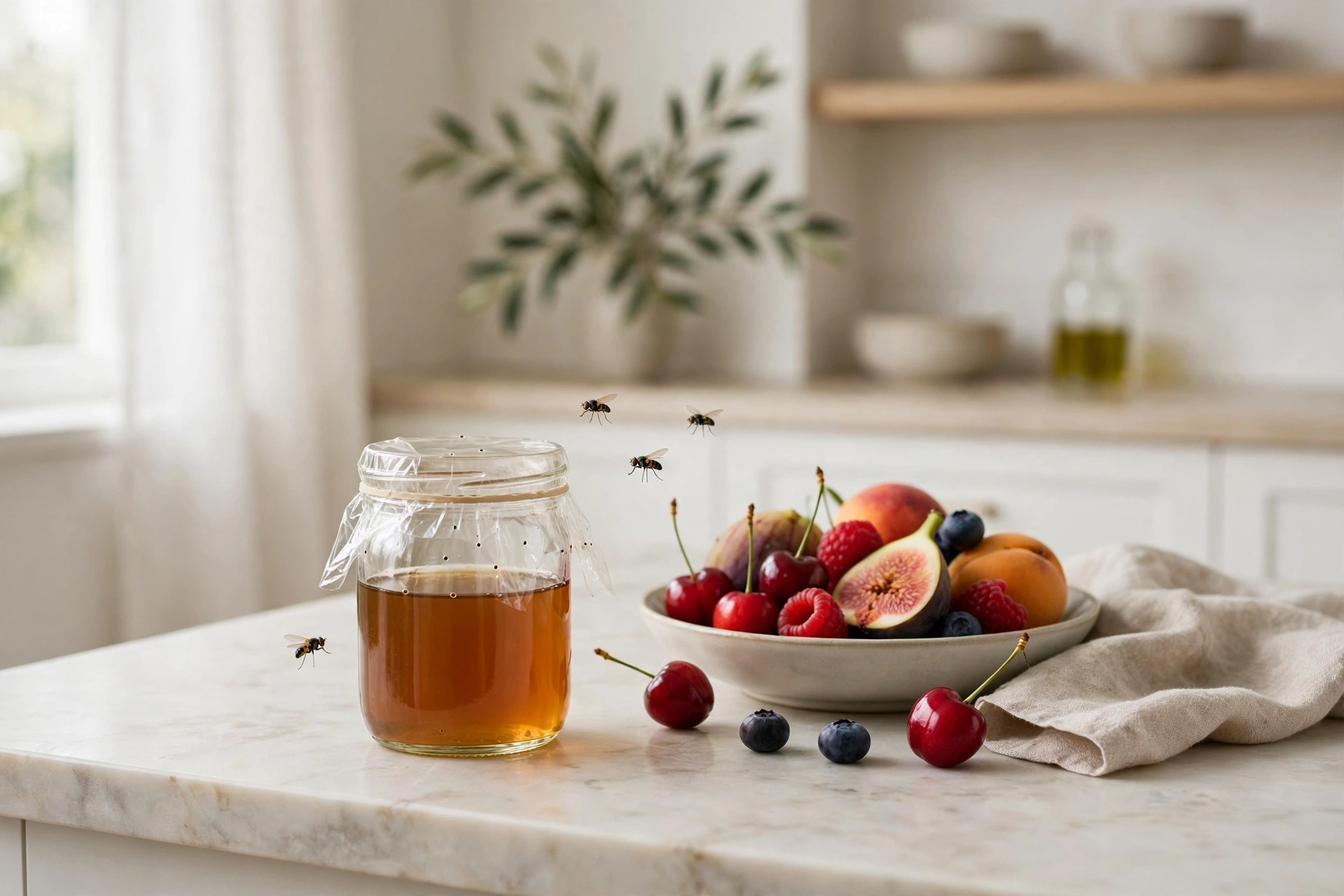
With breeding sites removed, a simple trap will finish the job. The classic version works well: pour a little apple cider vinegar into a small jar or bowl, add a drop or two of dish soap, and cover it with plastic wrap pierced with a few small holes. The vinegar attracts the flies, the soap breaks the surface tension so they sink, and the cover makes escape harder. Place traps near the fruit bowl and the sink, not in the middle of the room, and refresh the liquid every couple of days.
Other traps work on the same idea. A jar with a piece of overripe fruit under pierced wrap, or a nearly finished wine bottle with a paper funnel in the neck, will both catch flies. What matters is not which trap you choose, but that you use it alongside the cleaning steps above. One trap in a dirty kitchen will fill up and change nothing.
Are these fruit flies, drain flies or fungus gnats?
Not every tiny kitchen fly is a fruit fly, and the fix changes with the insect. Fruit flies hover around fruit, bins and drains and are usually reddish-brown with red eyes. Drain flies are fuzzy, moth-like and stay close to drains and bathrooms. Fungus gnats are slender, dark and hover around houseplant soil. If your flies are coming from a plant pot, let the top layer of soil dry out between waterings and remove dead leaves from the surface. Identifying the insect first saves you from trapping the wrong pest for weeks.
How long will it take?
With the source removed and traps in place, you should see a clear drop within a few days, and most infestations end within one to two weeks. The life cycle explains the wait: traps catch adults, but eggs and larvae already present still need time to hatch and be caught. If numbers are unchanged after two to three weeks of proper cleaning and trapping, the breeding site is probably still there, or you are dealing with a different insect. At that point, a professional pest inspection is worth considering, especially if flies are also appearing in bathrooms or bedrooms.
Keeping them from coming back
Prevention is mostly habit. Store ripe fruit in the fridge, empty bins regularly, rinse recyclables, wipe spills promptly, and clean drains and damp cloths on a routine basis rather than only when flies appear. Wash new fruit when you bring it home, since eggs can travel on the skin. None of this is complicated, but done consistently it removes the conditions fruit flies need, which is a far better result than winning the same battle every summer.
Related reading: How to Get Rid of Ants Permanently, Signs of Roaches in Apartment, How to Clean a Carpet.
Sources: Orkin fruit fly guide; Consumer Reports on fruit flies.
FAQs
Q: Do fruit flies bite? A: No. They are a nuisance and a hygiene concern around food, but they do not bite people.
Q: Can I just use a trap and skip the cleaning? A: You can catch many adults that way, but the infestation will keep renewing itself until the breeding site is removed.
Q: Are vinegar traps safe around food? A: Yes, when placed away from open food and kept out of reach of small children and pets. Keep traps covered and dispose of them in a sealed bag.
Q: Why do fruit flies keep appearing in winter? A: Indoor heating keeps kitchens warm enough for them to breed year-round, especially around drains and stored produce.