
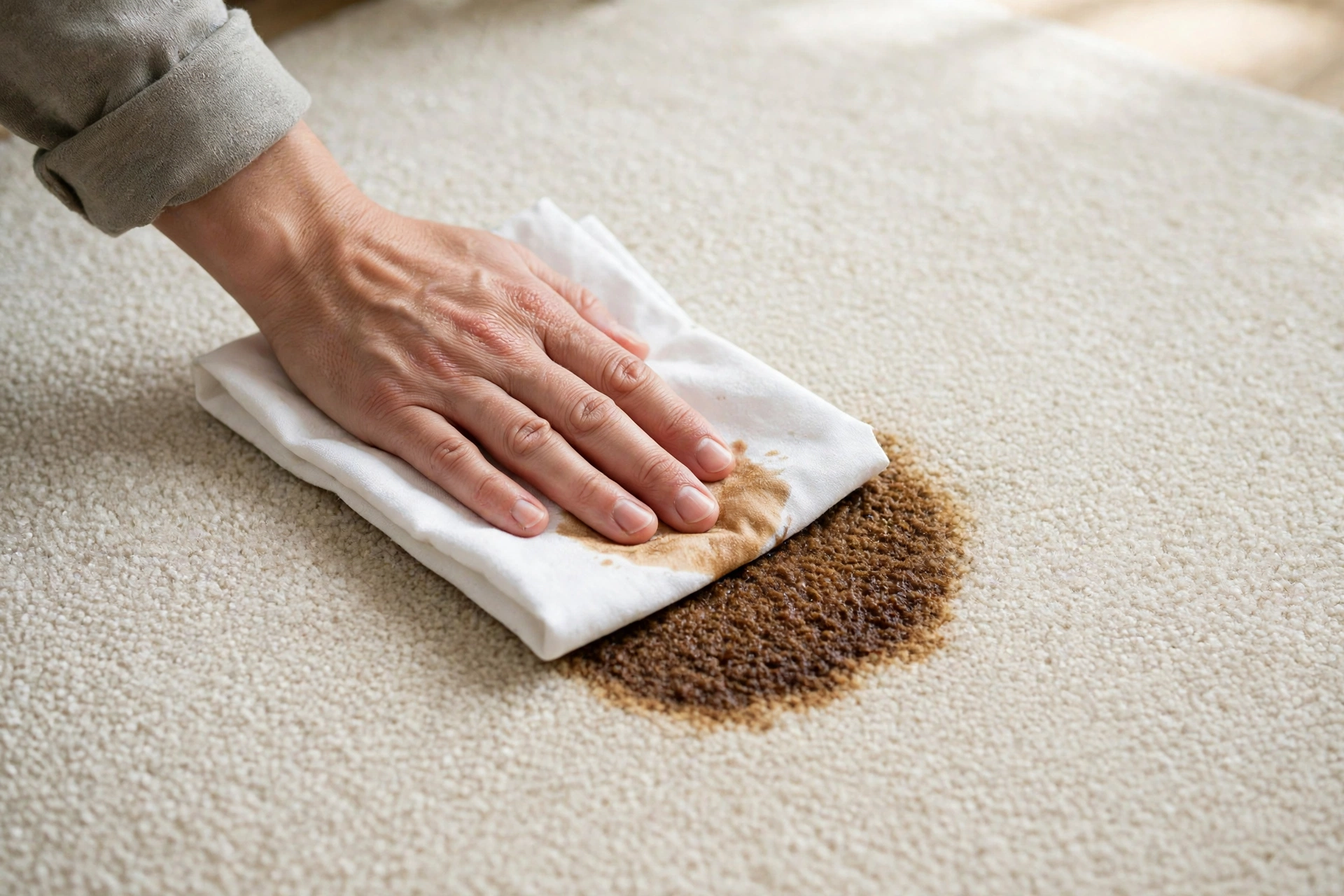
A spilled cup of coffee on carpet feels like a disaster, especially on a light-coloured rug. But coffee is one of the more forgiving carpet stains — if you act correctly and quickly. The single most important rule is simple: blot, do not rub. Rubbing pushes coffee deeper into fibres, spreads the stain and frays the pile. Blotting lifts it out.
This guide covers the best method for a fresh spill, how to tackle a dried or set-in stain, what to do when coffee contained milk or sugar, and the mistakes that make a stain permanent.
What you need
Gather these before you start, so you are not hunting for supplies with a wet stain spreading:
- Clean white cloths, rags or paper towels (white avoids dye transfer to the carpet)
- Cold water
- Mild liquid dish soap
- White vinegar
- Baking soda
- A spray bottle (helpful, not essential)
- A vacuum cleaner, for dried stains
Avoid coloured cloths, harsh bleach on most carpets, and hot water at the start — heat can set tannin stains like coffee.
Step 1: Blot up as much coffee as possible
For a fresh spill, press a clean white cloth or paper towel firmly onto the stain and lift. Repeat with fresh sections of cloth until no more liquid transfers. Work from the outside of the stain inward, so you do not spread it to clean carpet.
Do not scrub, twist the cloth into the pile, or use a brush at this stage. Your goal is to remove liquid, not to work it deeper. If a large amount spilled, you may need several towels. Patience here saves effort later.
Step 2: Apply the dish soap and vinegar solution
The classic, effective solution for coffee on carpet is mild and simple:
- 1 tablespoon of mild liquid dish soap
- 1 tablespoon of white vinegar
- 2 cups of warm (not hot) water
Mix well. Dampen a clean white cloth with the solution — do not pour it directly onto the carpet, which can over-wet the pile and padding — and blot the stain gently, working from the outside in. Let the solution sit for a few minutes, then blot with a fresh cloth to lift the loosened stain.
Repeat the blot-and-lift cycle, using fresh sections of cloth, until the cloth comes away clean. This may take several rounds for a large spill. Resist the urge to soak the carpet; repeated light applications work better than one flood.
Step 3: Rinse by blotting with cold water
Soap residue left in carpet attracts dirt, so rinsing matters. Dampen a clean cloth with cold water and blot the area to remove soap and vinegar. Repeat with fresh cloths until the area no longer feels slippery or soapy.
Step 4: Blot dry and let it air dry
Press a dry white towel firmly onto the area to absorb as much moisture as possible. You can stand on the towel to add pressure, or place a stack of towels over the spot with a weight on top for a while. Then let the carpet air dry completely, with air circulation if possible. Avoid walking on the damp area more than necessary, and do not apply heat from a hair dryer or radiator — heat can set any remaining tannin.
Dried or set-in coffee stains
A stain that has dried needs a little more patience, but it is often still removable:
- Vacuum the area thoroughly to remove dried coffee residue and loose debris.
- Dampen the stain lightly with cold water and blot — do not soak it.
- Apply the same dish soap and vinegar solution with a cloth, blot, and let it sit for 5 to 10 minutes.
- Blot, rinse with cold water by blotting, and repeat as needed.
- If a faint mark remains, try the baking soda method below.
For very old stains, several cycles may be needed over a day, with drying time between attempts. If the stain has been heat-set — for example, by steam cleaning with heat before treatment — it may be permanent, and professional cleaning is the next option.
The baking soda method
Baking soda works differently from soap: it absorbs moisture and draws pigments upward as it dries, rather than dissolving them. It is especially useful for a stain that keeps reappearing after drying — a sign of wicking from the carpet pad underneath.
- After blotting and cleaning as above, lightly mist the area with cold water (do not soak it).
- Sprinkle a generous layer of baking soda over the stain.
- Leave it for 30 to 60 minutes for a fresh stain, or several hours or overnight for an older one, covered with a breathable towel.
- Vacuum thoroughly once dry, and repeat if a faint mark remains.
Baking soda is not a bleach and is safe for most carpet fibres, but test any method on a hidden spot first if your carpet is wool or unusually dyed, and vacuum completely so no powder residue remains.
Coffee with milk or sugar
Coffee with milk, cream or sugar needs one extra consideration: the dairy and sugar can leave a sticky residue and, if left, an odour. The dish soap in the solution above helps break down the fatty, sticky component. After the main cleaning, rinse particularly well by blotting with cold water, so no sugary residue remains to attract dirt or smell. If an odour persists after drying, a baking soda treatment followed by thorough vacuuming often helps.
Stains on delicate or wool carpet
Wool, silk and other delicate fibres need gentler handling:
- Test any solution on a hidden area first and wait for it to dry before proceeding.
- Use cold water only, and the mildest soap solution.
- Blot very gently; do not agitate wool fibres, which can felt or distort.
- Avoid oxygen bleach, ammonia and harsh carpet cleaners unless the care label or manufacturer specifically allows them.
- For valuable or antique rugs, professional cleaning is safer than repeated home attempts.
If you are unsure what your carpet is made of, check the manufacturer’s care information or test in the least visible corner.
Mistakes that make coffee stains worse
- Rubbing or scrubbing: spreads the stain and damages fibres.
- Using hot water first: heat sets tannin stains like coffee and tea.
- Over-wetting: soaking the carpet can push the stain into the pad, where it wicks back up as the carpet dries.
- Using coloured cloths: dye can transfer to light carpet.
- Mixing bleach with vinegar or ammonia: dangerous fumes, and bleach can damage or discolour carpet.
- Skipping the rinse: soap residue attracts dirt, so the spot looks dirty again within days.
- Steam cleaning an untreated stain: heat and pressure can set it permanently. Treat the stain first.
When to call a professional
Consider professional carpet cleaning if the stain remains after several careful attempts, if it covers a large area, if the carpet is wool, silk or antique, or if there is a lingering odour suggesting the pad underneath is affected. A professional can assess fibre type, use extraction equipment that home blotting cannot match, and treat the pad if needed. Tell them what you have already tried — especially if heat or bleach was involved — so they can choose the right approach.
Preventing the next spill
You cannot prevent every spill, but a few habits reduce damage:
- Use mugs with lids in carpeted rooms, especially around children and pets.
- Keep a stack of white cloths accessible, so blotting starts within seconds, not minutes.
- Treat spills immediately; coffee that sits for hours is harder to remove than coffee blotted at once.
- Consider a washable rug or runner in high-risk spots, such as beside a favourite armchair.
Frequently asked questions
Does vinegar remove coffee stains from carpet?
Yes, as part of a mild solution. White vinegar helps break down the tannin stain, especially combined with a small amount of dish soap in warm water. Apply with a cloth and blot — do not pour vinegar directly onto the carpet, and rinse well afterwards.
Can I use baking soda alone on a coffee stain?
Baking soda helps draw out moisture and pigments, especially for stains that reappear after drying, but it works best after blotting and a soap-solution clean. Sprinkle it on a lightly damp stain, leave it to dry, then vacuum thoroughly.
Will coffee stains come out of white carpet?
Often, yes, if treated promptly by blotting and the soap-and-vinegar method. White carpet shows every trace, so repeat blotting cycles and a thorough rinse matter more. Old, heat-set stains on white carpet are the hardest and may need professional help.
Why does a coffee stain reappear after it dries?
This is wicking: coffee that reached the carpet pad rises back to the surface as the carpet dries. Repeat light cleaning and a baking soda treatment, with full drying between attempts, rather than soaking the area again.
The bottom line
The best way to remove coffee stains from carpet is unglamorous but reliable: blot immediately, clean with a mild dish soap and white vinegar solution applied by cloth, rinse by blotting with cold water, and dry thoroughly. For dried stains, add patience, vacuuming and a baking soda treatment. Avoid rubbing, hot water and over-wetting, and you will save most carpets from a morning mishap.
Related reading
- https://alittletestblog.com/how-to-clean-a-carpet/
- https://alittletestblog.com/how-to-remove-oil-stains-from-clothes/
- https://alittletestblog.com/how-to-get-rid-of-ants-permanently/
- https://www.homesandgardens.com/advice/how-to-remove-coffee-stains&
- https://www.homemadesimple.com/in-the-home/coffee-stain-cleaning-guide-carpet-clothes-mugs/