
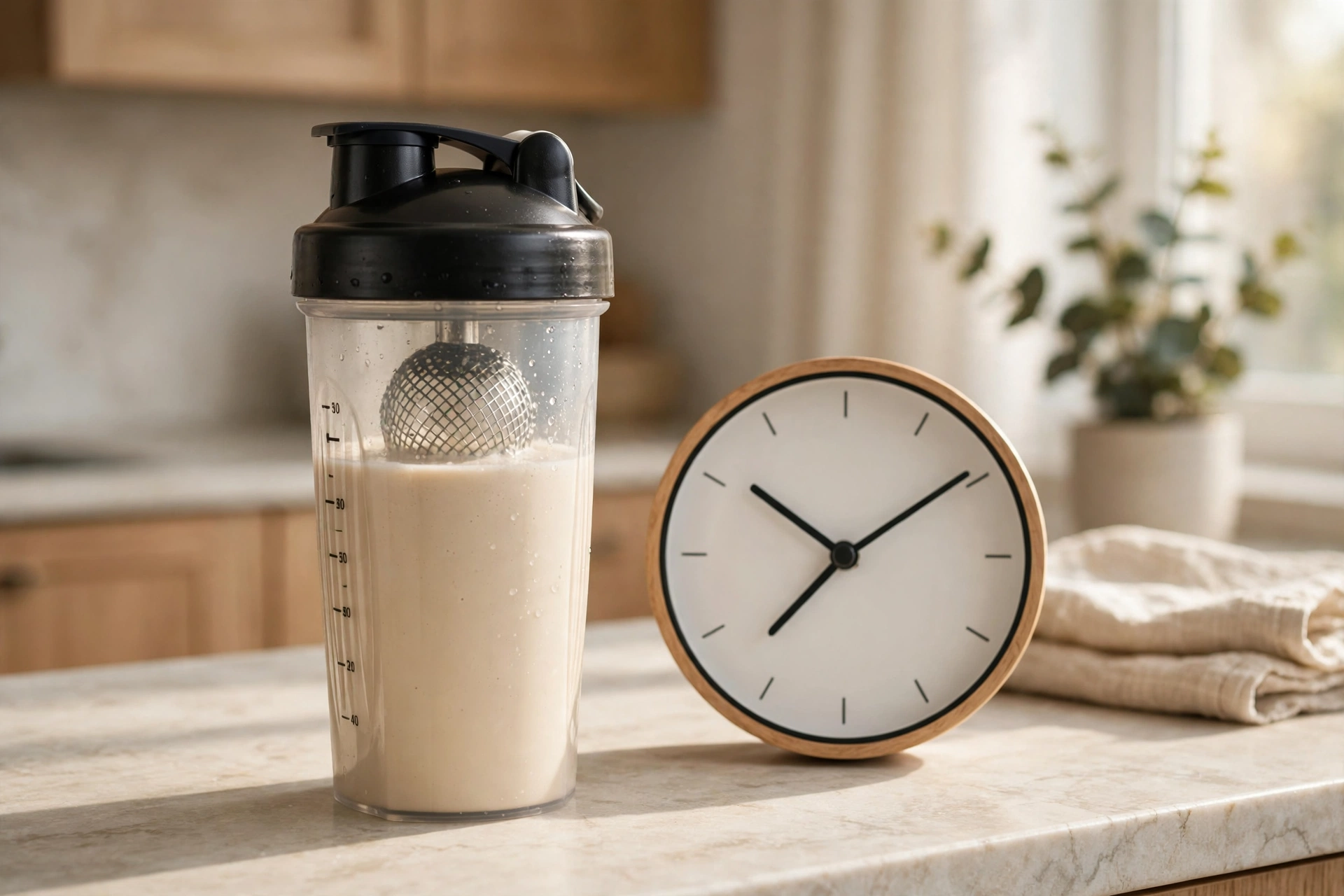
Does a Protein Shake Break a Fast?
Yes. A protein shake breaks a fast. That is the straightforward answer, and it holds for whey, casein, soy, pea, and other protein powders, whether mixed with water, milk, or a plant-based drink. A shake is food in liquid form: it contains calories and protein, and both move the body out of the fasted state. The more useful question is not whether it breaks a fast, but whether that matters for your goal — and when a shake fits best instead.
Why a shake ends the fast
Fasting, in the usual intermittent fasting sense, means taking in no calories during the fasting window. A typical protein shake contains roughly 100–200 calories and 20–30 grams of protein, along with small amounts of carbohydrate and fat depending on the product and the liquid used. Three things then happen. First, digestion starts, so the gut is no longer at rest. Second, amino acids — especially leucine — trigger an insulin response, even though protein raises insulin less sharply than sugar does. Third, amino acid availability switches on growth signalling pathways that pause cellular cleanup processes associated with fasting. None of this makes protein unhealthy; it simply means the body is now in fed mode, not fasted mode.
Does the type of shake change the answer?
No, not in any practical sense. Protein water, clear whey, meal replacement shakes, and high-protein smoothies all contain calories and amino acids, so all of them break a strict fast. A shake with added sugar, milk, or fruit breaks it more clearly, but even a plain scoop in water crosses the line. The same logic applies to branched-chain amino acid drinks and collagen drinks: if it provides protein or calories, it ends a clean fast. Very small, near-zero-calorie flavourings are a grey area that some fasting plans tolerate, but a full protein shake is not in that grey area.
What about a “small” shake or half a scoop?
Halving the shake halves the calories, but it does not preserve a strict fast. A clean fast is defined by no meaningful calorie intake, not by a calorie budget. Some flexible approaches allow a small number of calories and still aim for overall calorie control, and for weight loss that flexibility may be harmless. But if your goal is a strict fast — for gut rest, for low insulin, or for the cellular processes linked to fasting — a half shake still breaks it. Be honest about which version you are following, and judge the result by that version’s rules.
What you can drink during a fast
During a fasting window, stick to drinks with no calories and no protein: water, sparkling water, black coffee, and unsweetened tea. Plain electrolytes without calories or sweeteners that raise insulin are commonly accepted, though products vary, so check the label. Milk in coffee, juice, flavoured waters with calories, and any shake or smoothie belong in the eating window, not the fasting window.
When a protein shake is actually a good idea
A shake is not the enemy of intermittent fasting; it is just badly timed during a fast. Inside the eating window, a shake is one of the easiest ways to reach a daily protein target, especially when the eating window is short and appetite is limited. Protein helps preserve lean muscle during weight loss, supports recovery after training, and keeps you fuller for longer than carbohydrate alone. Many people find it most useful as the first meal after a fast, after a workout, or as part of a balanced meal — not as a drink sipped through the fasting hours.
Timing tips for training and fasting
If you train while fasting, you do not need a shake mid-workout to protect muscle in a short session, but plan your eating window so protein follows training reasonably soon afterwards. If you train intensely in the morning and your eating window does not open until much later, consider shifting the window rather than breaking the fast with a shake and calling it fasting. Consistency matters more than perfection: a plan you can follow most days beats a strict plan you abandon.
Common misunderstandings
- “It is only liquid, so it does not count”: liquids with calories count just like solid food.
- “Protein does not spike blood sugar much, so it is fine”: blood sugar is not the only signal; insulin and amino acid signalling also end the fasted state.
- “Zero-sugar means zero-calorie”: many zero-sugar shakes still contain protein and therefore calories.
- “One shake will not ruin progress”: for weight loss, one shake may barely affect the week’s total, but it still ends that day’s fast. The distinction matters if you are tracking fasting hours strictly.
Who should be careful with fasting itself?
Intermittent fasting is not suitable for everyone. People who are pregnant or breastfeeding, have a history of eating disorders, take medicines that must be taken with food, have diabetes, or have other medical conditions should get medical advice before fasting. Protein needs also vary with age, activity, and health, so a shake is a supplement to a diet, not a replacement for varied meals.
FAQs
Does a protein shake break a fast for weight loss?
Technically yes, because it adds calories. Practically, if your main goal is overall calorie control, having the shake in your eating window keeps both goals intact.
Can I drink a protein shake before a morning workout while fasting?
That would break the fast. If you prefer to train fed, open your eating window earlier instead.
What breaks a fast besides protein shakes?
Anything with meaningful calories: food, juice, milk, sugary drinks, broths, and caloric supplements. Water, black coffee, and plain tea generally do not.
Is collagen different from whey for fasting?
No. Collagen is protein, so it provides amino acids and calories and breaks a strict fast in the same way.
Bottom line
A protein shake breaks a fast because it contains calories and protein that trigger digestion, insulin, and fed-state signalling. Save shakes for your eating window, where they are genuinely useful, and keep the fasting window to water, black coffee, and unsweetened tea. That simple timing rule gives you both the benefits of fasting and the benefits of enough protein.
Related reading
- Health Benefits of Magnesium Glycinate
- Fig Dry Fruit Benefits
- What Causes Bad Breath?
- Health & Fitness