
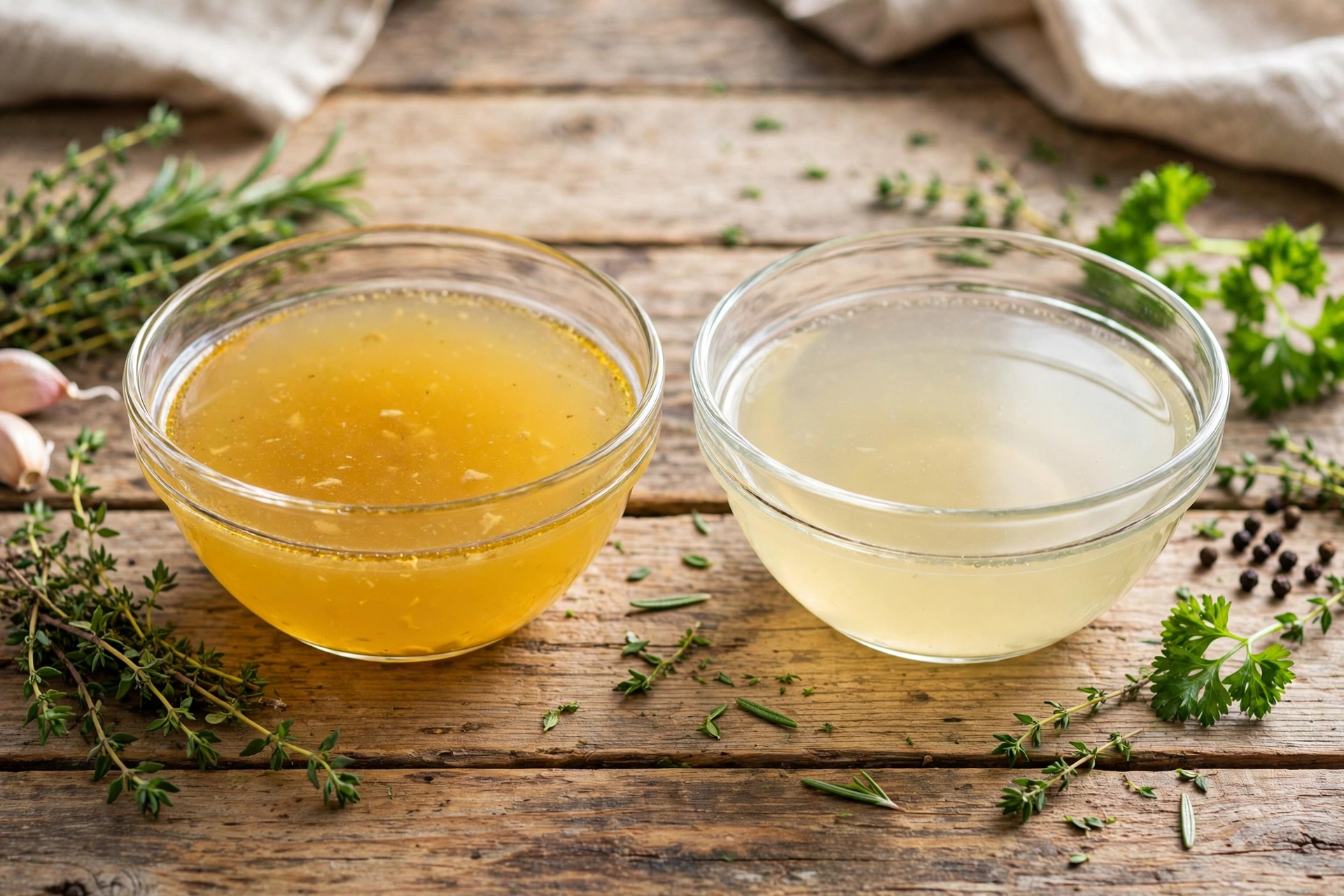
Walk down the soup aisle and the cartons look almost identical, yet cooks treat broth and stock as different tools. The difference is not marketing: it comes down to what goes into the pot, how long it simmers, and what the finished liquid does when it cools. Once you know those three things, choosing between them becomes easy.
The short answer
Chicken stock is made mainly from bones, simmered for several hours, and turns jelly-like when chilled because of the gelatin drawn from the bones and connective tissue. Chicken broth is made mainly from meat, simmered for a much shorter time, and stays liquid when chilled. Stock is a building block for sauces and stews; broth is a lighter liquid meant for sipping and quick soups.
What goes into each one
Stock starts with bones — a leftover carcass, wings, backs, and feet if you have them — plus a small amount of meat still clinging to them, and the usual aromatics: onion, carrot, celery, and herbs. The bones are the point. Broth starts with meaty pieces such as thighs, breasts, or a whole chicken, again with aromatics. Bones may be present, but they are not the main ingredient. That single difference in starting material explains almost everything that follows.
Cooking time and why it matters
A pot of stock simmers for four to six hours, sometimes longer, because collagen in bones and connective tissue needs time to break down into gelatin. That slow extraction is what gives stock its body. Broth simmers for about one to two hours: long enough to draw flavour from the meat, short enough that the meat stays pleasant rather than turning stringy. Cook broth for six hours and you will not get stock; you will get tired meat and a cloudy liquid, because you started with the wrong material.
The fridge test
If you are ever unsure which one you have, chill it. Stock sets into a soft jelly in the fridge — a sign of gelatin — and loosens again when heated. Broth stays pourable. This is also why a good stock makes sauces feel silky without flour: the gelatin is already there, coating the palate and giving a sauce body as it reduces.
Seasoning: another quiet difference
Traditional stock is left unseasoned, or very lightly seasoned, because it is an ingredient, not a finished dish. A sauce made from salty stock can easily end up over-salted once it reduces. Broth, by contrast, is usually seasoned during cooking and is meant to taste good on its own, straight from the bowl. This is why sipping a spoonful of plain stock can taste flat, while broth tastes like soup. Neither is wrong; they were designed for different jobs.
When to use stock
Reach for stock when body matters. Pan sauces and gravies turn glossy and rich with stock, because the gelatin thickens them as they reduce. Long-simmered stews and braises benefit from the same depth, and risotto made with stock has a creaminess that broth cannot quite match. If a recipe says “reduce by half,” stock is usually the better choice, since it starts with more to give.
When to use broth
Reach for broth when lightness matters. A clear chicken soup, a quick noodle bowl, or a pot of rice or couscous cooked in broth all want direct chicken flavour without heaviness. Broth is also the better choice when you are short on time: it is ready in about the time it takes to make dinner, while stock is a weekend project. And for sipping when you feel under the weather, broth is the one you want in the mug.
Can you swap them?
In many everyday dishes, yes, with a small adjustment. Soup made with stock instead of broth will be richer and may need a little extra water or a squeeze of lemon to lift it. A sauce made with broth instead of stock will be thinner; you may need to reduce it longer or thicken it another way. The swap only really fails at the extremes: broth will not give a classic pan sauce its body, and stock can overpower a delicate clear soup. For most weeknight cooking, use what you have and adjust the seasoning at the end.
Buying them: reading the label
Supermarket labels blur the distinction, and products sold as “stock” and “broth” can be surprisingly similar. A useful check is the ingredient list and the protein content: a stock-style product usually lists bones or bone-derived ingredients early and has more protein per cup, while broth lists meat and is lighter. Taste matters too: if it tastes good sipped on its own, it is behaving like broth, whatever the carton says. For the best control over salt, look for low-sodium versions and season the finished dish yourself.
Making your own: a simple approach
Save bones from roast chicken in the freezer until you have enough for a pot. Cover them with cold water, add onion, carrot, celery, a bay leaf, and a few peppercorns, and simmer gently — never a rolling boil, which clouds the liquid — skimming foam from the surface in the first hour. Strain, cool, and refrigerate; lift off the layer of fat if you prefer a leaner stock. For broth, simmer meaty pieces with the same aromatics for one to two hours, remove the meat for another meal, strain, and season. Both freeze well for several months, so a single afternoon of cooking can stock the freezer.
FAQs
Is bone broth the same as stock?
Bone broth is a close cousin of stock, usually simmered even longer and often seasoned so it can be sipped on its own. Think of it as stock made with drinking in mind.
Which one is healthier?
Neither is a health food on its own. Stock tends to have more protein and collagen per cup, while broth is lighter in calories. The bigger health factor is sodium, so check the label on shop-bought versions.
Can I use stock in soup?
Yes, and many cooks do. Just expect a richer result, and thin it with a little water if it feels too heavy.
Does stock have to gel to be good?
A proper bone-based stock should set when chilled. If yours does not, it may have been simmered too briefly, had too much water, or started with too few bones — it will still taste fine, it just will not have the same body.
Bottom line
Bones plus time equals stock: rich, gelatinous, and built for sauces. Meat plus a shorter simmer equals broth: lighter, seasoned, and built for sipping and quick soups. Keep both in the freezer and you will rarely have to guess.
Related reading
How Long Is Pizza Good in the Fridge?
How Long Do Cooked Eggs Last in the Fridge?
200 Grams Flour to Cups
Cooking & Kitchen