
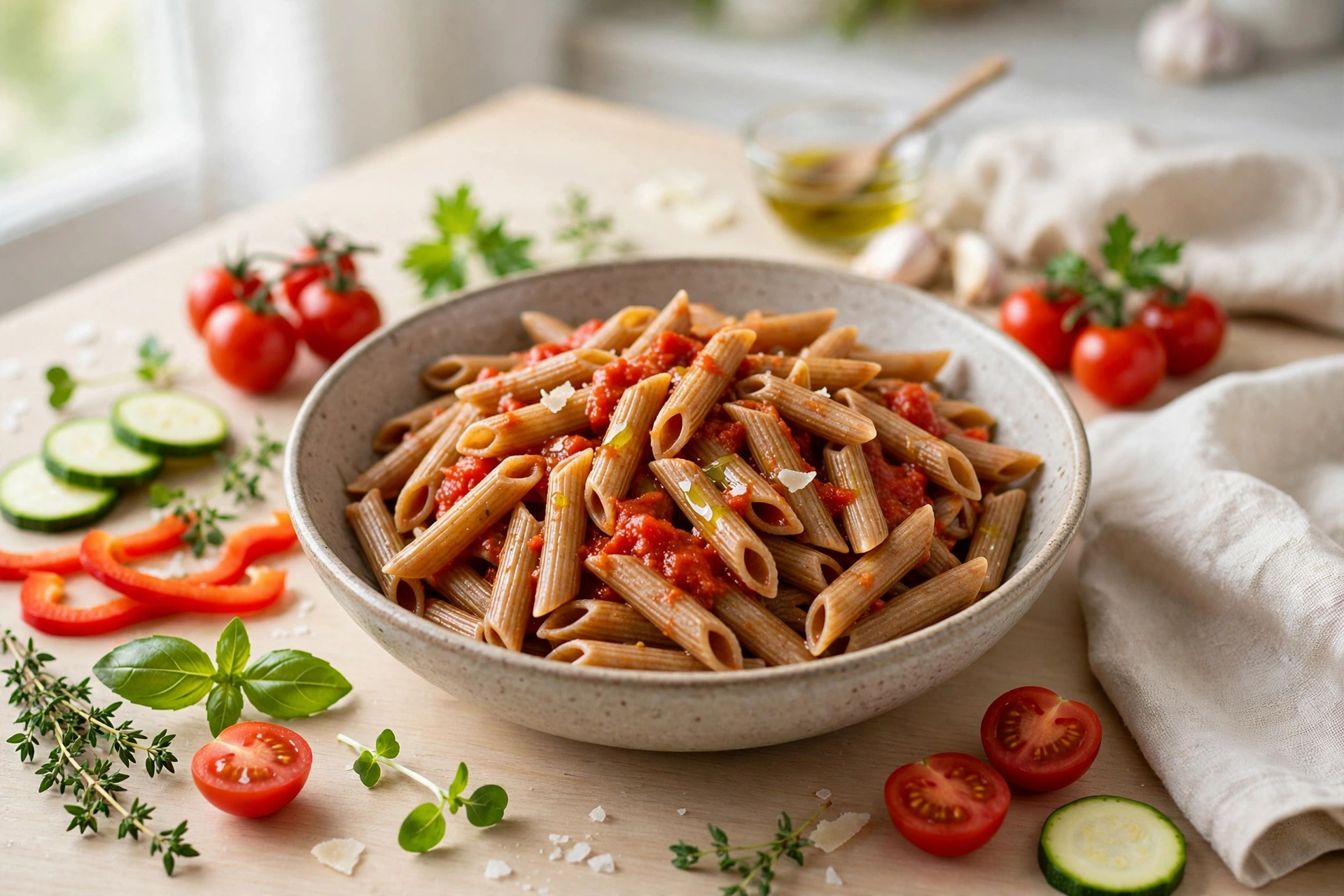
Is pasta healthy? Pasta has a worse reputation than it deserves, and a better one than some of its fans claim. The truth sits in the middle: pasta is neither a health food nor junk food. It is a starchy staple whose health value depends on the type you choose, the portion you serve, and — most of all — what you put with it. Get those three right and pasta fits comfortably into a balanced diet; get them wrong and it becomes a large bowl of refined carbohydrate with a heavy sauce.
What pasta actually contains
Most dried pasta is made from durum wheat milled into semolina, a hard wheat variety higher in protein than ordinary flour. A cooked cup of regular white pasta supplies roughly 6 to 7 grams of protein and about 2 grams of fibre, and most brands are enriched with iron and B vitamins such as folic acid. That is not an empty-calorie profile, but it is not fibre-rich either.
One underappreciated point is pasta’s glycaemic index. The way its starch and protein are bound means pasta is digested more slowly than many other refined carbohydrates, giving it a low to medium glycaemic index. Blood sugar therefore tends to rise more gradually after pasta than after white bread or white rice, which helps with fullness. Cooking method matters: pasta cooked al dente has a lower glycaemic response than the same pasta cooked very soft, and cooled pasta develops some resistant starch, which is why pasta salad can be a slightly different nutritional story.
Refined vs whole-grain vs bean pasta
Refined pasta has the bran and germ removed, taking much of the fibre and micronutrients with it, though enrichment restores some B vitamins and iron. Whole-grain pasta keeps the whole kernel, so it is higher in fibre — up to about 7 grams per cooked cup — and richer in magnesium, zinc, and B vitamins. In studies, whole-grain pasta has increased fullness compared with refined pasta, though results on blood sugar are mixed, and one small study found no difference between the two.
Bean pastas, made from lentil or chickpea flour, are a different category again: they typically offer 11 to 14 grams of protein and considerably more fibre per serving than wheat pasta, and they suit people avoiding gluten. Their texture and taste divide opinion, so they are worth trying rather than assuming. Corn and rice pastas tend to be less nutritious than wheat or bean options. When shopping, check the first ingredient: “whole wheat” or “whole grain” means whole-grain; “enriched wheat flour” means refined.
Portion: where pasta meals usually go wrong
The single biggest problem with pasta is portion size. A standard serving is 2 ounces dry, which becomes about 1 cup cooked. Restaurant servings and home servings are routinely double or triple that, and the extra calories come quietly because pasta itself is not very filling per bite. A useful visual guide: a cooked portion about the size of your fist, with the rest of the plate filled by vegetables and protein, is a reasonable meal. Weighing pasta dry a few times trains the eye quickly, and it is the habit that most changes pasta’s health profile.
Building a healthy pasta plate
Think of pasta as the base, not the meal. The healthiest pasta dishes follow a simple pattern: about a quarter of the plate pasta, half vegetables, and a quarter lean protein, with a sauce that adds flavour without drowning everything in fat and salt.
Good partners include tomato-based sauces, olive oil with garlic and herbs, leafy greens, broccoli, mushrooms, peppers, and courgettes. Lean proteins such as chicken, fish, beans, or lentils turn pasta into a complete meal — our guide to keeping rotisserie chicken safely in the fridge is handy if leftover chicken is your protein. Cheese in a sprinkling is fine; cheese as a sauce base, especially with cream and butter, is where calories climb fast. The same applies to creamy, very salty, or very sugary sauces.
A few practical upgrades cost nothing: add a large salad or a side of vegetables, choose whole-grain pasta at least sometimes, cook it al dente, and keep the sauce to a coating rather than a pool. Fresh fruit after the meal, with produce washed properly as in our guide to washing apples, rounds out the plate better than a heavy dessert.
Pasta and weight, diabetes, and gluten
Pasta is often blamed for weight gain, but weight gain comes from total energy intake, not from one food. Pasta’s moderate glycaemic index and decent protein mean a measured portion with vegetables and protein can be satisfying. Problems arise when portions are large, sauces are rich, and vegetables are absent — a pattern that applies to any starchy food.
For people managing blood sugar, portion control and whole-grain choice matter most, along with pairing pasta with fibre and protein rather than eating it alone. Anyone with coeliac disease or a diagnosed gluten sensitivity needs certified gluten-free pasta; for everyone else, there is no evidence that avoiding gluten improves health or weight.
Frequently asked questions
Is whole-grain pasta much healthier than white pasta?
Yes, mainly for fibre and micronutrients, and it tends to be more filling. The difference is meaningful but not enormous — portion and sauce matter at least as much.
How much pasta should I eat in one meal?
About 2 ounces dry (roughly 1 cup cooked) is a standard serving. Fill the rest of the plate with vegetables and lean protein.
Is pasta bad for weight loss?
Not inherently. Large portions with rich sauces can add many calories, but a measured portion in a vegetable- and protein-rich meal fits a weight-loss diet fine.
Does cold pasta have health benefits?
Cooled pasta contains some resistant starch, which behaves a little like fibre. It is a small bonus, not a reason to eat pasta cold if you prefer it hot.
Is gluten-free pasta healthier?
Only if you need to avoid gluten. Gluten-free pastas vary widely in nutrition and are not automatically lower in calories or higher in fibre.
Pasta is healthy when it is treated as one part of a meal rather than the whole meal: a sensible portion, preferably whole-grain, covered in vegetables, paired with lean protein, and finished with a light sauce. That is the difference between pasta’s bad reputation and a genuinely good dinner.
Browse more in Food & Nutrition.
Sources: Healthline on whether pasta is healthy and Consumer Reports on making pasta healthy.