
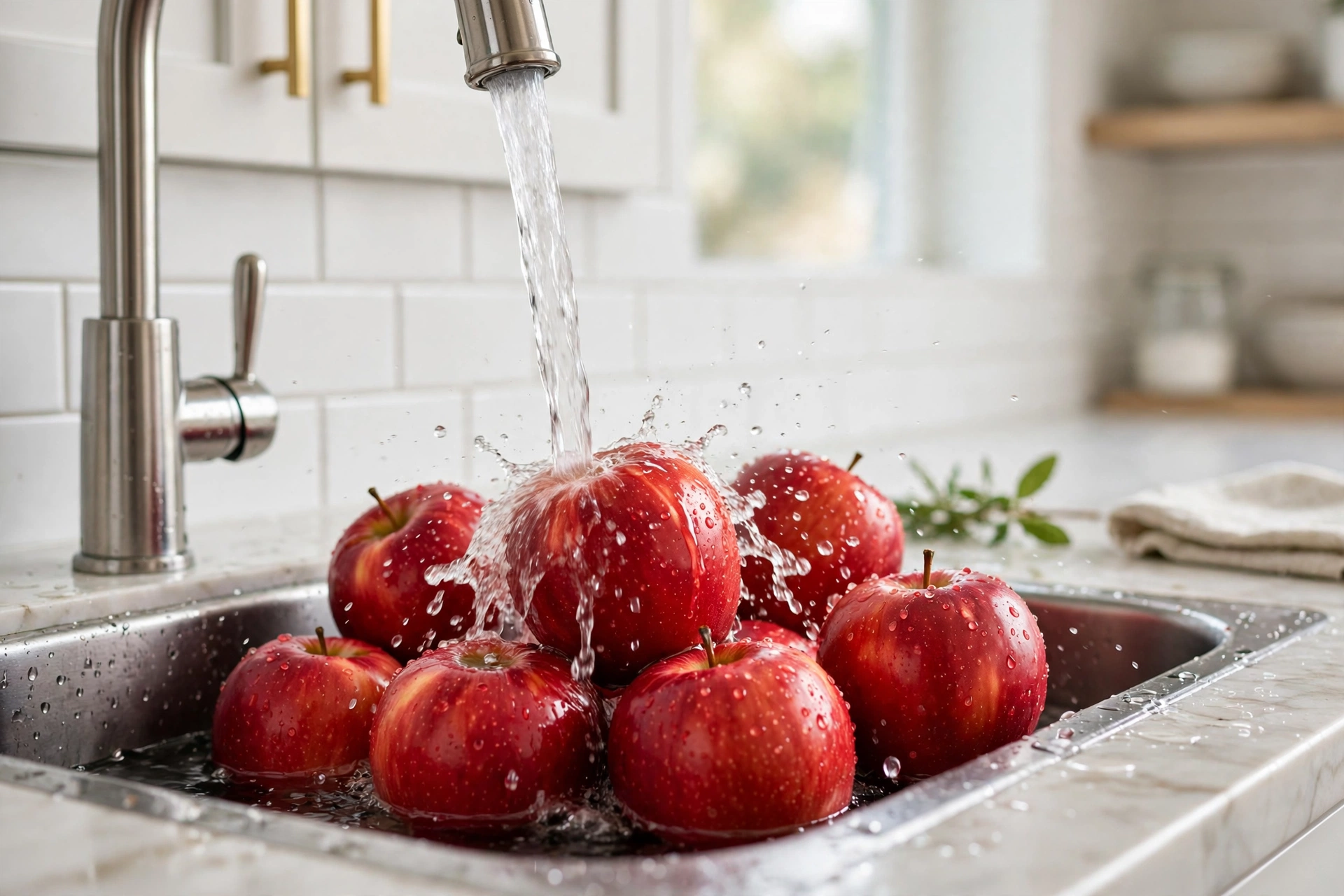
Apples are usually eaten with the skin on, which is exactly why washing them matters. The skin can carry dirt, handling residue, and surface pesticide residue from the field, the store, and your own kitchen. Washing an apple takes less than a minute, and it is one of the simplest food-safety habits you can build.
The short answer: wash your hands, rub the whole apple under cool running water, and dry it with a clean towel. That alone removes most surface dirt and residue. A baking soda soak is an optional extra step if you want a more thorough clean.
Wash your hands first
Wash your hands with soap and warm water before handling produce. Otherwise you can transfer dirt and germs from your hands onto the apple you are trying to clean. The same applies after handling raw meat, poultry, or seafood — wash your hands and your board and utensils before touching fruit.
The basic wash: water and friction
Food safety experts describe the method in two words: friction and faucet. Running water alone helps, but rubbing the surface is what lifts residue off the skin.
- Wash your hands.
- Hold the apple under cool running water.
- Rub the entire surface with your hands, including around the stem and the base.
- For a firmer clean, use a clean produce brush and gently scrub the skin.
- Dry the apple with a clean kitchen towel or paper towel.
Dry it because a wet apple stored in a bag or box stays damp, and dampness encourages spoilage.
Why you should not use soap on apples
Do not wash apples with soap, detergent, or bleach. Produce is porous and can absorb residues from cleaning products, and food safety agencies advise against using soap on fruit and vegetables. Plain water, with rubbing, is the recommended method. Commercial produce washes are also not needed — their benefit over plain water has not been clearly established.
The baking soda soak (optional extra)
If you want a deeper clean, a baking soda soak is a simple, inexpensive option that is often recommended for apples.
- Fill a large bowl with cold water — about two cups of water per teaspoon of baking soda.
- Stir until the baking soda dissolves.
- Place the apples in the solution and let them soak for about 12 to 15 minutes.
- Take each apple out, rinse it under cool running water, and rub the skin gently with your hands or a clean produce brush.
- Dry with a clean towel.
You do not need to do this every time. For everyday eating, the basic rinse-and-rub wash is enough, and the soak is a useful extra when apples look dusty or you simply want a more thorough clean.
What about vinegar?
A diluted vinegar soak — roughly one part vinegar to three parts water for a few minutes, followed by a rinse — is another optional method some people use. It can help with surface cleaning, but rinse well afterwards so no vinegar taste remains. As with baking soda, this is an extra step, not a replacement for the basic wash, and you should never use undiluted vinegar or bleach on fruit.
Should you wash apples before storing them?
No — wash apples just before you eat or prepare them, not as soon as you bring them home. Washing before storage leaves moisture on the skin, which can speed up spoilage and encourage mould. Store unwashed apples in the fridge, away from strong-smelling foods such as onions, since apples can absorb odours. Wash each apple when you are ready to eat it.
This also applies to apples you plan to peel. Wash the apple first, because a peeler or knife can carry residue from the skin onto the flesh as you cut.
Wax on apples: do you need to remove it?
Many store-bought apples have a wax coating, which may be natural or added to protect the fruit and keep it fresh. Washing with water and rubbing removes surface dirt, and a baking soda soak with gentle scrubbing helps reduce the waxy feel. You do not need to remove every trace of wax for the apple to be safe to eat, and peeling is always an option if you prefer.
How to tell if an apple is past its best
Washing will not save an apple that has already spoiled. Skip apples with large soft or bruised spots, wrinkled skin, leaking moisture, or an unpleasant smell. Cut away small bruised areas on an otherwise firm apple, and wash the apple before cutting into it.
Apples for cooking and baking
Wash apples the same way whether you eat them raw or cook them. For pies, sauces, and baking, wash, dry, and then peel or slice as your recipe needs. After slicing, there is no need to wash the pieces again, although a brief soak in plain or lightly salted water can slow browning if you are preparing slices ahead of time.
FAQs
Do I need to wash organic apples?
Yes. Organic apples can still carry dirt, handling residue, and germs from soil, transport, and store handling. Wash all apples, organic or not, just before eating.
Do I need to wash an apple if I am going to peel it?
Yes. Residue on the skin can transfer to the flesh when you peel or cut the apple, so wash it first either way.
Is rinsing under water enough, or do I need a soak?
For everyday use, a thorough rinse with rubbing under running water is enough. A baking soda or vinegar soak is an optional extra, not a requirement.
Can I wash apples in advance for the week?
It is better not to. Wash apples just before eating so they stay dry in storage and last longer. If you have already washed some, dry them well and use them first.
Related reading: how long cooked eggs last in the fridge, how long pizza lasts in the fridge, benefits of dried figs, EatingWell — The Best Way to Clean Apples, Better Homes & Gardens — The Best Way to Wash Apples.