
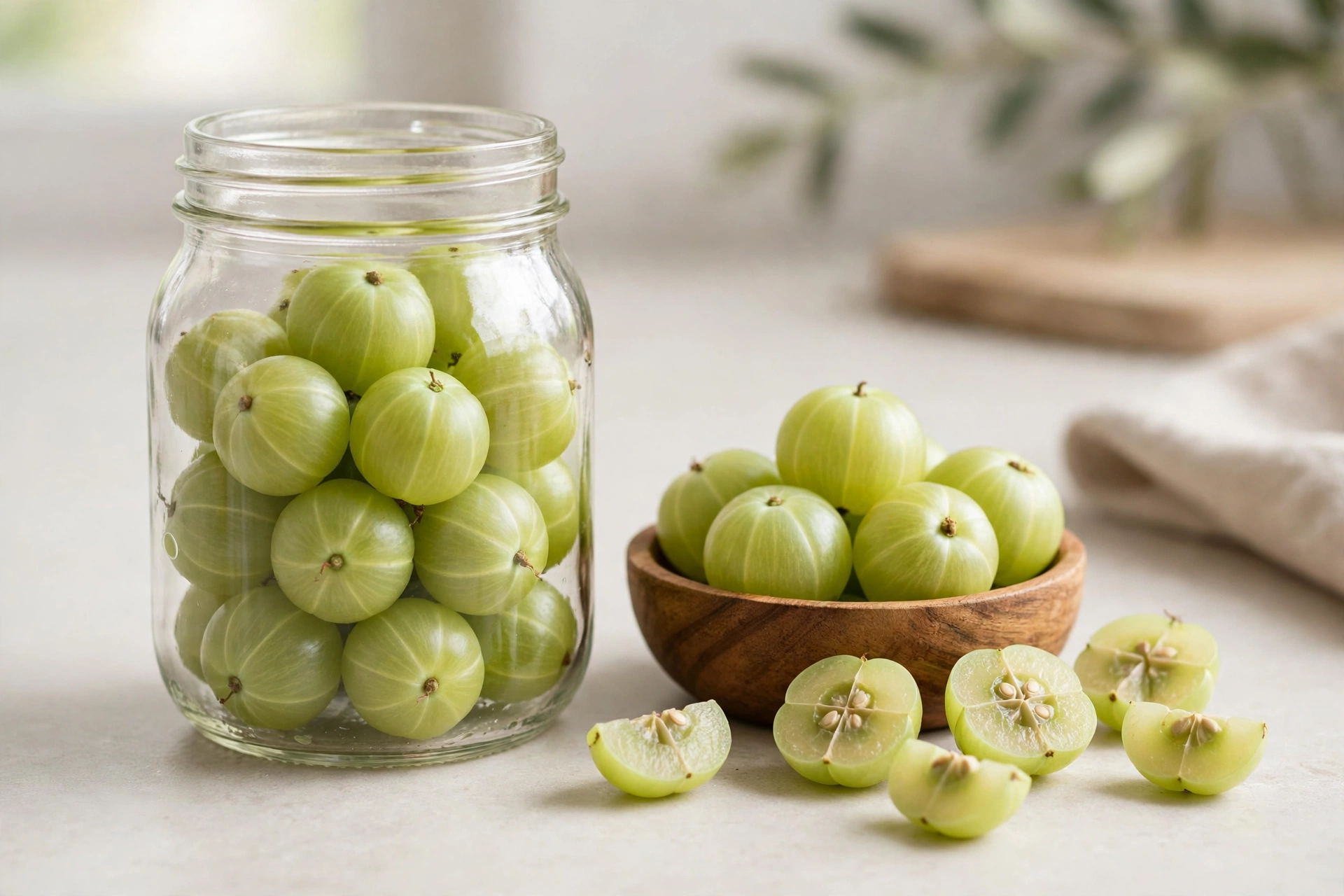
Amla, also called Indian gooseberry, arrives in a rush and disappears just as quickly. One week the market is full of firm, pale-green fruit, and a few days later the batch at home has gone soft, dark, or mouldy. That short season is the real problem: amla is at its best for a limited time, but most households want to use it for months, for juice, chutney, hair care, or cooking.
The short answer is this: match the method to the form. Keep whole, unwashed amla in the fridge for short-term use. Freeze whole or cut amla for up to a year. Dry it into slices or powder for shelf storage. Keep fresh juice only for a few days in the fridge, or freeze it in small portions. And always start with firm, undamaged fruit — storage cannot rescue amla that is already spoiling.
Start with the right fruit
Storage starts at the market, not in the kitchen. Choose amla that feels firm and heavy for its size, with smooth, light-green skin and no soft spots, cracks, or dark patches. A fruit that is already soft or bruised will spoil first and can spoil its neighbours in the same container, so use those straight away or discard them.
Do not wash the whole batch as soon as you bring it home. Washing leaves moisture on the skin, and moisture speeds up mould. The same principle applies to other fruit kept with its skin on: wash each piece just before you eat or prepare it, not weeks in advance. Keep the fruit dry, sort out any damaged pieces, and only wash what you are about to use.
Method 1: Fridge storage for whole amla (days to a few weeks)
For everyday use, the fridge is the simplest option. Put dry, unwashed whole amla in a clean, dry container or a perforated bag, and keep it in the main body of the fridge rather than the door, where the temperature swings. Check the container every few days and remove any fruit that has softened or darkened.
Whole amla kept this way usually stays good for about two to three weeks, though the exact time depends on how fresh it was when bought and how steady your fridge temperature is. This is the method to choose when you plan to use the fruit regularly — for a daily juice, a chutney, or a hair rinse — and do not want to commit to freezing or drying.
Method 2: Cut amla in the fridge (about two weeks)
Once amla is cut, the clock runs faster, because the exposed flesh loses moisture and browns. If you have chopped amla ready for a recipe, put it in an airtight container in the fridge and use it within about two weeks. A squeeze of lemon juice over the cut pieces before sealing can help slow browning, since the acid limits oxidation on the surface.
Keep cut amla separate from strong-smelling foods, and do not mix a fresh batch into an older container. Mixing batches makes it impossible to tell how old the oldest pieces are, which is how a container of mixed ages ends up being thrown away.
Method 3: Freezing whole or cut amla (up to a year)
Freezing is the best option for keeping amla for the whole year. Wash and dry the fruit thoroughly first, then either freeze it whole in a zip-lock bag or airtight box, or cut it, remove the seeds, and freeze the pieces in portions you will actually use. Squeeze the air out of bags before sealing, label each bag with the date, and take out only what you need — do not thaw and refreeze the whole batch.
Frozen amla keeps its colour and much of its flavour, and it is ready for juice, murabba, chutney, or hair preparations without a long thaw. Thaw the portion you need in the fridge, not on the counter, and use it promptly once thawed. For juice, you can even blend frozen pieces directly, which avoids a second wait.
Method 4: Parboiling before refrigerating (three to four weeks)
A traditional method for keeping amla green and juicy in the fridge is light parboiling. Boil the fruit briefly — a few minutes in salted water — then cool it completely, drain it, and let it dry before sealing it in an airtight container in the fridge. The brief heat softens the skin slightly and, with the salt, helps hold the colour, and fruit kept this way can stay fresh for three to four weeks.
This method suits amla you plan to use for murabba, pickle, or cooked preparations, where a slightly softer texture is no disadvantage. It is less useful if you want completely raw fruit for fresh juice, in which case plain fridge storage or freezing is a better fit.
Method 5: Drying amla into slices or powder (months on the shelf)
Drying is the oldest long-storage method, and it needs no fridge at all. Wash the fruit, cut it into slices, remove the seeds, and dry the slices until they are crisp — in strong sun over two to three days, or in a food dehydrator if the weather does not cooperate. The slices must be completely dry before storage; any remaining moisture invites mould.
Once crisp, store the slices in an airtight container, preferably glass, in a cool, dry place away from sunlight. For powder, grind only the fully dried slices, and store the powder the same way. Dried amla and amla powder keep for months, and they are convenient for teas, detox drinks, hair masks, and cooking, though the texture is entirely different from fresh fruit.
Method 6: Storing amla juice (days fresh, months frozen)
Fresh amla juice is the most fragile form of all. Its vitamin C is sensitive to air, light, and heat, and the juice can start to ferment within a few days. If you make juice, pour it into an airtight glass container, refrigerate it immediately, and aim to use it within three to four days. Glass is preferable to plastic for acidic juice, and a full, tightly sealed container limits the air that degrades it.
For longer storage, freeze the juice instead. Pour it into ice-cube trays or small freezer-safe containers, label them, and thaw only the portion you need, in the fridge. Frozen juice can keep for several months, and small portions mean you never have to thaw a large batch for one glass. Pasteurising juice by heating it can also extend fridge life to a few weeks, but it can reduce vitamin C, so freezing is usually the better trade-off for nutrition.
Salt, lemon, and pickle storage (no fridge needed)
If you have no fridge, salt and lemon are the traditional preservatives. Cut washed amla into pieces, mix with salt or lemon juice, and pack the mixture into a clean glass bottle kept away from sunlight. The salt and acid slow spoilage and stop the fruit turning black quickly, and this preparation keeps for months, especially in cooler conditions.
Pickle and murabba work on the same principle on a larger scale: oil, salt, vinegar, or sugar preserve the fruit while adding flavour. These are the best methods when you want a ready-to-eat product rather than raw fruit for later recipes, but they change the taste completely, so choose them for that purpose, not as a substitute for fresh amla.
How to tell if stored amla has gone bad
No storage method lasts forever, and a date label is more reliable than a sniff test alone. Throw amla away if you notice soft, mushy patches, dark or black discolouration spreading through the flesh, visible mould, a sour or fermented smell, or leaking liquid in the container. For juice, an off smell, fizzing, or a sour taste that was not there when it was made means it has fermented and should be discarded.
When in doubt, throw it out. This matters most for juice and cut fruit, which spoil faster than whole fruit, and for anyone serving amla to children, older adults, or people with weakened immunity.
Which method should you choose?
Use this quick guide to decide:
| What you have | Best method | Rough storage time |
|---|---|---|
| Whole amla, using it soon | Fridge, unwashed, dry container | About 2–3 weeks |
| Cut amla for a recipe | Fridge, airtight container, lemon juice to slow browning | About 2 weeks |
| Amla for the whole year | Freezer, whole or cut, in dated portions | Up to 12 months |
| Amla for murabba or pickle | Parboil, then fridge | About 3–4 weeks |
| Amla for powder, tea, or hair care | Sun-dry or dehydrate, then airtight glass jar | Months on the shelf |
| Fresh juice | Fridge in glass, or freeze in ice-cube trays | 3–4 days fresh; months frozen |
| No fridge available | Salt or lemon in a clean glass bottle, away from sunlight | Months, in cooler conditions |
The best method is the one you will actually use. A freezer full of amla you never thaw is no better than a fridge drawer of fruit you forgot, so portion by how you cook and label everything with the date.
Common mistakes
The most common mistakes are washing the whole batch before storing it, sealing wet fruit in a closed bag, mixing old and new batches in one container, and thawing a whole frozen bag for a single use. Others are storing juice in a half-empty, loosely closed bottle, where air degrades it quickly, and grinding powder from slices that were not fully dry, which then clumps or moulds in the jar.
A second mistake is keeping amla in the fridge door or near the front of the fridge, where warm air enters every time the door opens. An inside shelf, a sealed container, and a date label solve most of these problems at once.
FAQs
Can I store amla without a refrigerator?
Yes. Drying it into slices or powder, or packing cut amla in salt or lemon juice in a clean glass bottle away from sunlight, keeps it for months without a fridge, though the form and taste change.
Does freezing amla reduce its nutrition?
Freezing preserves amla better than long fridge storage or heating, and frozen fruit keeps much of its colour, taste, and vitamin C, provided it stays frozen solid and is not repeatedly thawed and refrozen.
How long does fresh amla juice last in the fridge?
Aim for three to four days in an airtight glass container, refrigerated immediately. For longer storage, freeze it in small portions rather than keeping it in the fridge for weeks.
Why does my amla turn black in storage?
Browning and blackening usually come from moisture, air exposure, or fruit that was already damaged. Keep fruit dry, use airtight containers, remove damaged pieces promptly, and use lemon juice on cut pieces to slow browning.
Can I store amla powder in the fridge?
You can, and refrigeration can extend its freshness, but it is not mandatory if the powder is fully dry and kept in an airtight glass container in a cool, dry place.
Bottom line
Do not try to store every form of amla the same way. Keep whole fruit dry in the fridge for the short term, freeze it for the year, dry it for powder, and freeze juice in small portions instead of letting it ferment in the fridge. Label every container with the date, take out only what you need, and discard anything soft, mouldy, or sour-smelling. That routine turns a short winter season into amla available all year, without waste.
Note: General food information only. This article is not medical advice.