
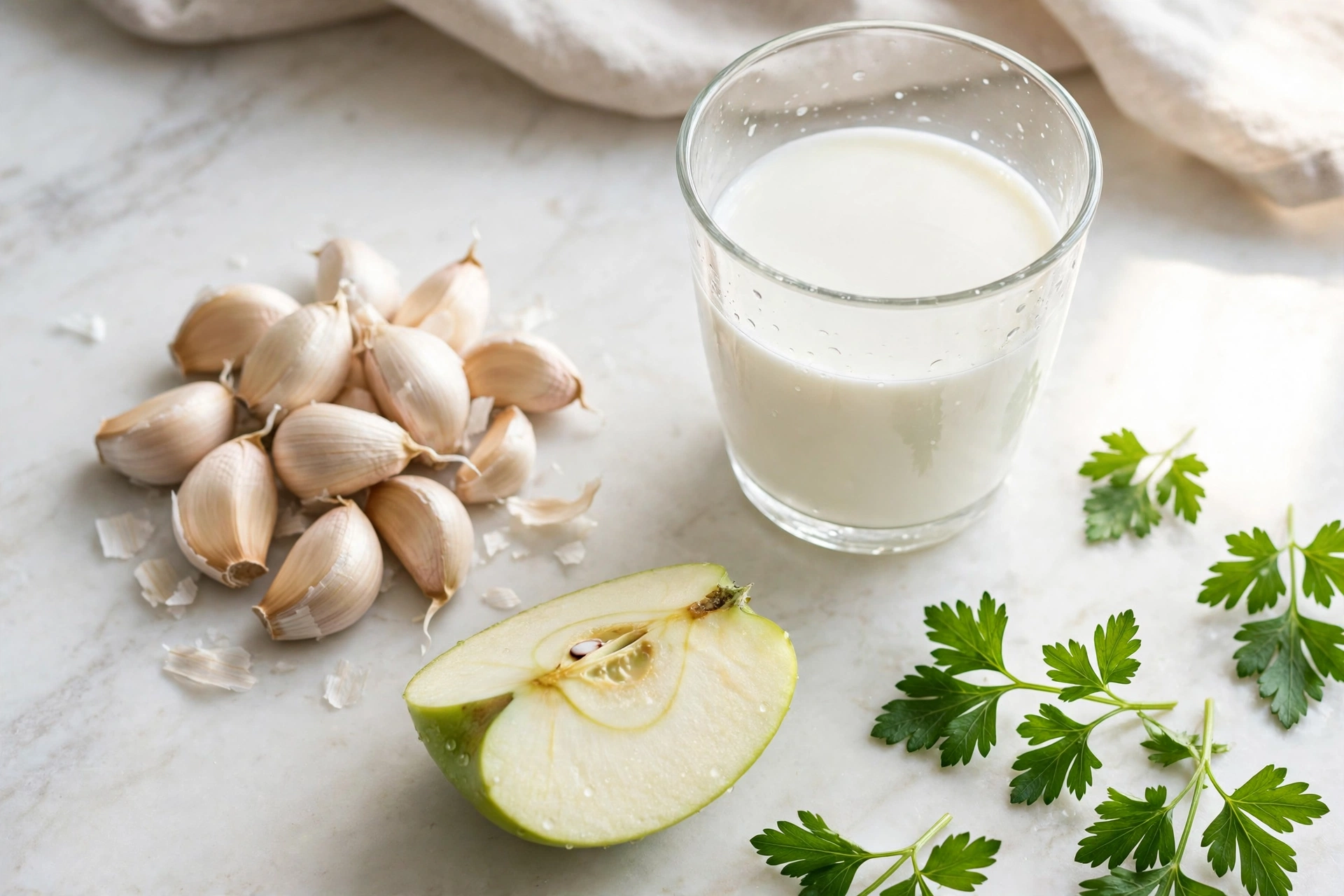
Garlic makes food taste wonderful and leaves a taste that lingers long after the meal. If you have an important meeting, a date, or just a close conversation coming up, that lingering taste can be unwelcome. The good news is that a few simple foods genuinely help. The less good news is that the most obvious fix, brushing your teeth, does not solve the real problem.
Understanding why garlic lingers explains why some remedies work and others only mask the taste for a few minutes.
Why garlic taste survives brushing
When garlic is crushed or chewed, its cells release compounds that break down into sulfur-containing chemicals. Some of those chemicals stay in your mouth, but others are absorbed into your bloodstream, travel to your lungs, and are breathed out over hours. That is why garlic breath can return even after thorough brushing: brushing cleans the mouth, but it cannot reach compounds circulating in the blood and exhaled through the lungs.
This also explains why timing matters. Remedies work best when they act on garlic compounds while they are still in the mouth and stomach, ideally within about half an hour of eating. Hours later, once the compounds are fully in circulation, surface fixes have far less effect, and waiting it out becomes the main option.
What actually helps: raw apple
Eating a raw apple after garlic is one of the most reliable remedies. Apples contain natural compounds called polyphenols that react with garlic’s sulfur compounds and make them less volatile, which means less of the taste reaches your nose and breath. Chew the apple slowly and thoroughly so it mixes well in the mouth.
Cooked apple does not work the same way, because heat breaks down the active compounds. Use a fresh, raw apple, and eat it soon after the garlic meal rather than hours later. A single medium apple is enough for most meals.
Whole milk, drunk with or just after the meal
Whole milk is another remedy with real support behind it. The fat in whole milk binds to garlic’s sulfur compounds, reducing how much of them is released as breath. It works best when drunk during or just after eating garlic, rather than long afterwards. Skim milk is far less effective, because it lacks the fat that does the binding.
If you do not drink milk, or you are lactose intolerant, do not force it: apple and parsley below are good alternatives, and a dairy remedy is not worth stomach discomfort. Plant-based milks without fat do not offer the same benefit.
Fresh parsley and mint
Chewing fresh parsley after a garlic meal is a classic remedy, and it does help, though more modestly than apple or milk. Parsley contains chlorophyll and plant enzymes that break down some sulfur compounds and freshen the mouth. Chew a few fresh sprigs thoroughly. Dried parsley is not a substitute, since drying removes much of the active effect.
Fresh mint leaves work in a similar way and leave a fresher taste, though again the effect is partly masking rather than full neutralisation. Parsley and mint are best used alongside apple or milk, not as the only remedy.
Green tea and lemon, used with care
Unsweetened green tea contains polyphenols similar to those in apples, and sipping it after a meal can help modestly. It is a good option when milk is not suitable, and it has the advantage of stimulating saliva, which washes residue from the mouth.
Lemon is trickier. Lemon juice and lemon water can freshen the mouth and stimulate saliva, but undiluted lemon juice is acidic and can harm tooth enamel if used often or held in the mouth. If you use lemon, dilute it well in water, do not swish pure juice, and do not brush immediately afterwards, since acid softens enamel and brushing can wear it.
What to do first: a simple sequence
For the best result, act quickly and combine two remedies. Eat a raw apple soon after the meal, chew a few sprigs of fresh parsley, and drink a glass of water to rinse residue and stimulate saliva. If you are still eating, a glass of whole milk with the meal helps even more.
Then wait before brushing. Brushing immediately after eating garlic, especially after acidic foods, can spread oils around the mouth and wear softened enamel. Give it at least half an hour, then brush and clean your tongue gently as normal. A tongue cleaner or gentle tongue brushing removes residue that a toothbrush alone can miss.
Common fixes that only mask the taste
Mint gum, mints, and strong mouthwash mostly cover the taste for a short time. Once the flavour fades, the garlic taste often returns, because the underlying compounds are still circulating. Alcohol-based mouthwash can also dry the mouth, which concentrates odours rather than reducing them.
Strong coffee is another poor choice. It can dry the mouth and add its own strong smell, making breath worse rather than better. Water alone helps a little by rinsing and diluting, but it does not bind sulfur compounds, so it works best combined with apple or parsley rather than on its own.
Preventing a strong garlic taste next time
If you love garlic but not its aftermath, small cooking changes help. Using whole cloves in stews instead of minced garlic releases fewer compounds, and cooking garlic gently in oil before adding other ingredients softens its intensity. Roasting whole garlic gives a milder flavour than raw minced garlic, which is the strongest form.
You do not need to avoid garlic entirely. Eating it earlier in the day, rather than just before an important event, gives your body more time to process the compounds before close conversation.
When a lingering taste needs checking
Garlic taste after a garlic meal is normal and fades within a day as the body processes the compounds. If a garlic-like taste or breath persists for days without eating garlic, or comes with mouth pain, sores, or digestive symptoms, it is worth checking with a dentist or doctor, since ongoing breath changes can have other causes. That is a prompt to seek advice, not a reason to worry about a single meal.
Frequently asked questions
How long does garlic taste last in your mouth?
The taste in the mouth fades within hours, but breath effects from compounds in the bloodstream can linger longer, often into the next day after a large amount of raw garlic.
Does brushing your teeth remove garlic taste?
It cleans the mouth and helps, but it cannot remove compounds that are breathed out from the lungs, so garlic breath can return after brushing.
Is milk or apple better for garlic breath?
Both help. Whole milk works best during or just after the meal, while raw apple is convenient afterwards. Combining them works better than either alone.
Does chewing gum get rid of garlic taste?
No, gum mainly masks the taste for a short time. Once the mint fades, the garlic taste often returns.
Can I prevent garlic breath before eating garlic?
Partly. Cook garlic gently, use whole cloves rather than minced raw garlic, and eat garlic earlier in the day when possible.
Garlic taste lingers because it is not only in your mouth, which is why brushing alone disappoints. Eat a raw apple soon after the meal, drink whole milk with it if you can, chew fresh parsley, and give your body time. That combination deals with the chemistry, not just the smell, and it is far more effective than mints alone.
Related reading: how to wash apples, how long do cooked eggs last in the fridge, more Food & Nutrition guides, Shuncy garlic breath guide and garlic taste guide.