
Hair dye stains skin because it is designed to cling to hair and resist washing out — and it does not distinguish between hair and the skin around it. The result is usually a dark line along the hairline, stained ears, or coloured hands after colouring at home. It looks alarming, but in most cases it fades with gentle treatment, and the sooner you act, the easier it comes off.
The direct answer is this: start with soap and warm water while the dye is still fresh, move to gentler oil-based methods for the face, and save stronger options for hands only. Never use bleach, ammonia, or nail polish remover on your skin, and do not scrub hard — that irritates the skin and can make the stain look worse.
Act fast, and start gentle
Fresh dye is much easier to remove than dye that has dried and set. If you notice a stain during or straight after colouring, wipe it away with a damp cloth or cotton pad before it dries. A simple wash with mild soap and warm water is often enough at this stage.
If the stain has already set, work through the methods below in order, from gentlest to strongest, and stop as soon as one works. The goal is to lift the dye, not to strip your skin. If your skin feels hot, tight, or itchy at any point, rinse straight away and switch to a gentler method. People with sensitive skin should patch-test any new product on a small area first, such as behind the ear, before using it on the face.
Methods for the face and hairline
Facial skin is thinner and more sensitive than the skin on your hands, so it deserves the gentlest options.
Soap and water. Dampen the area with lukewarm water, lather a mild soap or gentle body wash, massage in small circles for 30 to 60 seconds, rinse, and repeat once if needed. Avoid heavily fragranced or harsh soaps on the face.
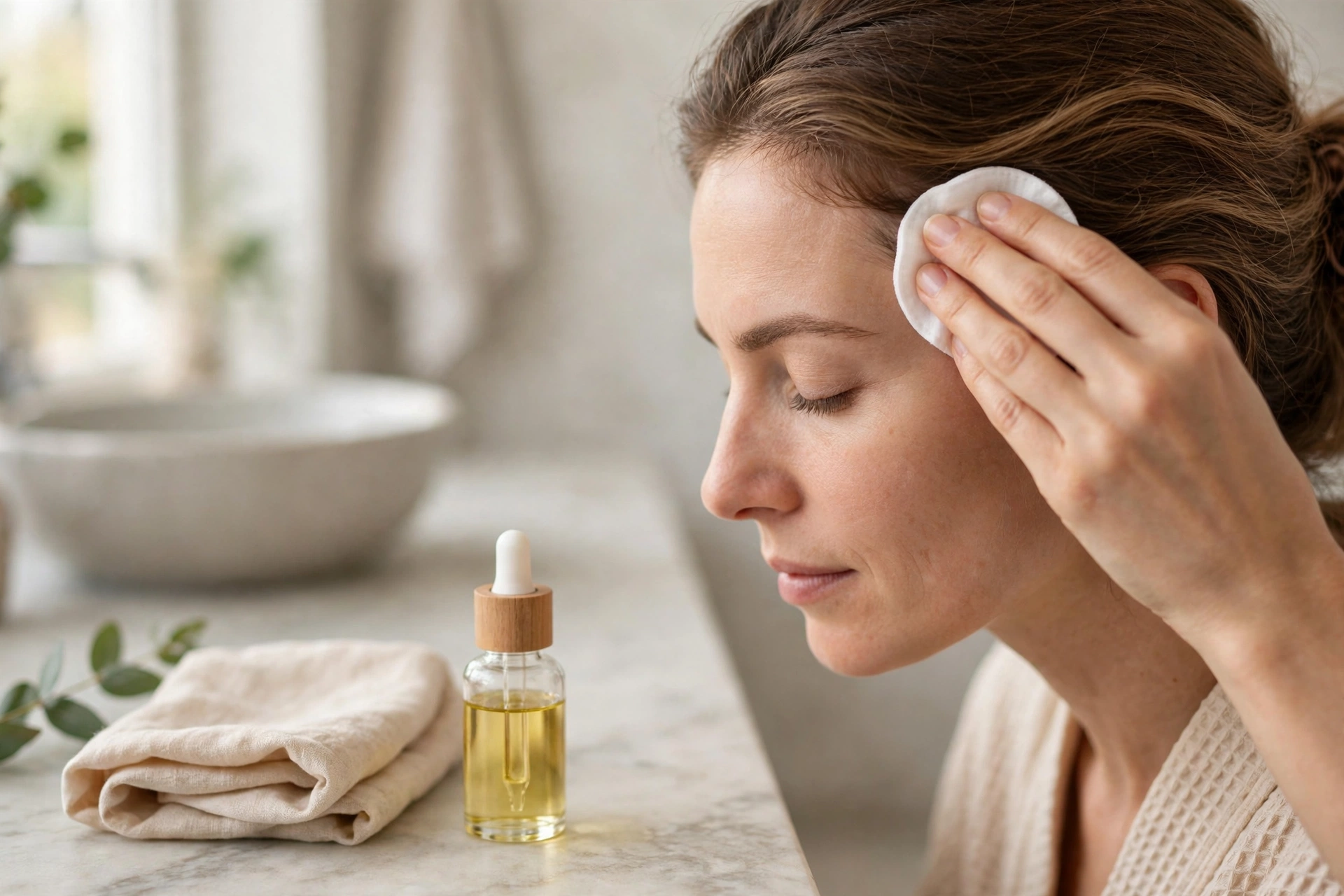
Makeup remover or micellar water. Oil-based makeup removers and micellar water are designed to break down pigment, which makes them ideal for stubborn dye on the face and neck. Soak a cotton pad, press it onto the stain for 10 to 15 seconds, then wipe gently in small circles. Rinse and moisturise afterwards.
Olive oil or coconut oil. Oil is a good option for sensitive skin. Apply a small amount to a cotton pad or your finger, rub gently into the stain, and leave it on for a while — up to a few hours for a stubborn mark, or overnight for hands. Then wash off with warm water and soap. Oil works slowly, but it is one of the least irritating methods available.
Gentle exfoliation. A mild exfoliating scrub, used very gently, can help lift a stain that has set into the top layer of skin. Massage softly with a soft cloth, rinse, and moisturise. Do not use a harsh scrub on the face, and never exfoliate skin that is already red or sore.
Methods for hands only
Hands tolerate stronger treatment than the face, but the same rule applies: stop if the skin becomes irritated.
Dish soap and baking soda paste. Mix a little gentle dish soap with baking soda to form a paste, rub it gently over stained hands, and rinse with warm water. The baking soda provides mild exfoliation and the soap dissolves dye. Keep this off the face unless you have tested it and your skin tolerates it well.
Rubbing alcohol. Dabbing a cotton ball soaked in rubbing alcohol can lift small, fresh stains on hands. It is drying, so wash and moisturise immediately afterwards, and do not use it on the face or on broken skin.
Whitening toothpaste. Some people report that a small amount of non-gel whitening toothpaste, massaged gently and left for 5 to 10 minutes, helps with hand stains. It contains abrasives, so it can irritate skin — test a small spot first, and do not use it on the face if you have sensitive skin.
Professional dye removers. Salons and beauty supply stores sell products made specifically for removing hair dye from skin. These are the best option for a stubborn stain that home methods have not shifted, and they are formulated to be safer than household chemicals. A salon can also help if the stain is extensive.
What NOT to use
Some common suggestions are genuinely harmful and should be avoided entirely. Do not use bleach or ammonia-based products on your skin — they can cause chemical burns and scarring. Do not use nail polish remover, which contains acetone and strips the skin’s protective barrier. Avoid harsh scrubbing with rough cloths or abrasive pads, which can break the skin and let dye penetrate deeper. And do not apply undiluted vinegar to the face; its acidity can irritate sensitive skin even though it is sometimes suggested for other stains.
If a stain will not come off after trying the gentle and moderate methods, patience is a better strategy than escalation. Most hair dye stains fade naturally within a few days as skin cells renew. Covering the area with makeup in the meantime is safer than damaging the skin to remove it faster.
Prevention next time
Preventing stains is far easier than removing them, and it takes only a minute before you start colouring.
- Apply a thick barrier around your hairline, ears, and neck before colouring — petroleum jelly, a rich moisturising cream, or lip balm all work. The dye cannot stain skin it cannot reach.
- Wear gloves throughout, including while rinsing, since rinse water carries dye onto hands.
- Keep a damp cloth nearby during colouring so you can wipe away drips immediately, before they set.
- Tie hair back and protect your neck and shoulders with an old towel or cape.
The same care principle applies to other beauty routines: gentle methods first, harsh products avoided, and prevention built into the routine. For skin marks in general, the gentlest-first rule is the one to remember — it protects your skin while still getting the job done.
Frequently asked questions
How long does hair dye stay on skin?
Usually a few days at most. Fresh stains often wash off immediately, while set stains fade as skin renews, even if home methods do not remove them completely at once.
What removes hair dye from skin fastest?
Soap and water while the dye is fresh. For set stains, oil or a professional dye remover works well without damaging the skin.
Can I use nail polish remover on hair dye stains?
No. Acetone is too harsh for skin and can cause irritation or chemical burns. Use gentler methods, or a professional dye remover.
How do I prevent hair dye staining my forehead?
Apply petroleum jelly or a thick moisturiser around your hairline, ears, and neck before colouring, wear gloves, and wipe drips away immediately.
Is it safe to use toothpaste on dye stains?
On hands, a small amount of non-gel whitening toothpaste may help, but it is abrasive, so test a small area first and avoid it on sensitive facial skin.