
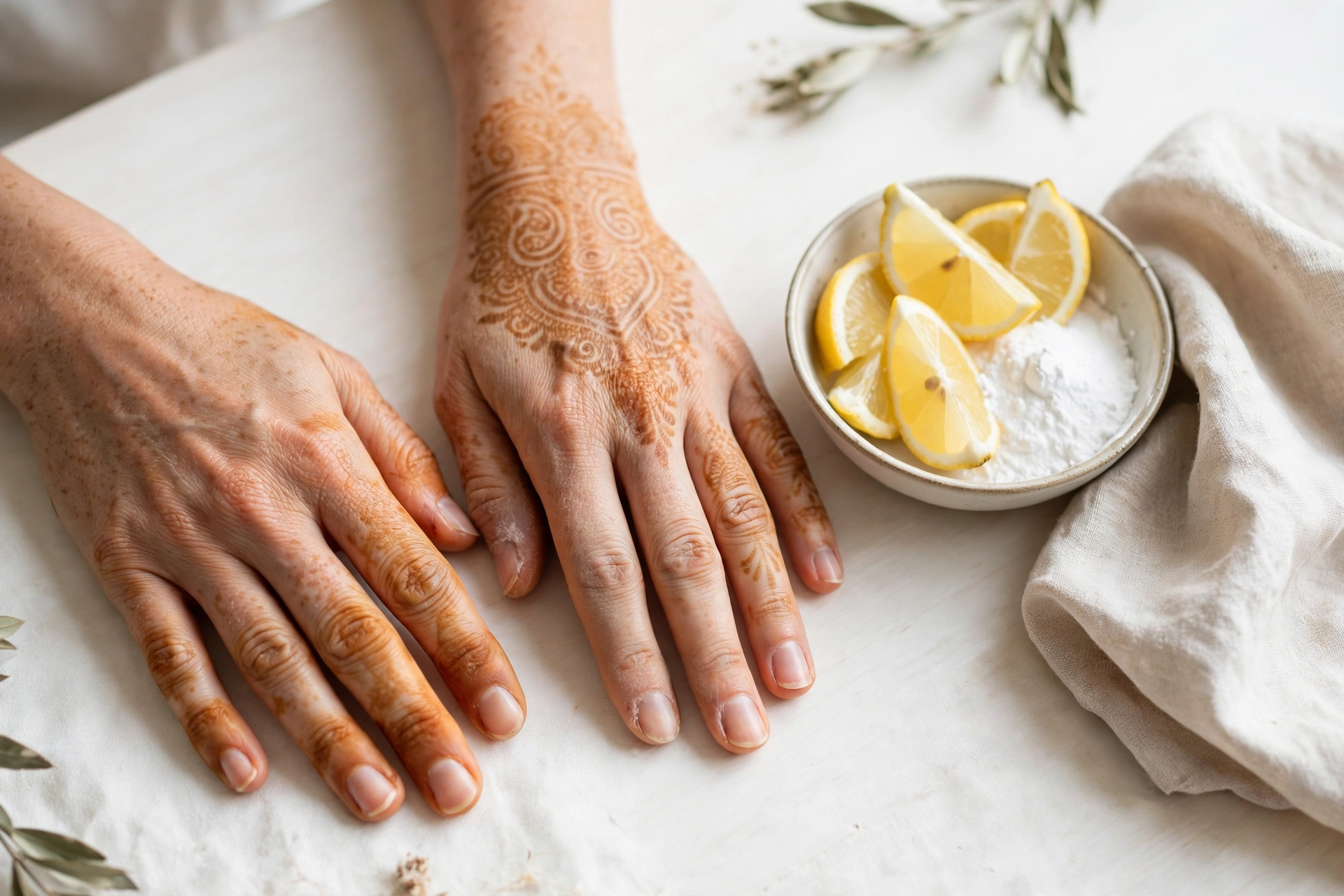
Mehndi is meant to be temporary, but a dark stain can linger for one to three weeks while the stained skin cells naturally shed. Sometimes you need it gone sooner — for work, a photo, or simply because the design has faded unevenly. The good news is that gentle methods can speed the fading noticeably. The important rule is patience with your skin: mehndi sits in the outer layer of skin, so you are encouraging that layer to shed, not scrubbing colour out of deep tissue. Harsh scrubbing damages skin without removing the stain any faster.
Why mehndi is hard to remove
Henna contains lawsone, a natural dye that binds to keratin, the protein in your skin’s outer layer. The longer the paste stayed on and the warmer the skin was, the deeper and darker the stain. That is why palms stain darkest — the skin there is thick and absorbs more dye — and why a stain fades unevenly as different areas shed at different rates. No home method removes a fresh, dark stain instantly; every safe method speeds a natural process.
Method 1: Salt water soak (gentlest)
Mix two to three tablespoons of sea salt or table salt into a bowl of warm water and soak your hands for fifteen to twenty minutes. Salt encourages gentle exfoliation as the stained cells loosen. Afterwards, rub the area lightly with a soft washcloth, pat dry, and moisturise. Repeat twice a day. This is the best first choice for sensitive skin.
Method 2: Baking soda and lemon paste
Mix baking soda with a few drops of lemon juice to form a thick paste. Apply it to the stained area, leave it for about ten minutes, then rub gently in circles and rinse with lukewarm water. Baking soda is mildly abrasive and lifts stained cells; lemon’s acidity helps lighten the colour. Moisturise well afterwards, and skip this method if your skin is sensitive or broken, since lemon can sting and dry the skin. Avoid sun exposure straight after using lemon on your skin.
Method 3: Olive oil and sugar scrub
Mix a tablespoon of olive oil with a teaspoon of sugar and massage the mixture over the stain for several minutes, then leave it for ten minutes before wiping off with a warm cloth. Oil helps break down the dye while sugar provides gentle exfoliation, and the oil leaves your hands soft rather than stripped. This is a good option if other methods have left your skin dry.
Method 4: Toothpaste trick
Apply a thin layer of plain white toothpaste — not gel — over the stain, let it dry for ten to fifteen minutes, then scrub gently with a damp cloth or a soft toothbrush and rinse. The mild abrasives in toothpaste lift surface cells. Use it at most every other day, and moisturise afterwards, because it can dry the skin.
Method 5: Oil soak or makeup remover
Warm olive oil or coconut oil, or an oil-based makeup remover, can loosen the stain: soak a cotton pad, hold it on the area for a few minutes, then wipe in circles. Makeup removers are designed to break down pigment, which makes them surprisingly effective. This method suits delicate areas and dry skin, and it pairs well with a gentle scrub afterwards.
Method 6: Steam and exfoliation
Hold your hands over a bowl of hot water for five to ten minutes so the steam softens the skin, then exfoliate gently with a body scrub, loofah, or exfoliating glove. The combination works well, but keep the pressure light — the aim is to help shedding along, not to scour the skin raw.
Method 7: Simply wash more often
Regular washing with soap gradually fades mehndi on its own, because every wash removes a few stained cells. Washing your hands more often than usual, with a moisturising soap, is the slowest method but also the safest, and it works well alongside any of the methods above.
What not to use
Avoid bleach, harsh chemical removers, and hydrogen peroxide on your skin. These can cause irritation, burns, or uneven lightening, and they are not worth the risk for a temporary stain. Avoid aggressive scrubbing with rough tools, which can bruise the skin and still leave colour behind. If you notice redness, itching, or swelling after applying any product — especially if the mehndi used was “black henna”, which may contain a chemical dye rather than pure henna — stop, wash the area, moisturise, and seek medical advice if the reaction persists.
Helping the fade along
Moisturise after every removal attempt, since dry skin sheds unevenly and looks patchy. Exfoliate once a day at most, not several times. Protect fading mehndi from further darkening by avoiding reapplying new henna over an old stain. And accept that the last faint traces may take a few days to disappear completely — the stain will go, even if no single session removes it all.
FAQs
How long does mehndi normally last? Usually one to three weeks, depending on the skin area, how long the paste stayed on, and how often you wash your hands.
Can I remove mehndi in one day? Not completely if the stain is fresh and dark. Gentle methods can fade it a lot in a day, but full removal takes repeated sessions.
Is lemon and baking soda safe for all skin? No. It can irritate sensitive or broken skin. Patch-test first, and use the salt soak or oil scrub instead if your skin reacts.
Why is my mehndi fading unevenly? Different areas of skin shed at different rates, and palms hold dye longer. Even fading comes with time and gentle, regular exfoliation.
Related reading
- how to remove hair dye from skin
- how to clean earrings at home
- how to reduce redness on face
- how to clean jewelry