
How to Get Skunk Smell Out of the House
Skunk smell is stubborn for a chemical reason, not because you cleaned badly. Skunk spray is an oily liquid rich in sulphur compounds called thiols, and those compounds cling to fabrics, skin, and porous surfaces. Air freshener only covers them for a while. To actually remove the smell, you need to ventilate, break down the oil, and oxidise the thiols — and you need to act before the oil settles deep into soft furnishings.
First, keep it from spreading
If a sprayed pet is the source, keep the pet outside until it has been washed; bringing it indoors will transfer oil to carpets, sofas, and bedding. If the spray came through an open window or from under the house, close off unaffected rooms where you can, and avoid running central heating or cooling that would circulate the smell through ducts. Open windows in the affected rooms and set fans to push air out rather than just stirring it around.
Ventilate and absorb what is in the air
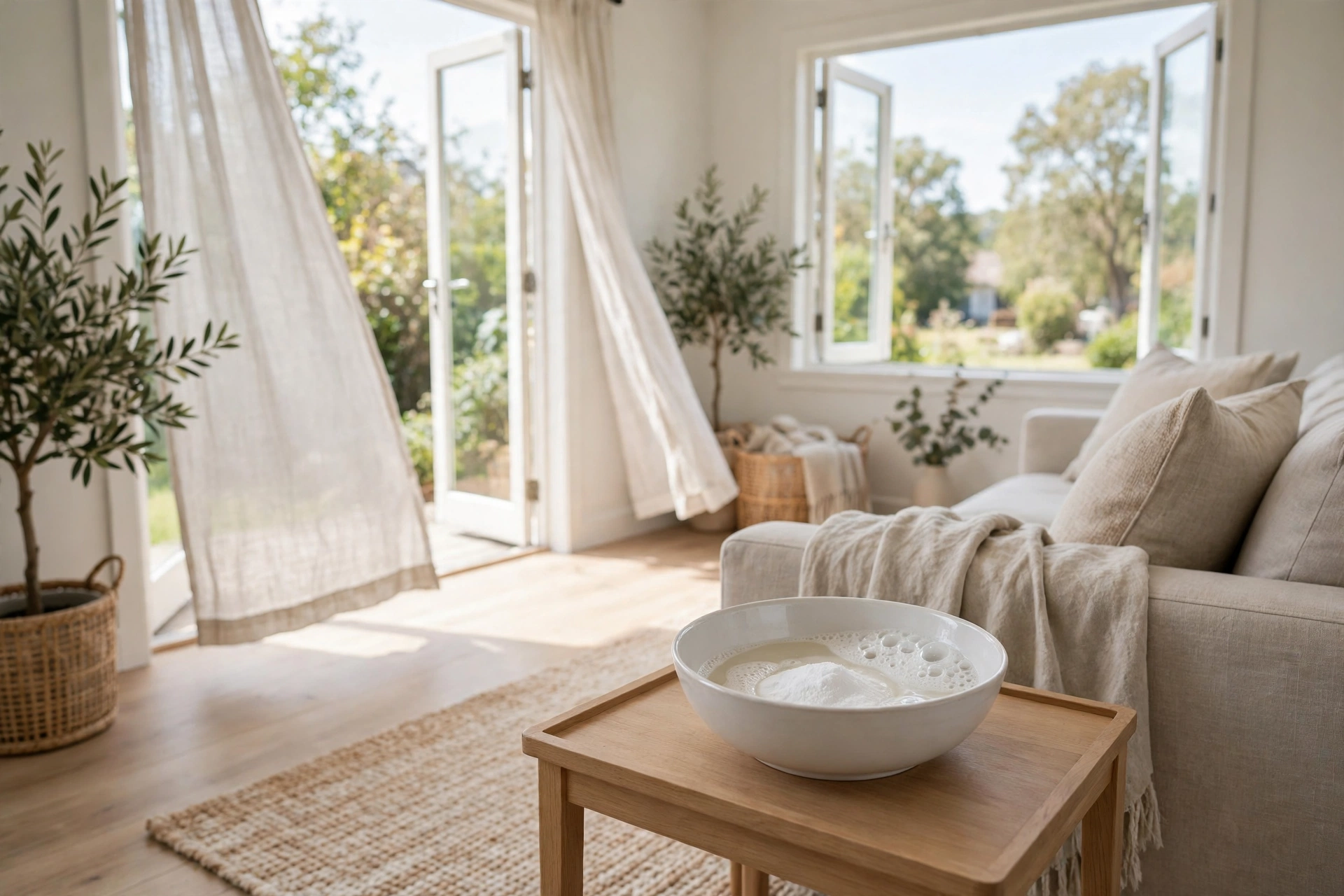
Start with fresh air. Open windows and doors on opposite sides of the house to create a cross-breeze, run fans, and let sunlight in where possible. Then set out wide bowls of white vinegar, baking soda, or activated charcoal in affected rooms. These absorb airborne odour while you work on surfaces. They will not strip oil from a sofa on their own, but they lower the background smell and make the house bearable while you clean.
The neutralising mix that actually works
The most widely recommended home formula, described by university extension services, is:
- 1 quart (about 1 litre) of 3% hydrogen peroxide
- 1/4 cup of baking soda
- 1 teaspoon of liquid dish soap
Mix it in an open container and use it immediately. Do not store it in a closed bottle: the mixture releases oxygen and pressure can build up. The peroxide oxidises the thiols into odourless compounds, the baking soda supports the reaction, and the dish soap breaks down the oily carrier so the other ingredients can reach the smell. Apply it to washable hard surfaces and fabrics that can handle peroxide, leave it for a few minutes, then rinse thoroughly. Test first on a hidden spot, because peroxide can lighten some fabrics and finishes. Never use this mix around a pet’s eyes, and do not use it on a pet without checking pet-safe guidance first.
Step by step for the house
- Ventilate: open windows, run fans outwards, and keep the system fan off or on “fan only” only if it helps push air out without spreading the smell.
- Find the source: check entry points, the pet, clothing, and the rooms nearest the spray. Clean the source first, or the smell will keep returning.
- Wipe hard surfaces: wash floors, walls, and sealed surfaces with the neutralising mix or a vinegar solution, then rinse and dry.
- Treat soft furnishings: sprinkle baking soda over carpets, rugs, and upholstery, leave it for several hours or overnight, then vacuum thoroughly. For washable items, repeat washing if needed.
- Launder fabrics: wash clothing, bedding, and removable covers with detergent plus half a cup of baking soda. Air-dry outside if possible; tumble-dryer heat can set any remaining odour, so check the smell before drying.
- Finish the air system: replace HVAC filters and wipe vent covers, since filters hold the smell and recirculate it.
- Repeat in stages: a faint smell that returns when humidity rises usually means oil remains in a porous material. Repeat the baking soda and ventilation steps rather than adding stronger perfume.
What about tomato juice?
Tomato juice is the classic myth. It may overwhelm your nose for a short time, but it does not chemically neutralise thiols, so the skunk smell returns once the tomato smell fades. The same applies to most scented sprays: masking is not removing. Use tomato juice only if you enjoy the smell, not as a cleaning method.
If the smell is under the house or in walls
A spray under the house or in a crawl space is harder, because you cannot easily wash the area. Ventilate from below where safe, remove any contaminated debris you can reach, and consider a professional cleaning service for enclosed spaces. If a skunk is still living under the house, do not seal the entry while it is inside; contact a local wildlife service for humane removal advice first.
Safety notes
Wear gloves and eye protection when handling sprayed materials, and keep children and pets away from cleaning mixes. Do not mix peroxide solution with bleach or other cleaners, and do not use bleach on fabrics or surfaces without checking it is safe for that material — bleach can react badly with some residues and can damage colour. If spray gets into eyes, rinse with plenty of water and seek medical advice if irritation persists. If anyone has breathing difficulty, leave the area and get fresh air.
Preventing the next visit
Skunks usually visit for food or shelter. Feed pets indoors, secure rubbish bins, remove fallen fruit, close gaps under decks and sheds, and keep grass and brush trimmed near the house. Motion-activated lights can help, but removing food sources matters more than any single deterrent.
FAQs
How long does skunk smell last in a house?
With prompt cleaning it usually fades within a few days, but oil left in carpets, upholstery, or filters can linger for weeks. Repeated ventilation and baking soda treatments shorten that time.
Will vinegar alone remove skunk smell?
Vinegar helps with airborne odour and light surface smells, but for direct spray it is usually not enough on its own. The peroxide, baking soda, and soap mix is more effective for neutralising thiols.
Can I use an air purifier?
A purifier with activated carbon can help with airborne smell, but it will not clean oil from fabrics. Use it alongside surface cleaning, not instead of it.
When should I call a professional?
Call one if the spray is in walls, ductwork, or an inaccessible crawl space, if the smell persists after thorough cleaning, or if a skunk is living on the property.
Bottom line
Ventilate first, neutralise second, and clean fabrics and filters last. The peroxide, baking soda, and dish soap mix works because it breaks down the oily thiols rather than covering them up. Work through the house in that order, repeat where needed, and you will get the smell out far faster than with air freshener alone.