
Most plant feeding problems are not caused by the wrong fertilizer. They are caused by too much of it, given at the wrong time, to dry soil. Learning how to dose fertilizer for plants is therefore mostly about restraint: start weaker than you think, feed only when the plant is actively growing, and watch how it responds before feeding again. A plant that is slightly underfed usually recovers quickly. A plant with burnt roots from overfeeding often does not.
Start with the label, every time. Fertilizer products differ in strength, and the same brand can sell several formulas. The three numbers on the pack, such as 10-10-10, show the percentages of nitrogen, phosphorus, and potassium in that order. They describe the ratio of nutrients, not the dose. The dose is the amount you actually mix or scatter, and that is what the label’s instructions give. When in doubt, use less than the label says, especially for indoor plants.
What fertilizer does, in plain terms
Nitrogen supports leafy growth. Phosphorus supports roots, flowers, and fruit. Potassium supports overall strength and resilience. A balanced fertilizer, such as 10-10-10, gives all three in equal proportion and suits most general-purpose feeding. A flowering plant may benefit from a formula with relatively more phosphorus, while a leafy plant may do well with relatively more nitrogen. For most beginners, though, a balanced feed at a cautious dose is a safer starting point than chasing a special formula for every plant.
Form matters too. Liquid fertilizer mixes with water and acts quickly, which makes it easy to control, and easy to overdo. Granular fertilizer releases more slowly, which suits garden beds and outdoor plants. Slow-release granules feed over weeks or months. Compost and other organic feeds work slowly and improve soil structure, but they are not precise, so they are best treated as gentle background feeding rather than a measured dose.
The golden rules before you feed
First, water the soil before you fertilize. Feeding dry soil is the fastest way to burn roots, because concentrated salts sit directly against dry roots. Water normally, let it soak in, then apply the diluted feed. Second, feed only a healthy, actively growing plant. Do not fertilize a wilting, diseased, or stressed plant, and wait a few weeks after repotting before feeding, so damaged roots can recover. Third, feed in the growing season, usually spring and summer, and reduce or stop in autumn and winter when most indoor plants slow down. A plant that is not growing does not need extra food, and unused fertilizer salts simply build up in the soil.
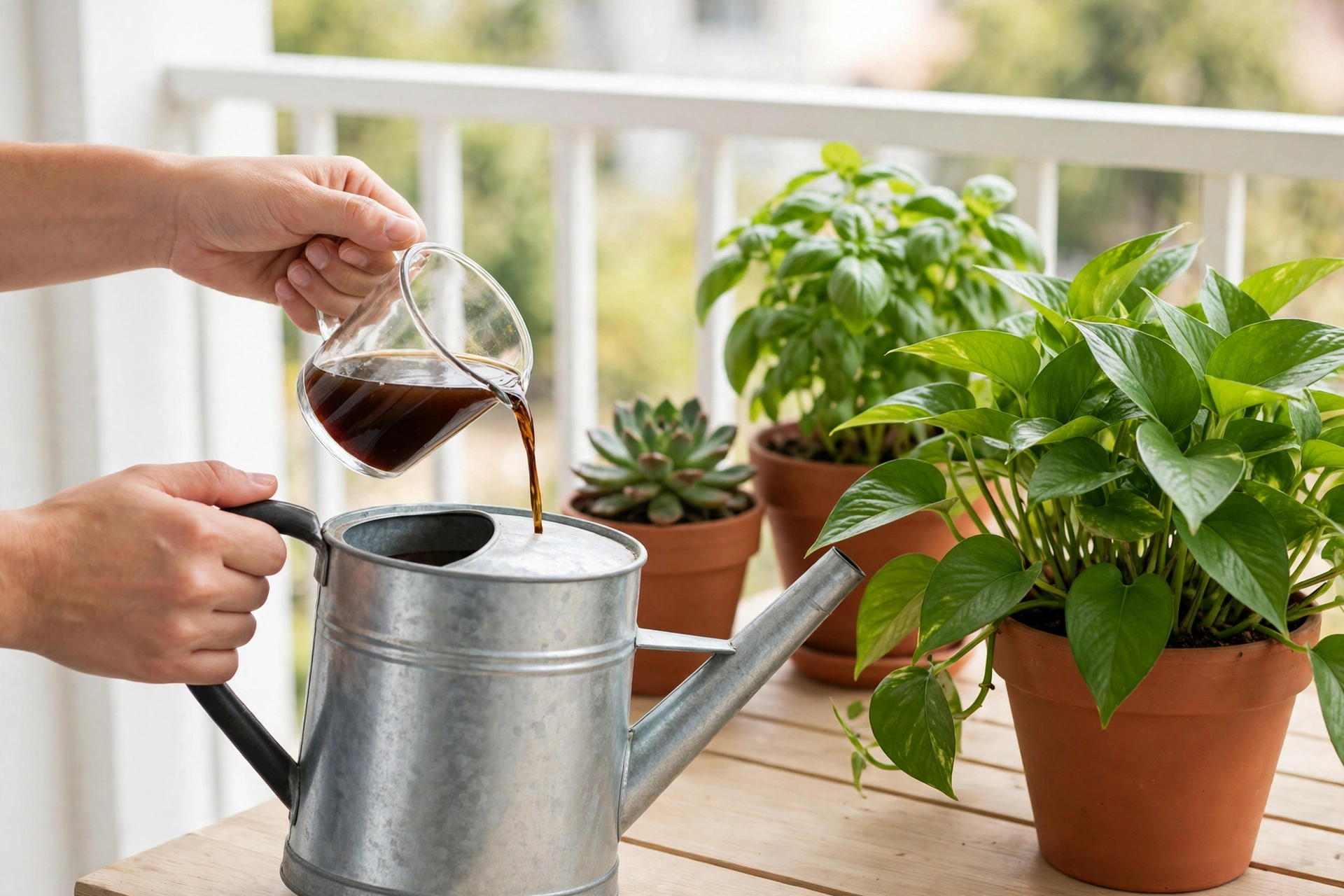
Fourth, measure. A rough pour from the bottle is not a dose. Use a measuring spoon or cap, and mix in a watering can so the feed is evenly diluted. Keep notes for a few feeds: what you used, how much, and how the plant looked two weeks later. That record is more useful than any generic chart, because it reflects your light, your pots, and your plants.
Doses by plant type
For indoor houseplants, start at half the label strength. Most houseplants do well with a balanced liquid feed every four to six weeks during spring and summer, and rarely or never in autumn and winter. Succulents and cacti need even less, often a quarter-strength feed once or twice in the growing season, because they grow slowly and store water. Flowering houseplants may benefit from a bloom formula while they are actively flowering, but return to a balanced feed afterwards.
For outdoor garden beds, follow the label rate for the product you are using, as a guide often around one to two tablespoons of liquid concentrate per gallon of water, or a light scattering of granules worked into the topsoil and watered in well. Feed every four to six weeks through the growing season, rather than giving one heavy dose. Vegetables and fast-growing annuals are hungrier than established perennials, but even they suffer from excess. A soil test, available through many garden centres and extension services, can tell you what your soil already contains, and it often saves money by showing you what you do not need to add.
For trees and shrubs, feed far less often than you might expect. Established trees and shrubs usually need only one or two feeds a year, often a slow-release granular fertilizer applied around the drip line, which is the area under the outer edge of the canopy, at the rate given on the product for the size of the tree. Avoid piling fertilizer against the trunk, where it can damage bark and roots. Young trees need gentle feeding while they establish, and a heavy dose does not make them grow faster. It usually stresses them.
For container plants on a balcony or patio, remember that pots dry out and salts build up faster than in open ground. Feed at half to full label strength, but flush the pot occasionally by watering until water runs freely from the drainage holes, which washes out excess salts. Always check that pots have drainage. Fertilizer in a pot with no drainage is a recipe for salt damage.
Signs you have overfed, and what to do
The classic signs of overfeeding are brown, crisp leaf tips and edges, leaves dropping suddenly, a white crust on the soil surface, and roots that look brown and mushy rather than pale and firm. Growth may stall even though you are feeding more, which is a confusing but common pattern. If you suspect overfeeding, stop feeding at once. Water the pot thoroughly, letting water run through the drainage holes several times, to flush excess salts. Remove badly damaged leaves, but do not prune heavily while the plant is stressed. Wait until you see new, healthy growth before feeding again, and when you do, use half the previous dose.
Underfeeding looks different: slow growth, pale leaves, and smaller new leaves than usual, especially in a plant that is otherwise healthy and well lit. If you see those signs during the growing season, a cautious feed at half strength is reasonable. Increase gradually, and give each change a few weeks to show an effect before changing again.
Common mistakes to avoid
Do not feed a plant just because you bought fertilizer, or because a calendar says it is time. Feed because the plant is growing and the season is right. Do not mix several fertilizers at once in the hope of covering every need. That makes the total dose impossible to judge. Do not fertilize in the heat of the day, when water evaporates quickly and salts concentrate. Early morning or evening, after watering, is kinder to roots. And do not assume that a plant that looks unhappy needs food. Light, water, drainage, and pests are more common causes of trouble than hunger, and feeding a stressed plant usually makes it worse.
FAQs
How often should I fertilize houseplants? Most need feeding every four to six weeks in spring and summer only, at half label strength. Stop or reduce in autumn and winter.
Can I use outdoor fertilizer on indoor plants? Yes, but dilute it more. Indoor plants grow more slowly in lower light and need a weaker dose.
What does 10-10-10 mean? It means the fertilizer contains 10 percent nitrogen, 10 percent phosphorus, and 10 percent potassium by weight, in that order. It is a ratio, not a dose.
Should I fertilize a newly repotted plant? Wait a few weeks. Fresh roots are easily damaged by fertilizer salts, so let the plant settle first.
The safest fertilizer routine is a boring one: water first, measure carefully, start weak, feed only in the growing season, and watch the plant before feeding again. Plants reward patience far more reliably than they reward extra food.
Related reading: how to clean outdoor furniture; how to preserve flowers; how to hang fairy lights without damaging wall; Home & Garden archive. Sources: Plant Style Home guide to dosing fertilizer; How to Dose Fertilizer for Plants guide.