
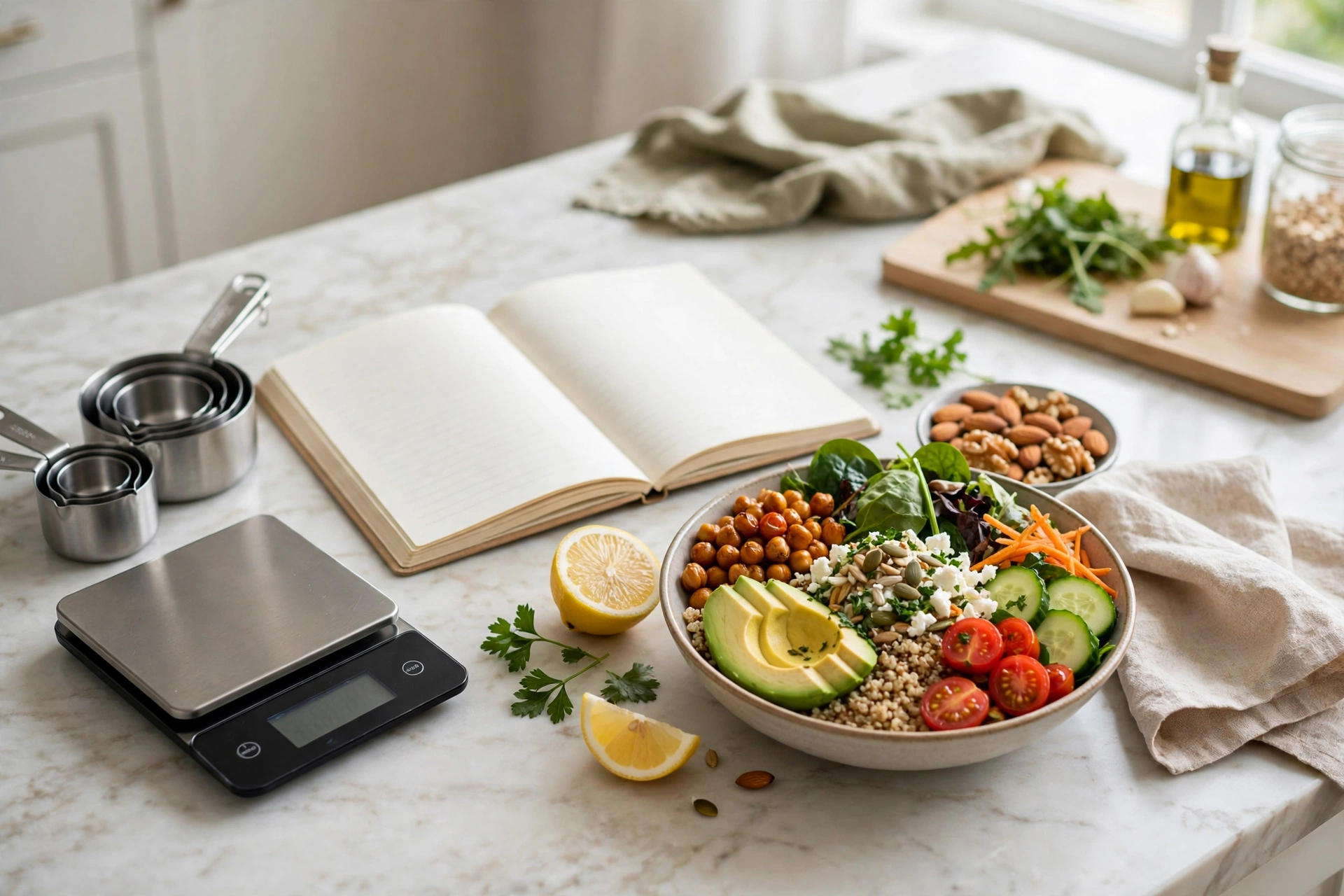
Calorie tracking sounds tedious, and done badly it is. Done well, it is a short daily routine: you set a target you can explain, log what you eat as you eat it, and judge progress by the trend over weeks, not by any single day. You do not need perfect numbers. You need numbers consistent enough to show whether your routine is working.
Step 1: Set a target you can defend
Tracking without a target is just journaling. Your target starts from an estimate of what you burn in a day, often calculated from the Mifflin-St Jeor equation using your weight, height, age, and activity level, which many free calculators and apps will do for you. From there, a modest adjustment fits most goals: a small deficit for gradual weight loss, a small surplus for muscle gain, or roughly maintenance if your weight is stable. Avoid the most aggressive deficit you can tolerate; a target you can hold for twelve weeks beats a brutal one you abandon in ten days. This is general information, not medical advice — if you are pregnant, breastfeeding, have a history of disordered eating, or need a therapeutic diet, speak to a qualified professional first.
Step 2: Log a normal week before changing anything
For your first week, do not change what you eat. Just log it. That baseline is the most useful data you will collect, because it reveals the invisible extras: the oil in the pan, the milk in four coffees, the handful of nuts, the children’s leftovers. Most people are surprised by where their calories actually come from, and that surprise is far more useful than any generic meal plan.
Step 3: Pick one logging method and stick to it
Choose the method you will actually use every day. An app with barcode scanning and a food database is fastest for most people, and saving repeat meals makes later days take minutes. A paper food diary works just as well if you prefer it: write down each food, the portion, and the calories from the label or a reference table, then add them up at the end of the day. Photo logging is a quick draft for a meal, but check the app’s estimate and correct the item you know is off. Whichever method you choose, use only one, so your numbers stay comparable.
Step 4: Weigh the foods where errors cost most
You do not need a food scale for everything. Vegetables and most whole foods are forgiving. The foods where small mistakes cost hundreds of calories are calorie-dense ones: cooking oils, butter, nut butters, cheese, sauces, and dry grains. A tablespoon of oil is around 120 calories, and pouring freely instead of measuring is one of the commonest tracking errors. Weigh or measure those foods with a spoon every time, and estimate the rest. Also watch the raw-versus-cooked trap: dry rice and cooked rice have very different calories per hundred grams, so pick the entry that matches what is actually on your plate.
Step 5: Log as you eat, not from memory
Log each meal right after eating. Evening reconstruction from memory is where snacks and drinks quietly disappear from the record. Save meals you eat often as favourites so logging them takes one tap. Log drinks, sauces, and cooking fats too — they are calories even when they are not the main event. If you eat out, split the dish into components — protein, side, sauce, drink — and estimate each, rounding up rather than down, since restaurant food usually contains more fat than the home version.
Step 6: Judge the weekly trend, not the day
Weight and intake both fluctuate daily for reasons that have nothing to do with progress: water, salt, sleep, and meal timing all play a part. Compare your average intake and your average weight across a week with the previous week. If the trend is moving in your intended direction over three to four weeks, the system is working, even if individual days look messy. If it is not, adjust the target slightly or tighten logging on the calorie-dense foods first, before overhauling your whole diet.
Common mistakes to avoid
Guessing portions for oils and sauces, picking the wrong database entry, forgetting drinks, and chasing a perfect day are the usual traps. Another is tracking everything for a week and then quitting because it felt like a chore: if logging takes more than a few minutes a day, simplify — fewer weighed foods, more saved meals, one method only. Tracking is a tool, not a test, and a slightly imperfect diary kept for months beats a perfect diary kept for a week.
When to stop tracking
Many people track daily for a few weeks to learn their habits, then switch to tracking only on weekdays, or only when their weight drifts. That is a success, not a failure: the point of tracking was to learn portion sizes and patterns, and once those are familiar, you can maintain them without logging every bite. If tracking starts to feel stressful or obsessive, take a break and return to it later, or talk to a professional about a gentler approach.
FAQs
Do I need a food scale to track calories? Not for everything. A scale earns its keep on calorie-dense foods like oils, cheese, and grains; hand portions or a photo log are close enough for most other foods.
How accurate does tracking need to be? Accurate enough to be consistent. If your method stays the same day to day, the trend over weeks is reliable even if individual entries are estimates.
How long should I track? At least three to four weeks to see a reliable trend. After that, many people track less often or only when progress stalls.
Can I track calories without an app? Yes. A paper diary with label values and a reference table is just as accurate; it simply takes a little more time.
Related reading: how long do cooked eggs last in the fridge, benefits of eating raw ginger, matcha latte benefits, how long can you keep rotisserie chicken in the fridge, difference between chicken broth and chicken stock
Sources: Nouribud guide, FitDay beginner tips